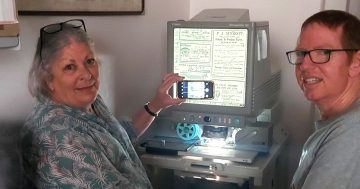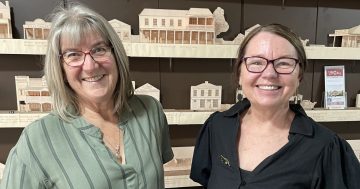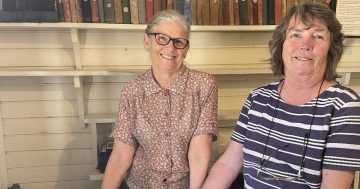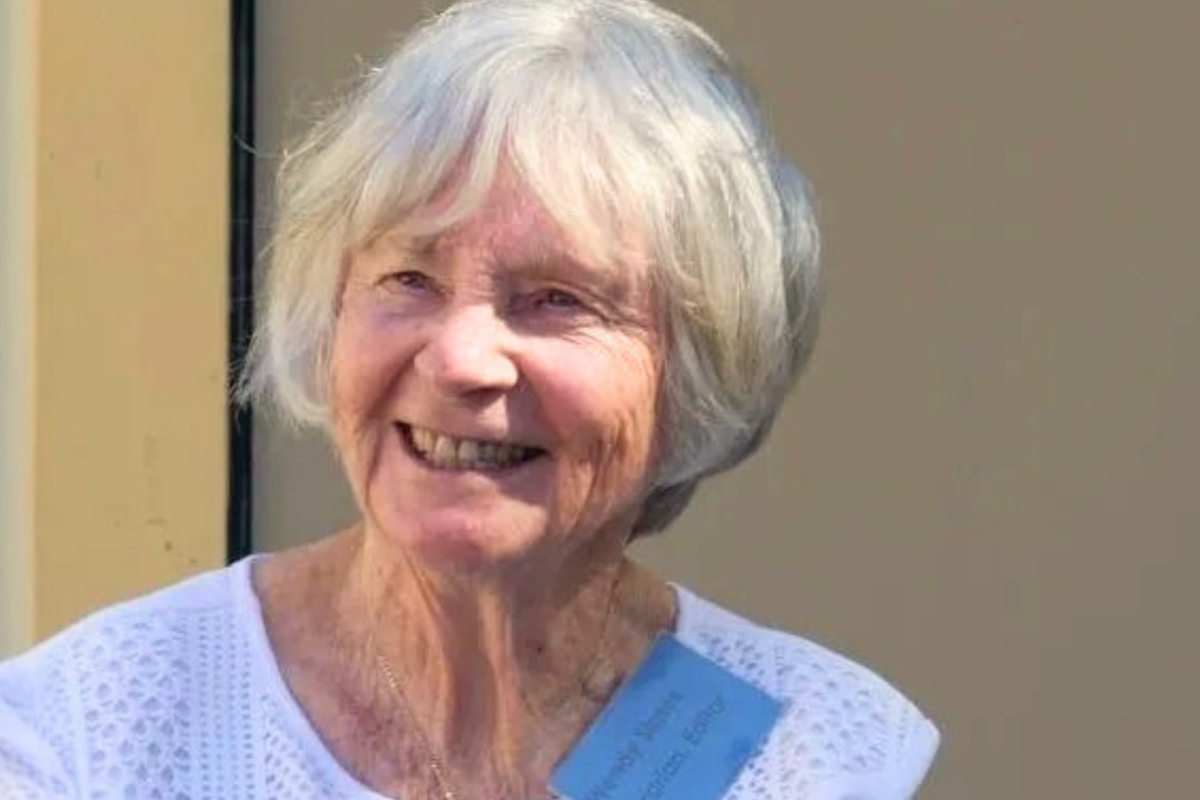
Wendy Simes is the head researcher of the News from 100 Years Ago project. Photo: Moruya and District Historical Society.
If you were to pick up a copy of the Moruya Examiner, or any Australian newspaper from the 19th century, the front page wouldn’t shout out political headlines or news from across the region. Instead, you would be greeted by an array of advertisements. Needing to cure your bothersome haemorrhoids? Sorted. Looking for your next drop of rum? Look no further. Indigestion giving you grief? Well, maybe give up the rum, but you could also try out the latest elixir to soothe your stomach.
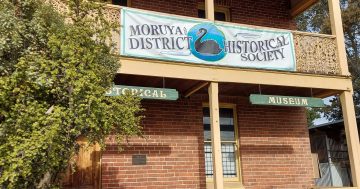
If it’s peculiarities of historic newspapers that you’re interested in, the Moruya-based research team at the Moruya and District Historical Society knows it all.
For 28 years, this dedicated team has dredged up the past and published it for the public’s reading pleasure, initially in the Moruya Examiner itself starting in 1998 and now on their own website and Facebook page, where a selection of stories from that day, 100 years ago, are published daily.
The project doesn’t always dig up solid gold headlines. Actually there were no headlines at all, just text, one of many facts about historical newspapers that Susan Murphy, president of the Moruya and District Historical Society, shared with me in our chat.
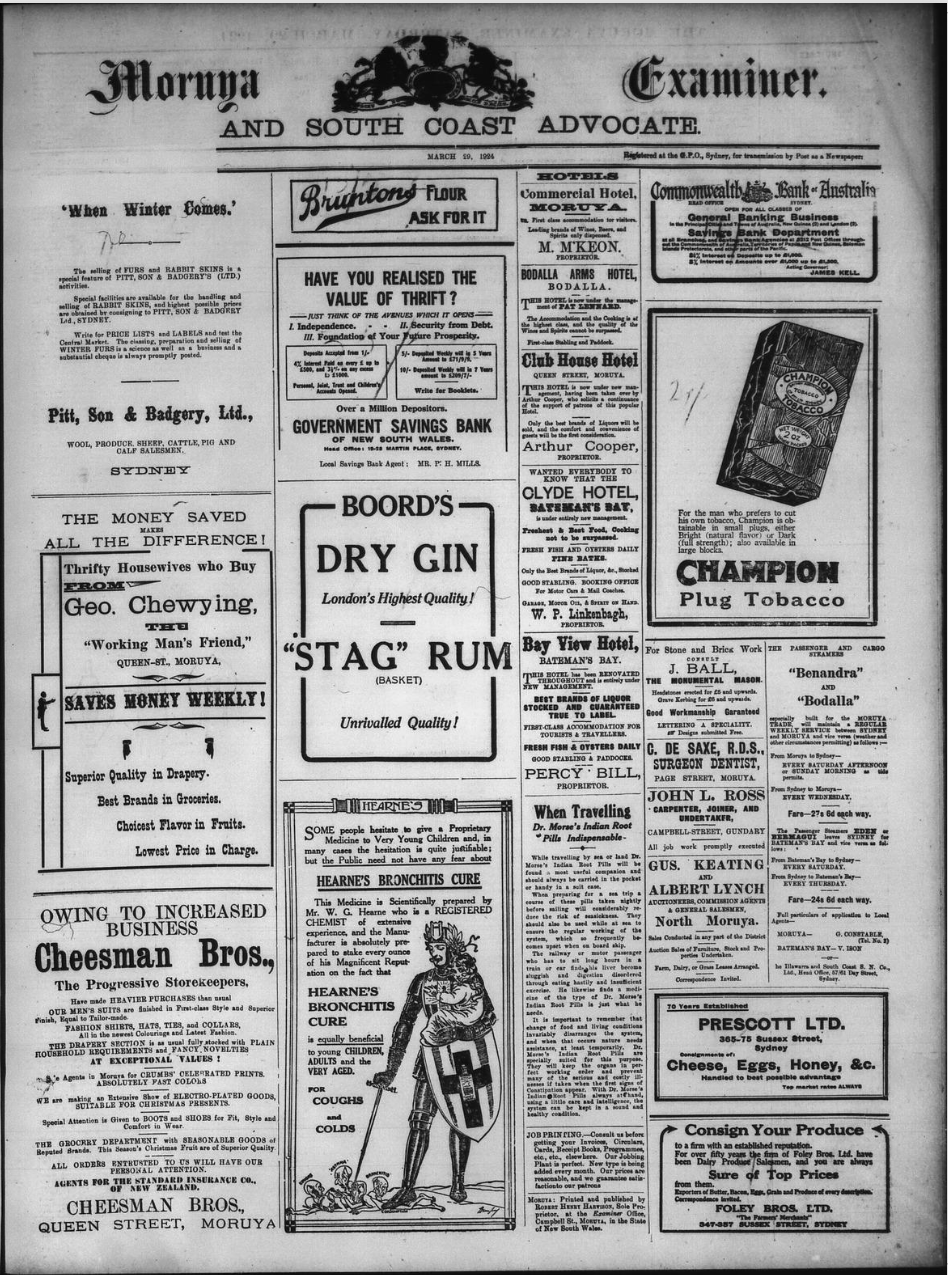
The front page of the Moruya Examiner from 29 March 1924. Photo: Moruya and District Historical Society.
Susan, along with her head researcher Wendy Simes are committed to the long-running project to provide a historical highlight reel from a publication that isn’t digitised and is largely inaccessible to the public.
“The cost of getting on Trove is very high; it would cost us around $20,000. The National Library manages Trove and they have a list of priorities of what they will be taking on,” Susan said.
Coming back to the fact that not all stories are solid gold, that’s actually one of the things that Susan loves most about the project, and the insights into the daily lives of the inhabitants of Moruya 100 years ago can be fascinating, mundane and amusing.
“Some of the stories are so quaint, things like ‘poor little John, he dropped an axe on his leg’, or the doctor stitched up Mr so-and-so,” Susan said.
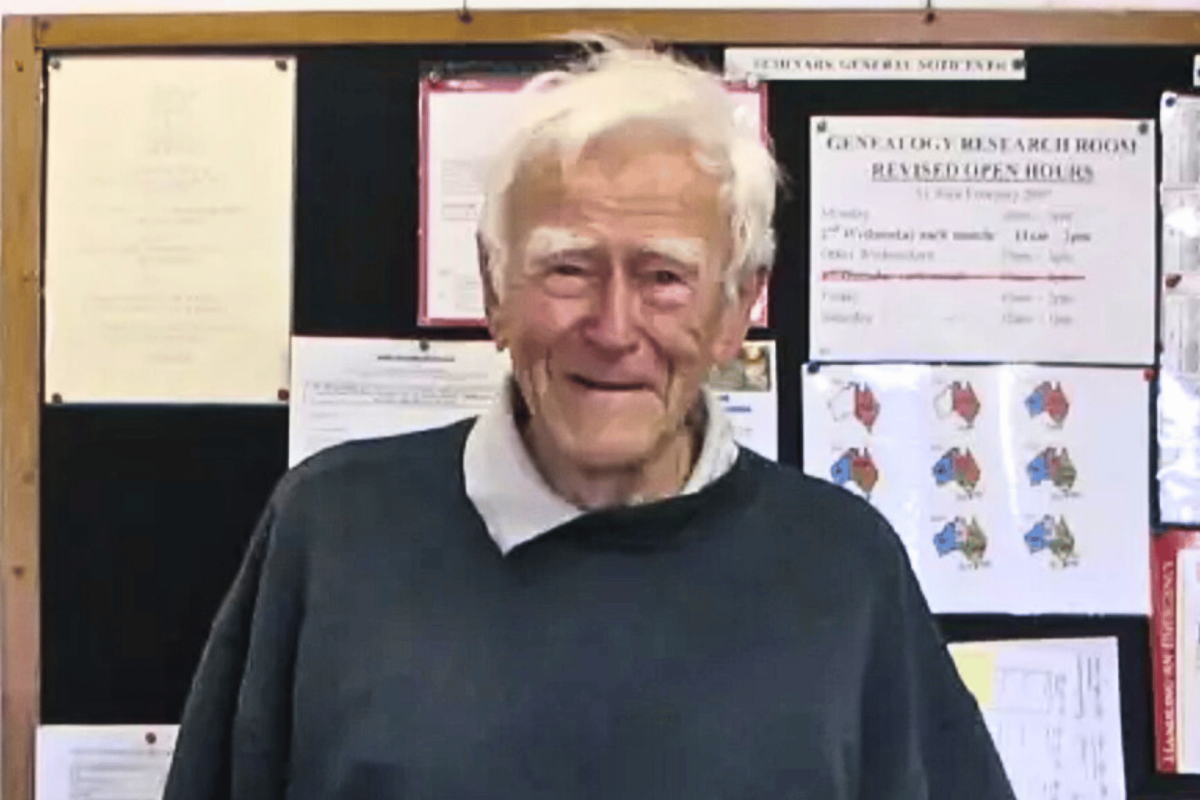
John Sewell initiated the project in 1998. Photo: Moruya and District Historical Society.
Sometimes though, stories are far from quaint and have real historical significance, like the discovery made by researcher Julian Armstong that was evidence that Australia’s oldest long-range message in a bottle had washed up near Moruya in 1925.
The story went global and was picked up in Scotland, where a local newspaper tried to solve the mystery of the crewman who had launched the bottle in 1877 from the iron clipper ship, the Loch Rannock.
That mystery remains unsolved, but what isn’t unsolved is every mundane detail that has happened in Moruya for more than a century.
Top of the list, Mrs Harry Lavis junior of the Burra, who had the misfortune of slipping and breaking her wrist, or that Mr H. Ball of Mullenderree was the latest addition to the new telephone exchange, or maybe the must-read news of the day was the unfolding tragedy of the white-linen tablecloth that was lost between “Braemar” and Milne’s residence, for which a reward had been issued.
Laughs and mundanities aside, Susan is well aware that many families in the region appreciate having access to the stories.
“You don’t want to go in and read these newspapers. It’s alright for a little bit, but it’s very tedious work. Pages of dense tiny print are very hard to read. The project connects families in the region, who have been here for generations, to stories about their families and the lives they led all that time ago,” she said.
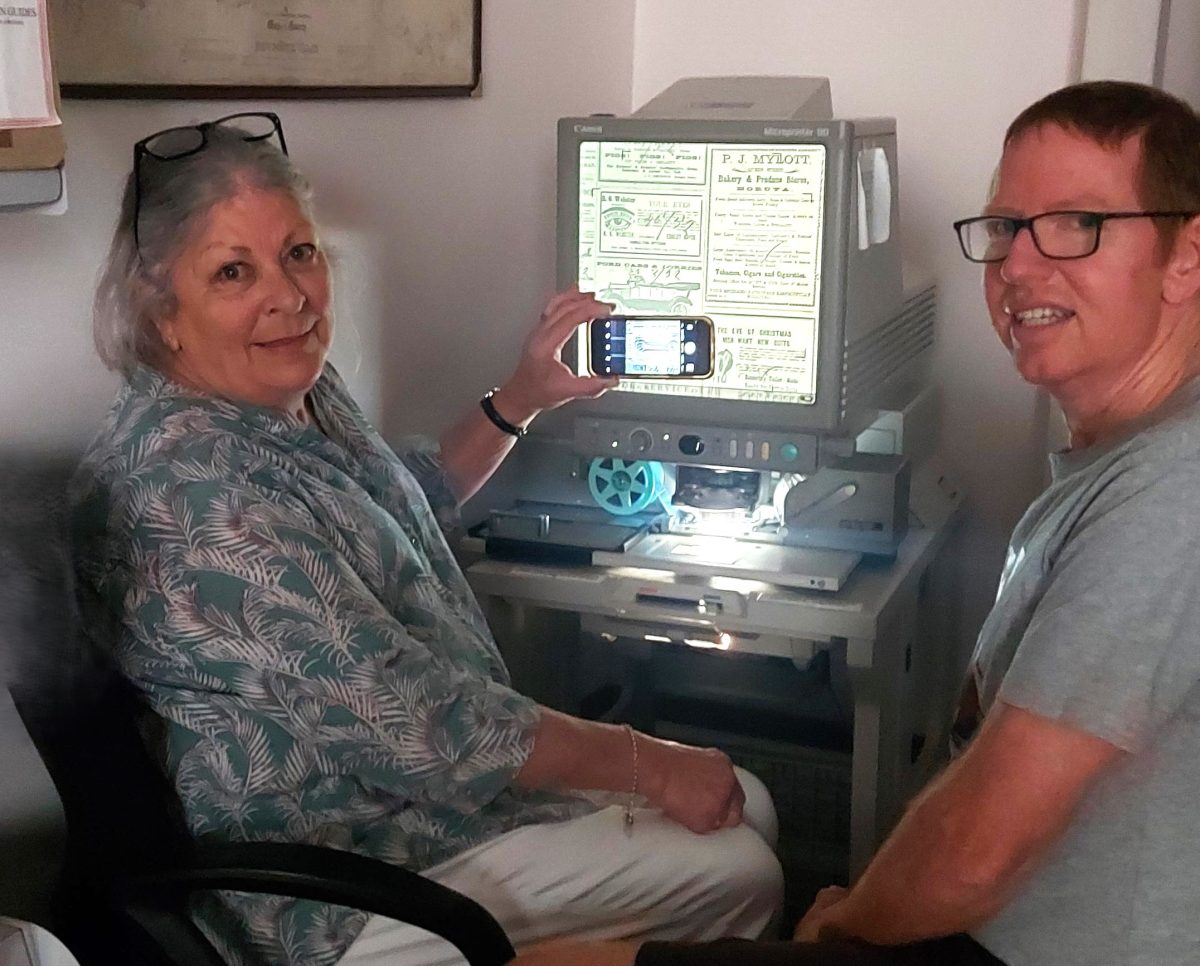
Yvonne Thomson and Julian Armstrong dug up evidence of Australia’s longest-range message in a bottle, reportedly found in 1925. Photo: Moruya and District Historical Society.
With the popularity of the project securing its future, Susan laments that she would love to obtain a reader for her team. The reader, Susan said, would allow them to digitally scan the articles in order to share them. As it stands, they need to head to Canberra to the National Library of Australia to use their reader.
“It’s around $15,000 for the reader, and the software is very expensive,” she said. “We’re volunteer-run, and the cost of technology like that is too high for us.”
As we wrapped up our chat, we pondered what news from 100 years ago would look like in another 100 years with the transition to digital media. Susan was already onto that – she laughed at the idea that “maybe we’ll have a brain implant”.
To follow the daily findings from 100 years ago head to the Moruya and District Historical Society website and Facebook page.