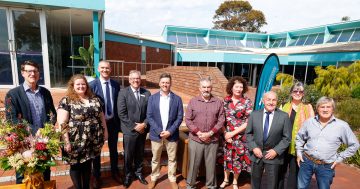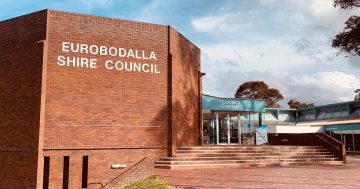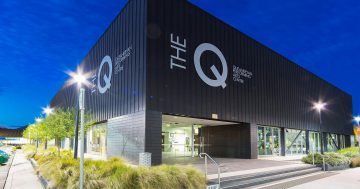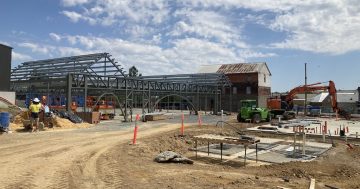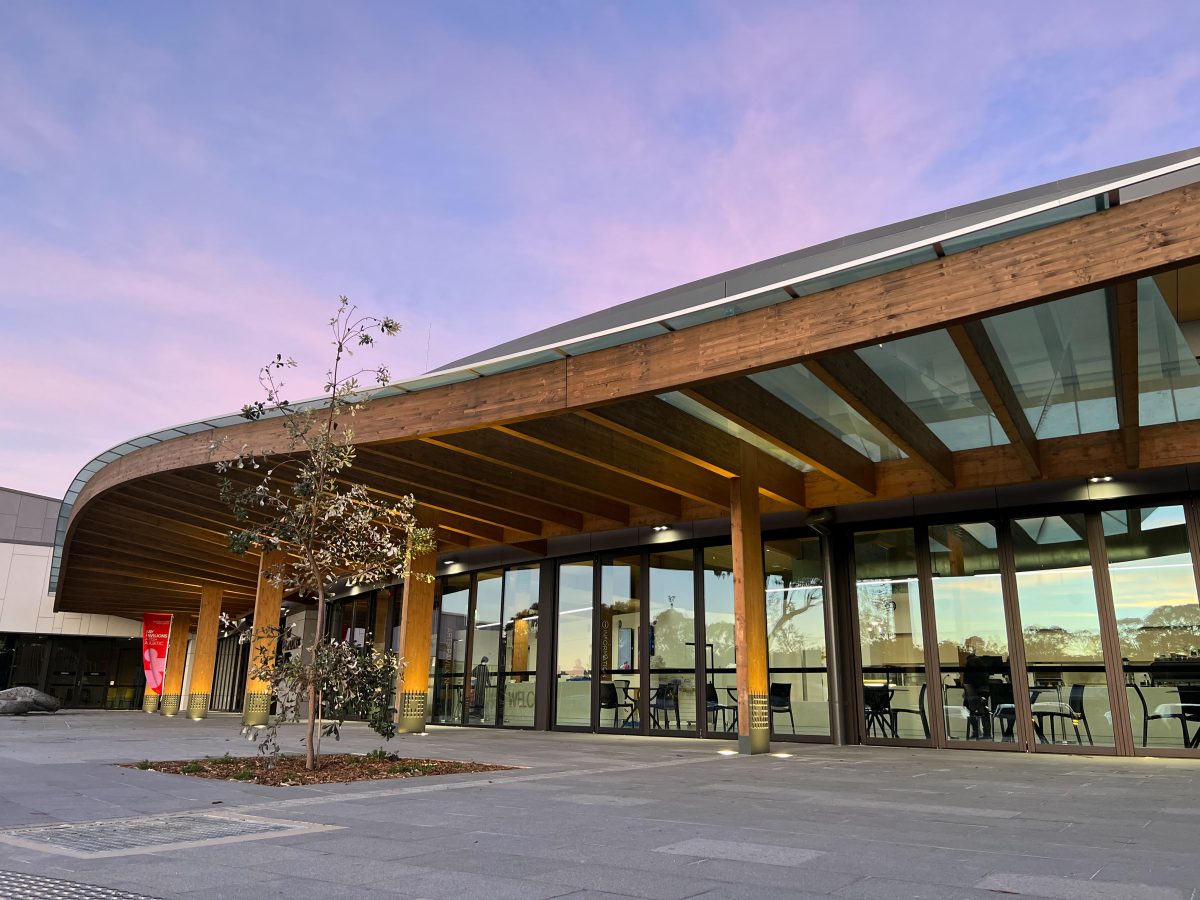
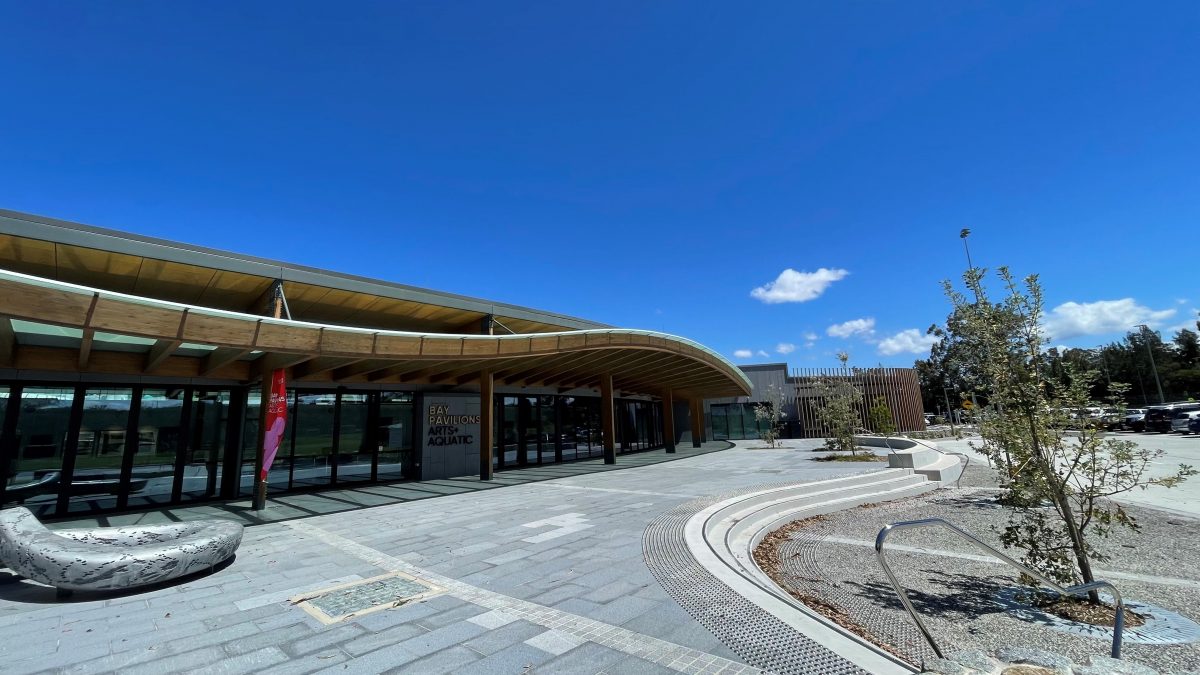
The Bay Pavilions won a national design award. Photo: Eurobodalla Shire Council.
Eurobodalla Shire Council will assume management of the Bay Pavilions’ theatre and meeting rooms in July 2026.
That is one key recommendation of a review that was conducted to identify ways to improve the efficiency, effectiveness and financial performance of Bay Pavilions.
Other recommendations include solar panels to lower electricity costs and a more advantageous contract model.
The Bay Pavilions, which officially opened in June 2022, provides aquatic facilities, gym/fitness facilities, a cafe, gallery space, meeting rooms, a theatre, as well as outdoor recreational spaces and waterslides.
Aligned Leisure has been contracted to manage all aspects of service delivery.
Council’s papers said the review was undertaken because Bay Pavilions “has a significant financial, service delivery and reputational impact on council and the community”. According to the review the preliminary net loss for the financial year that ended 30 June 2025, including overheads and depreciation, was $5.95 million.
The review by Morrison Low Advisory was published as part of the papers for council’s December meeting. The review cost $58,995 excluding GST. It assessed 11 management models and Bay Pavilions was benchmarked against the service offering of six other councils.
Electricity costs have fallen, but maintenance costs have doubled. Photo: Bay Pavilions.
Council’s papers reported that in the last financial year cleaning costs were $143,369 lower than the previous financial year and electricity costs had fallen $133,486.
However planned and minor maintenance costs more than doubled to $496,504. That was due to the end of the defects liability period and wear and tear from normal operations “reflecting the dynamic nature and complexity of facility operations”.
Electricity is a big cost. In the last financial year electricity cost around $691,000, with the pool accounting for 75.7 per cent of that ($524,000). The report recommended installing additional solar panels on the roof at a quoted cost of $900,000 and solar panels on the carparks at $600,000. The annual return on that $1.5 million investment would be $240,000, according to council’s papers.
As part of the review, Morrison Low Advisory reviewed several business cases, reviews and analysis.
“A brief analysis of these reports suggests the earlier consultant’s advice at the time the business case was prepared may have led to high performance expectations which ultimately failed to be realised,” the report said.
“The projections and analysis with hindsight appear overoptimistic in the earlier analysis. The modelling took into account growth which is yet to be realised, and the projections are based on other facilities and were less reflective of the Batemans Bay community,” the report said.
“This led council to approve a building design and configuration that it expected to perform better than it did in practice. The design itself also imposed cost on council that were greater than anticipated,” the report said.
Morrison Low Advisory also reviewed planning documents, monthly reports, financial reports, met with key council and contractor staff, attended an internal stakeholder workshop and presented initial management options to council.
The report said it was “widely accepted that the oversight during the design and construction of the facility left some costly legacy issues for council to deal with, the facility design makes the facility costly to maintain, and the current contract model places the responsibility on council to meet all costs, including a management fee, and that this model may not be providing best value”.
It said some of the savings to reduce operational costs meant the theatre component was receiving limited marketing. According to the report’s breakdown of performance by cost centre, the theatre posted the biggest loss of $1.55 million.
“Even with the sustainability plan improvements and the cost savings made to date the financial sustainability outlook is of concern,” the report said.
It noted several shortcomings with the contractor including its strategic and business plans were based on project information (visitation, membership and theatre performance revenue at the time of construction) and had failed to come to fruition.
The contractor’s primary experience was in wet and dry recreation facilities and had been unable to enliven the arts and theatre space as expected “and may not possess the required skills and experience to increase use”.
“The combining of contracts may have prevented more efficient contract prices from smaller contractors,” it said.
Aligned Leisure’s three-year contract was renewed for an additional year to 30 June 2026. As a result of the review, from 1 July 2026 Aligned Leisure will no longer manage the theatre and meeting rooms and will be responsible for planned and minor maintenance. The contract will be extended to 30 June 2027 to mitigate risk and allow time to implement the review’s findings.
The aquatic facilities, gym and cafe will be tendered out for commencement on 1 July 2027, including responsibility for operational costs and revenues.