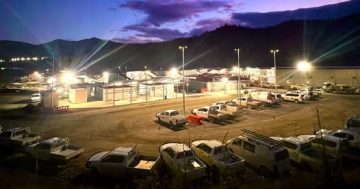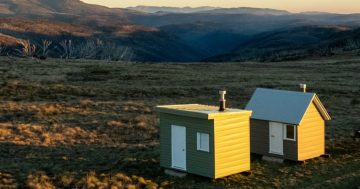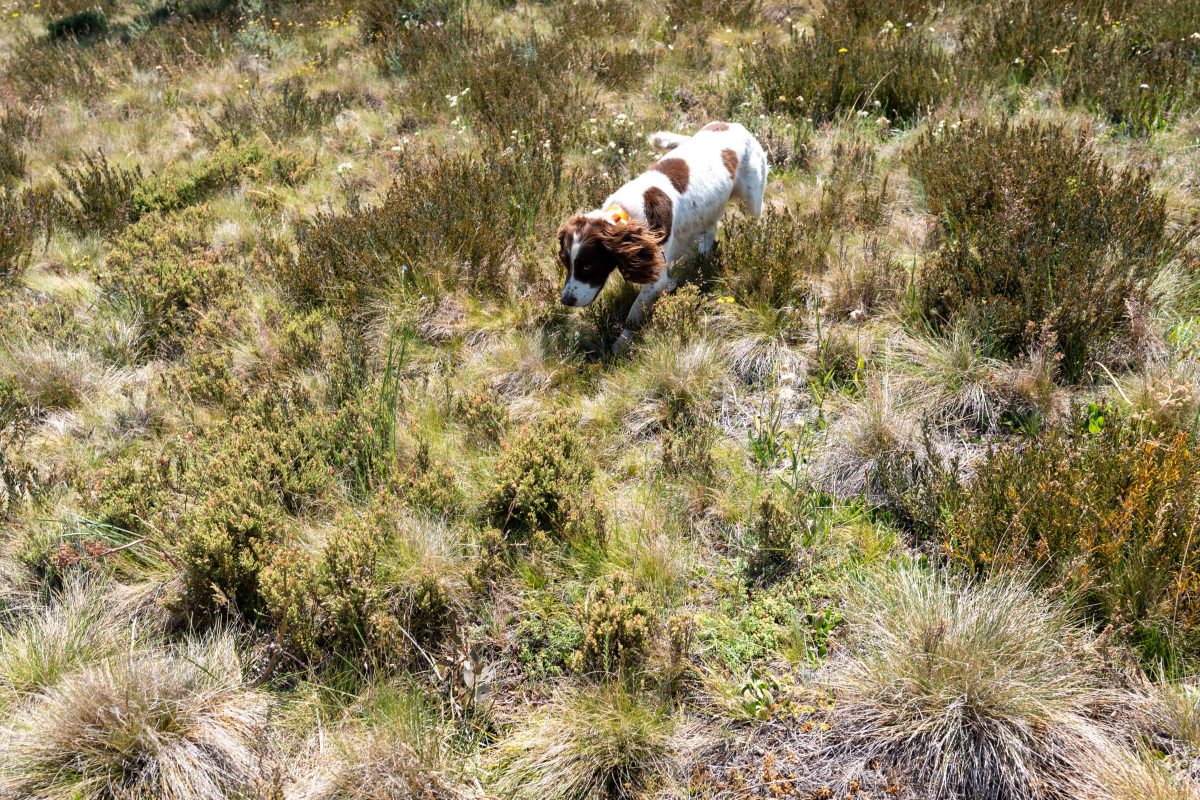
Meet Connor, a pup working on the frontline to tackle highly invasive weeds. Photos: Department of Climate Change, Energy, the Environment and Water.
“Cheeky” pup Conner is known for being a fan of long walks and belly rubs.
As a member of the National Parks and Wildlife Service (NPWS) team, he uses his superior nose to search for highly invasive weeds.
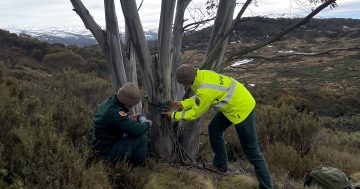
He’s rewarded with his ball after a find, while NPWS staff and volunteers mark the location and start the process of removing the weed.
Unlike most pups who aren’t allowed into national parks, Connor’s part of a team of dogs that have special permission and training.
For NPWS senior project officer in hawkweed management Emma Chapman-Davis, the dogs put a very cute face on a serious fight.
“They are bad news,” she says of the weeds.
“Orange and mouse-ear hawkweed spreads really rapidly. … They’re super aggressive in where and how they take over an area.
“What we end up seeing is that you have these hawkweeds growing in these large, dense mats, to the exclusion of all other plants. All you have is hawkweed.”
Orange hawkweed was first detected in Kosciuszko National Park in 2003, possibly introduced to the area 40 years earlier and spreading more extensively after bushfires.
The yellow-flowered mouse-ear hawkweed was detected on the main range in the summer of 2014, with NPWS believing it was spread by seed caught on camping gear.
Emma said that in the years since their detections, NPWS pushed back against their encroachment.
“We’re getting down to those last few plants. Being able to have [the dogs] out there, looking for those is incredibly beneficial. They can do it so efficiently.”
But it takes a lot of training to turn a normal dog into a member of the team, which she describes as being like “high performing athletes” or an Olympic athlete.
“In some respects, they are similar to an assistance dog.
“They are bred and they are trained to complete work for conservation efforts.”
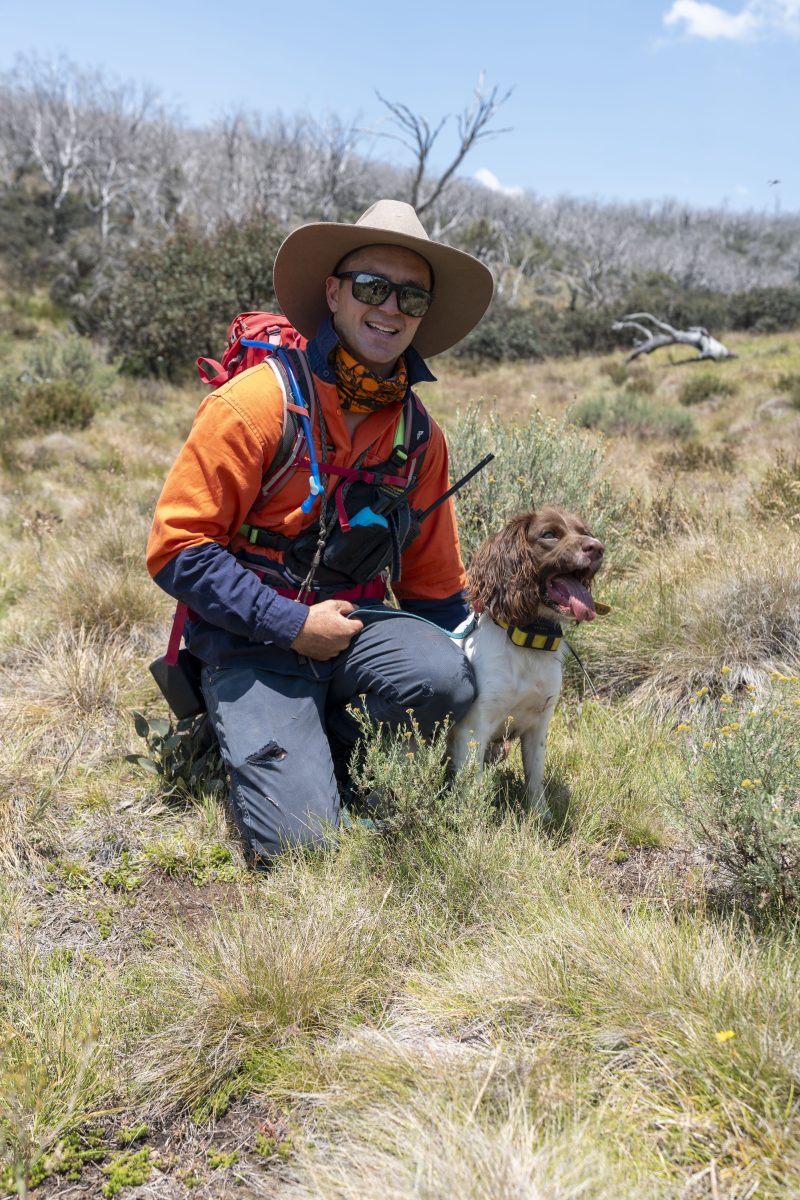
New recruit Taggie with her handler, Steve Dalleywater from Tate Animals.
Emma said each pup was carefully selected for their personality and behavioural traits, well before their training began.
To help manage the dogs, NPWS partners with specialist contractors.
“Every now and again, Connor might catch the scent of something that piques his interest. His entire body language will change.
“The handler will look for those cues and say, ‘No, that’s not what we’re looking for. … You don’t get to taste that – can you go find me hawkweed?'”
While Connor’s spent almost a decade helping to contain hawkweed, he’s about to take up a new job soon: retirement.
It means he’ll join Sally on the sidelines, who retired from the program several years ago.
“There are conversations at the moment on exactly which couch he will end up on and which spoiled household,” Emma said.
“At the moment, the plan, I understand, is for him to join Sally with one of our colleagues … Sally’s been enjoying her retirement.”
Emma said newcomers Taggie and Joey would step up and keep searching for the weed.
Across Australia, an estimated 27 million hectares are at risk of hawkweed invasion.
Emma said that while they were only found in a few places in Kosciuszko National Park and adjoining properties, anyone who stumbled on them should call the experts.
“Some areas are very much off the beaten track, and others are very much right on the track,” she said.
Any detections of hawkweed (along with pictures and a location) should be reported to the NSW Biosecurity Hotline on 1800 680 244, or NPWS on 02 6450 5565 or email [email protected].