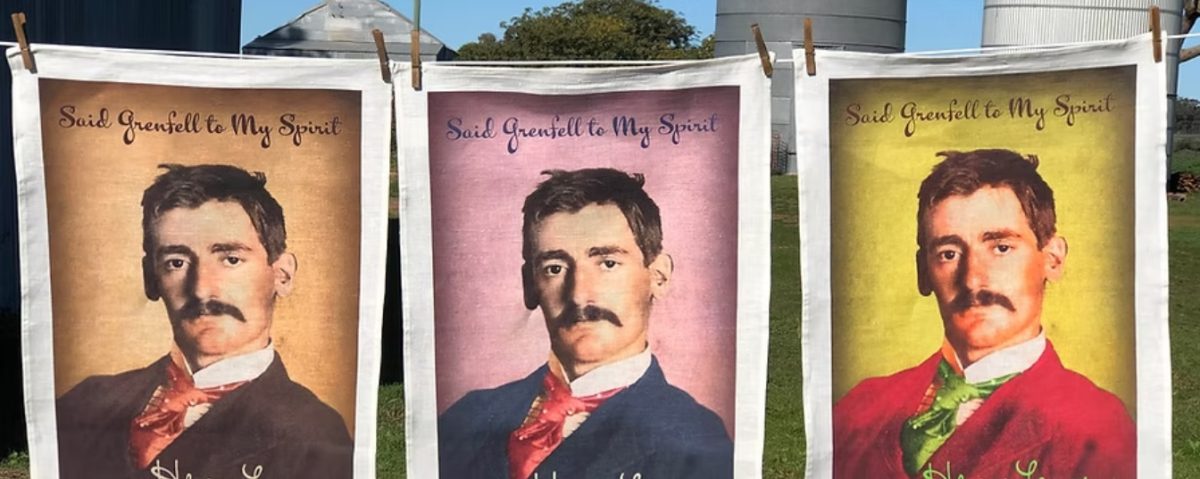
Raw, rebellious, and practical: Jason Kenah’s linen tea towels, drawn from Grenfell’s lore. Photo: Jason Kenah.
When the world lurched to a stop in early 2020, Jason Kenah found himself back at Sydney Airport unemployed, homeless and unexpectedly free.
He’d rented out his Darlinghurst flat for an overseas contract in India that COVID abruptly ended.
The shock became a pivot.
“I’d been thinking about the country for years,” he said.
He headed west, drove and drove, walked through towns, looked, listened, narrowed it down to a couple of places, and eventually chose Grenfell – a town whose deep heritage felt like the right kind of quiet.
“Admittedly it was a toss-up between Canowindra and Grenfell, but I was really taken with Grenfell because it’s got a better size to it,” Jason said, “and I think you really need to be this far out of Sydney to get away from the noise.”
Actually, fate took him a step further. With houses in town scarce, he hadn’t planned on it, but he found himself an even quieter spot.
“The agent said to me, ‘Oh, we’ve got this farmhouse that’s come available just today. Would you like to look at it?’ And, gosh, I didn’t see myself on a farm but, as it turned out, I loved it,” Jason said.
Now he’s all in, with a house bounded by crops, a sprawling vegetable garden, two rescue goats he calls “The Girls” and early morning wake-up calls from a territorial kookaburra – all of which equates to a life recalibrated to the seasons.
“I go to town now for a quick shop and two hours later I’ve walked the main street and talked to everyone and the shopping still hasn’t been done,” he said.
He didn’t just move to Grenfell – he fell for it.
“There’s nothing better than walking up the main street on a balmy evening and seeing all the string of bell lights across the road,” he said. “It’s just magic.
“I thought I would miss a lot of things from the city, but it turns out I don’t. I’m never going back to the city.”
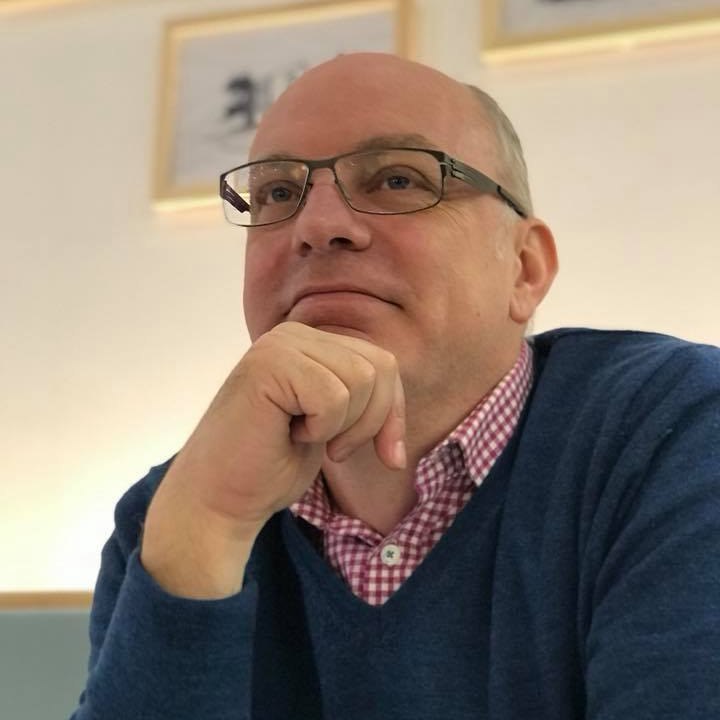
Jason Kenah — the man who traded a city postcode for a perspective. Photo: Jason Kenah.
Simple living didn’t mean stepping back from his daily craft – product design. It just changed the brief.
Jason, trained in textile design at RMIT, still spends his days with materials and measurements.
He specialises in textiles, lighting, and furniture, defined by an eye for finish and utility – and, above all, by the inspiration of his new home: farm-life rhythms, old-street histories, preserved architecture, and enduring folklore.
That pull drew him into heritage projects and sparked a desire to craft everyday objects that carry Grenfell’s story into people’s homes.
Under the boutique label, Wattle & Tea Tree, Jason has recast local iconography – Ben Hall, Henry Lawson, the town’s striking painted silos – into everyday art: 100 per cent linen tea towels, bold fridge magnets and limited-run stubby holders.
Lawson’s lines weave through the work, turning familiar history into something unmistakably contemporary, useful and portable – art you can hang, hold, and use.
It’s Grenfell, but with the volume turned up.
The work stays close: two local women sew, and others step in when demand spikes.
“I like that the money stays in the community … I’m proud they’re made here,” he said.
He isn’t chasing scale, and he isn’t interested in cutting corners: Jason sources premium linen from established mills for longevity and feel.
The designs avoid the tourist-trap look: no generic fonts, no postcard clichés – just images and stories people recognise.
“I could make and sell these a lot cheaper if they were on 100 per cent cotton … but I just wanted to do something really nice … something people would cherish.”
And cherish they do. Former residents buy the tea towels as a piece of home; locals use them and talk about the good old days.
Before Grenfell, his career in design and lighting meant big rents and bigger overheads but now Jason also finds himself in the throes of restoring an old cordial factory on the main street into a showroom-workspace.
The building will give Wattle and Tea Tree a public face and, like many main-street revivals across the region, it signals confidence in the future.
People wishing to learn more about Jason’s work can visit his Wattle & Tea Tree website.