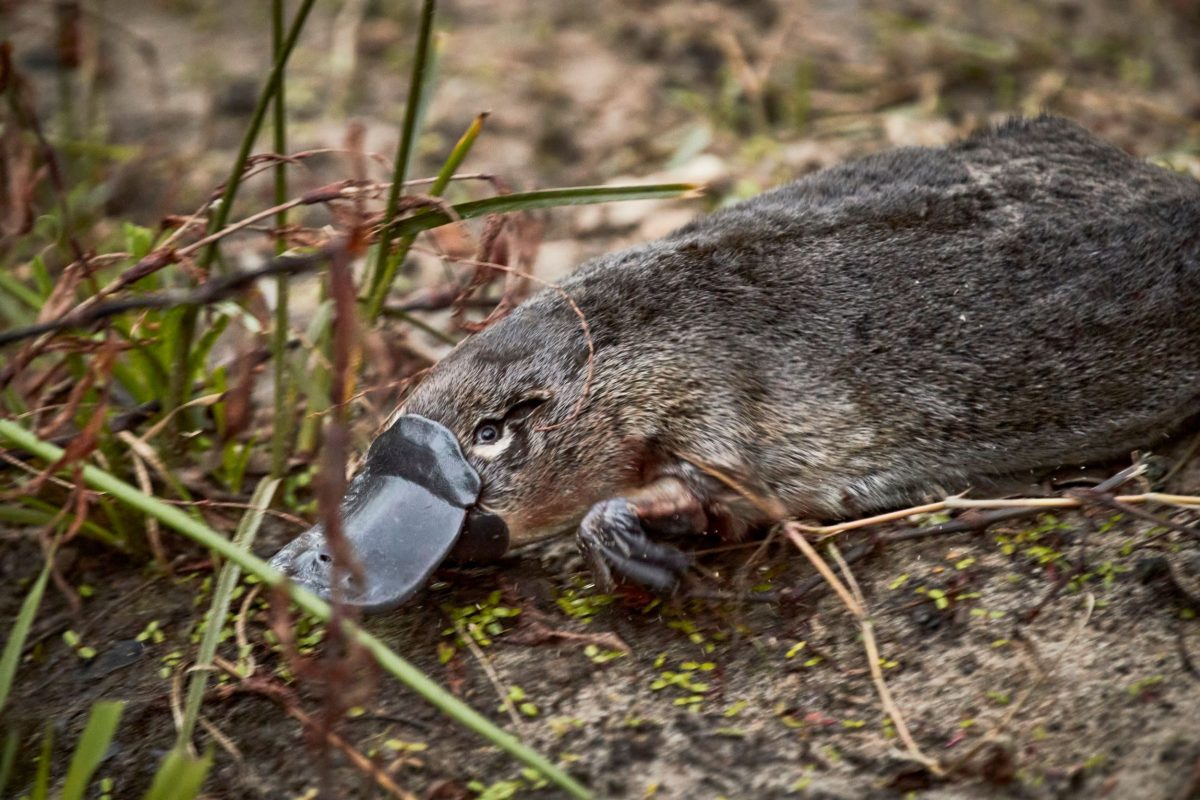
The platypus’ traditional range includes waterways across eastern Australia, including in sites across south-east NSW. Photo: Supplied.
CONTENT WARNING: This story contains images and content that may distress some readers.
The tragic discovery of a dead platypus in the Queanbeyan River has triggered calls for fishers of all ages to make sure they don’t leave anything behind.
In recent days, Susan Dalby and Christine Rampling both saw the mammal floating in the water when they visited the river.
The alarm was raised when it was realised the platypus wasn’t moving.
“It’s heartbreaking – an iconic creature from a beautiful river caught in really awful, unnecessary circumstances,” Ms Dalby said.
She asked for help from a nearby kayaker, who used his paddle to release the dead mammal.
Ms Rampling said some people were deliberately leaving fishing equipment behind, which risked harming the local wildlife.
“[Some] snag their line on a submerged log or a submerged rock, or a trolley.
“They’re unable to actually release the line, so they cut it. … An animal (like a platypus) could come along and do a ‘duck dive’ down to feed on the bottom [of the river].
“They can easily get tangled in that, and then they’re unable to come up for air.”
WIRES spokesperson John Grant told Region the rescue organisation regularly received calls about a variety of wildlife being caught in fishing lines and other nets.
He also said animals were also swallowing baited hooks and other equipment fishers left behind on beaches, rivers or other waterways.
“It’s an increasing problem. We’re finding a lot of entanglements – it’s not just fishing line, but it’s a big one because so many people are out fishing in the summer.
“It’s soccer nets, different types of webbing … [it all] causes a lot of damage to wildlife.”
Care for the injured animals can range from x-rays to surgery. Some injuries are also proving fatal.
“They’ll do so much damage to themselves when they’re trying to free themselves.
“It really is just a case of being careful. Don’t leave anything behind … The best thing that we can do is to clean up after ourselves and make a better time for everyone.”
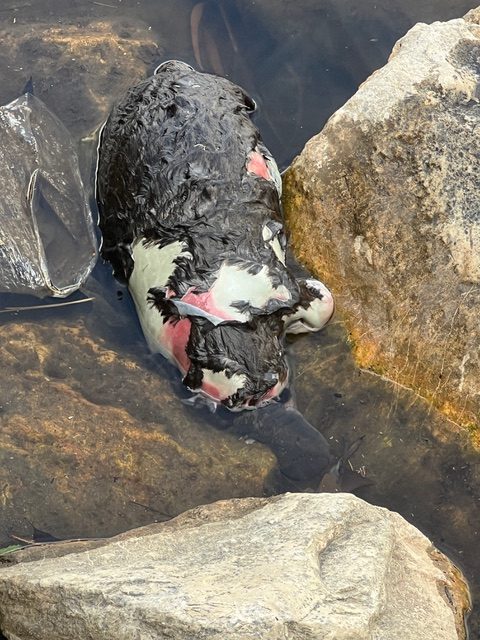
Ms Dalby said the platypus was found in Queanbeyan waters, at a section popular for people wanting to fish off the riverbank. Photo: Susan Dalby.
The need to be careful of your impact during visits to waterways was echoed by Dylan Castles.
He is the WaterWatch coordinator for the Molonglo catchment (including the Queanbeyan River).
The group is installing 12 bins (as well as informative signage) at popular recreational fishing sites across the region, giving fishers another space to drop off equipment.
One of these bins will be installed on the Queanbeyan River beneath the Oaks Estate Bridge, near an area of known platypus habitat.
“It’s just about knowing that these kinds of things are in their waterways, to minimise and hopefully eradicate them and allow all of our native species to thrive,” he said.
The project is a collaboration between Molonglo Conservation Group, OzFish ACT, the ACT Government and the National Capital Authority.
Mr Grant encourages people to call WIRES or another rescue group if they see an animal wrapped in netting or in another kind of distress.
“The sooner we can get to them, the more chance we have of doing something,” he said.
“It’s nothing to do with people being malicious. We know that people want the best for animals … It really is just that what may seem like a little bit of fishing line can have a real impact on the animals.”