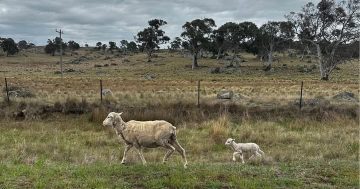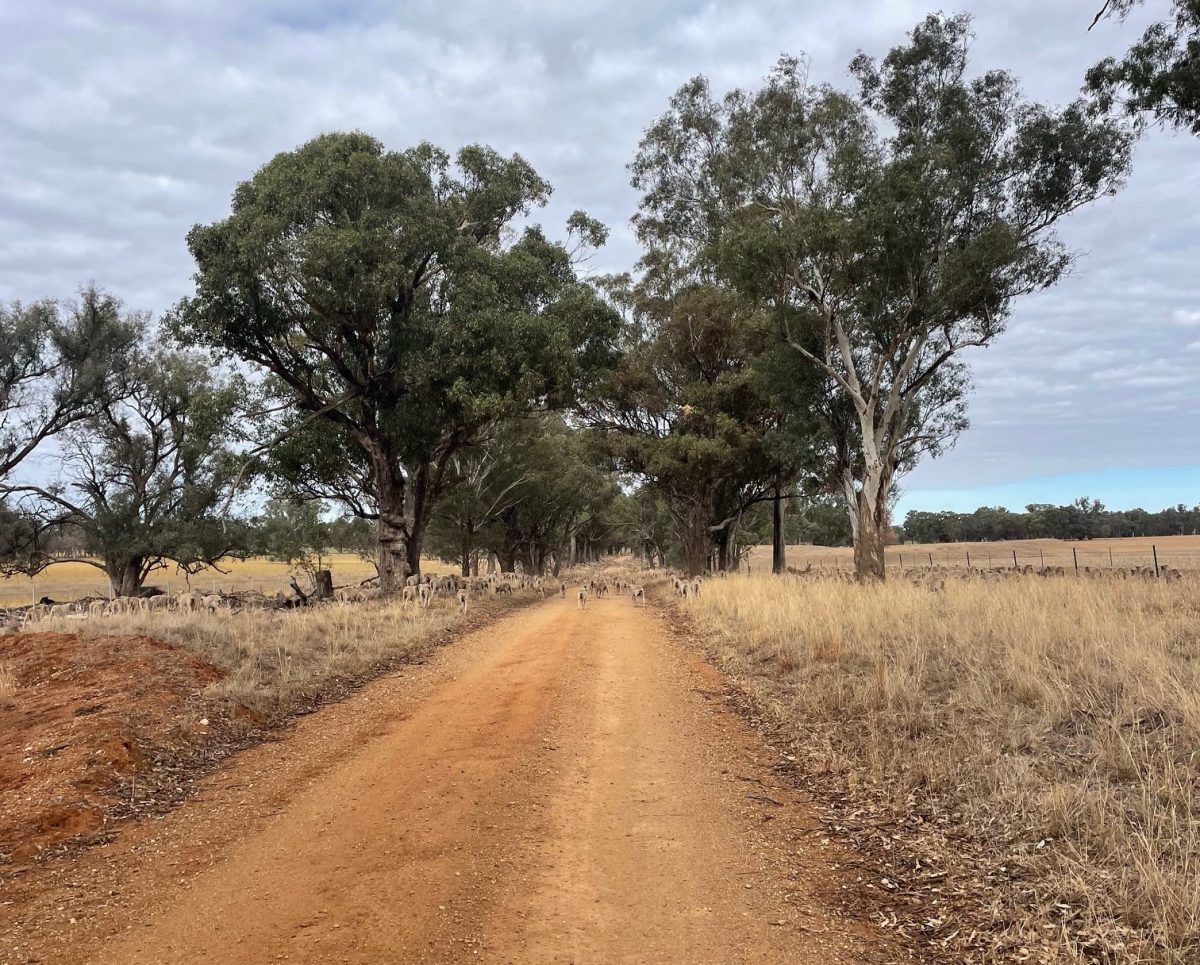
Livestock wandering where they shouldn’t might be a thing of the past after virtual fencing was legalised. Photo: Edwina Mason.
Farmers across southern NSW are evaluating the introduction of what one has described as a “revolutionary” technology for managing livestock.
Virtual fencing was recently legalised across the state, meaning farmers can now use it to move livestock around their properties.
The high-tech approach sees a collar placed on livestock, which connects to an app.
Farmers can set a designated area for the animals, which are given a slight shock if they move out of the area.
(It’s distinct from another kind of electric fencing, which uses lights and an alarm in an attempt to avoid wildlife collisions on roads.)
Riverina dairy farmer Malcolm Holm says it’s more than an addition to a farmer’s toolbox.
“It’s revolutionary. It’s a bit like when we had the old Nokia 3210s – and now we’re all using smartphones.
“It is a massive jump,” he says.
While Mr Holm isn’t immediately adapting the technology for his cows, he says it will likely turn out to be a “real game changer” for many others.
“I guess it’s like any new technology, it just takes a bit to get used to, and you’ve got to build your confidence,” he says.
He tells Region that NSW Farmers, of which he is also a committee member, has been calling for its legalisation in the state.
“It’s a technology that’s been around for a little while – to me, it’s a very much proven technology, which is why NSW Farmers was pushing [for] it so hard.
“Dairy farmers could see the benefits of it … I’ve had a number of different dairy farmers around the state saying, ‘When can we use this technology?'”
He points to its use in other parts of Australia and New Zealand, saying they have been able to use the technology to manage livestock movements, as well as erosion and other environmental concerns.
“I’ve seen animals caught up in barbed wire and I’ve seen animals that have died because they’ve got caught up in an electric fence,” he says.
“All animals will have a drawback. In the end, you’ve got to evaluate and size up, ‘Is it better than what we’re doing now?'”
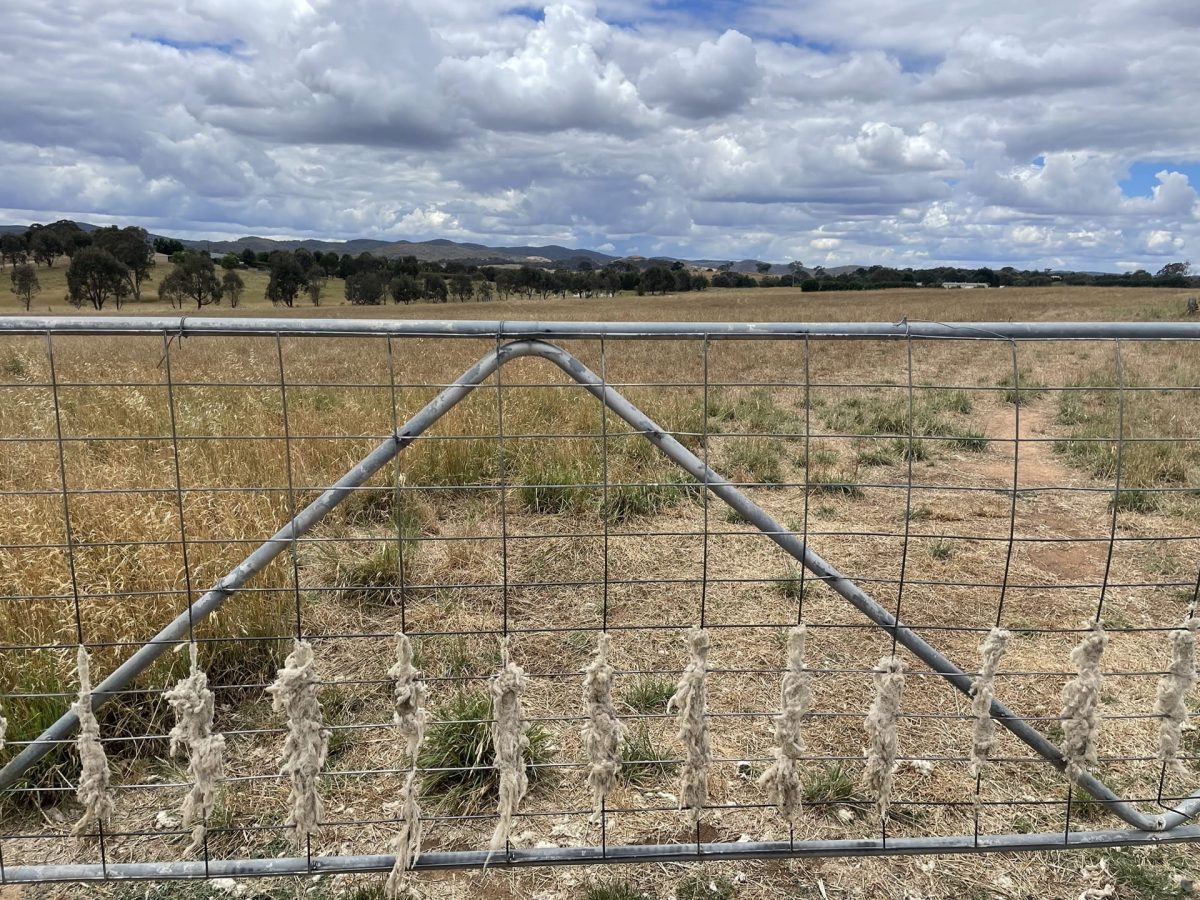
Sheep caught themselves on a farm fence while in their paddock. Photo: Sally Hopman.
In his view, the technology may be useful for up to “80 per cent” of farms and potentially see farmers able to take down internal fencing on their property as they grow in confidence around its use.
“Some of the animal welfare groups have jumped up and down about it. At the same time, the best animal welfare people are the farmers themselves,” he says.
“They care for their animals … they want healthy, robust animals that have a good life.”
Mr Holm says that while it will take some time for the animals to understand what the shock means (and follow it), they may even help each other stay together.
“If one of them does lose one of the collars – if it comes off their neck or stops working for whatever reason – they might start to wander off,” he says.
“But because cows are a herd animal, they’ll see their mates wander off [in a different direction] and go, ‘Hang on, I’m being left behind.'”
Mr Holm believes the technology comes with flow-on environmental benefits.
“You can set it up so that they don’t overgraze an area, or they don’t go into an area,” he says.
“For example, if there’s a particular species of animal that lives in an area at certain times of a year, you may let the animals in there and let the fence down, so to speak, [at other times].”
It can also be set to keep animals away from floodwater or damaged fences, he says.