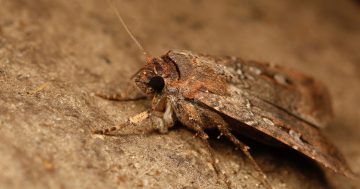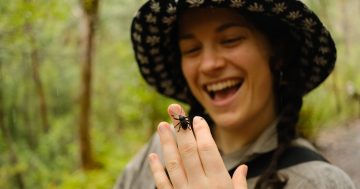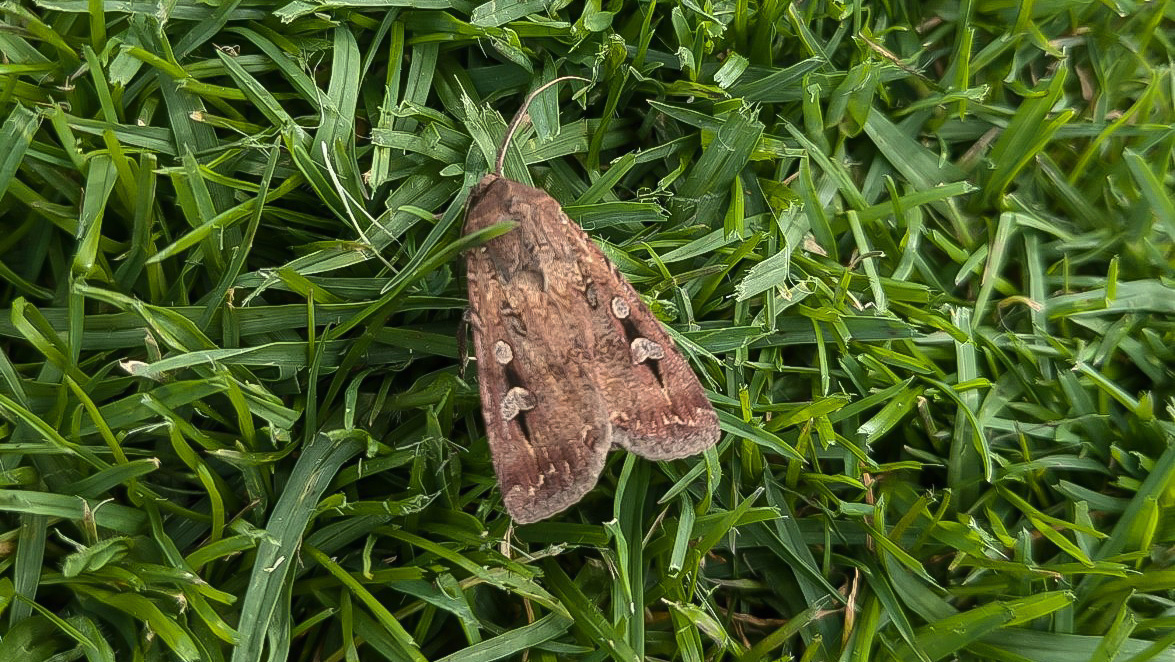
Bogong moths will begin their autumn migration in coming weeks and citizen scientists can help track their movements. Photo: NPWS.
Next week, the high country of Kosciuszko National Park (KNP) will become the starting line for a remarkable journey.
Starting Monday (16 February), a team of scientists from Invertebrates Australia will embark on a 10-day mission to tag 10,000 bogong moths, as part of an unprecedented effort to unravel the secrets of one of Australia’s most mysterious autumn migrations.
But it’s not just the scientists doing the work – citizen scientists are also being asked to step up for the project, and head outside.
Across south-eastern Australia, volunteers are also being asked to keep watch from their backyards, gardens, verandas and paddocks with every sighting of a tagged moth helping to map the routes these insects take from the mountains to their lowland breeding grounds – locations that, astonishingly, remain largely unknown.
Managing Director of Invertebrates Australia, Associate Professor Kate Umbers, said the project was designed to answer long-standing questions about bogong moth migration patterns.
“We don’t yet know which direction they leave the mountains, how far they travel or exactly where they breed,” she said.
“Now, because we’ll be recording the start location of every tagged moth, each sighting from that point in the mountains provides a crucial piece of the migration puzzle to help us gain a better understanding of their migration routes and timing.”
The tagging itself is delicate work.
“Moths are briefly sedated with CO₂, a few wing scales are removed, and a tiny paper tag with a unique code is carefully glued to the wing and coated in beeswax to protect it from moisture,” Ms Umbers said.
She was keen to stress that the tags were feather-light and did not affect the insects’ flight.
“Once released at night, they behave just as they would in the wild,” she said.
It’s then the citizen scientists – ‘Bogong Buddies’ – play a vital role.
Volunteers for the bogong moth project would ideally be spread out across a broad arc of south-eastern Australia, from the high country of the Snowy Mountains down into Victoria’s alpine foothills and across the surrounding plains and towns.
This translates to towns, cities, villages and farms across that region from Jindabyne, Cooma, Bombala, Dalgety and Nimmitabel in the Snowy Monaro across to Tumut, Tumbarumba, Adelong and Wagga Wagga and then north-west to Gundagai, Crookwell, Yass, Bungendore, Murrumbateman and Canberra.
Across the border in Victoria, volunteers from Omeo, Mansfield, Myrtleford, Beechworth, Wodonga, Bairnsdale and Corryong could help track moths as they move through the alpine and foothill regions.
“Even if you’re outside these towns, you can still take part,” Ms Umbers said. “Any observation helps us build a clearer picture of their autumn movements.”
This range of locations ensures the project can capture sightings from the moths’ mountainous release points all the way down into the lowland areas where they eventually breed.
The best way to keep watch is at your verandah light in the evening or with a ‘light trap’ which is simply a light that attracts insects attached to a container in which bugs fall and stay cosy until the morning when you can check your container. A torch will also attract the moths.
Then, all you need to do is snap a photo of the tag – or simply note the tag number – and report it using the link below.
The bogong moth migration is extraordinary.
They spend the winter as larvae (caterpillars) and emerge as adult moths around mid-August.
Once the weather becomes too hot, they begin their journey to the alps, usually from early to mid-September in most regions of south-eastern Australia.
Moths continue to arrive in the alps until mid-summer, moving among over-summering (aestivation) sites throughout the season.
The timing of their return journey to the lowlands is less clear, Ms Umbers said. Some moths begin leaving in early autumn, with others departing gradually until winter, making the autumn migration especially difficult to track.
Bogong moths are more than a curiosity. Their larvae fertilise lowland ecosystems, and their arrival in the alpine regions provides crucial food for species such as the mountain pygmy-possum.
Declines in recent years, exacerbated by climate change and rising temperatures, earned them a spot on the endangered species list.
While populations appear to have rebounded, Umbers said, the threats remain, and ultimately, the Kosciuszko tagging project seeks to do more than track moths.
By understanding how they navigate, when they move, and where they breed, scientists hope to inform conservation efforts and ensure these iconic journeys continue.
“Bogong moths are a symbol of the alpine ecosystem,” Ms Umbers said. “If this project succeeds, we can help protect not only the moths themselves, but the species and habitats that depend on them.”
Anyone interested in participating can register through Invertebrates Australia’s Bogong Watch program.