2 February 2026

South Coast historian's new book tells tales of cats in Australia

| By Claire Sams
Join the conversation
6
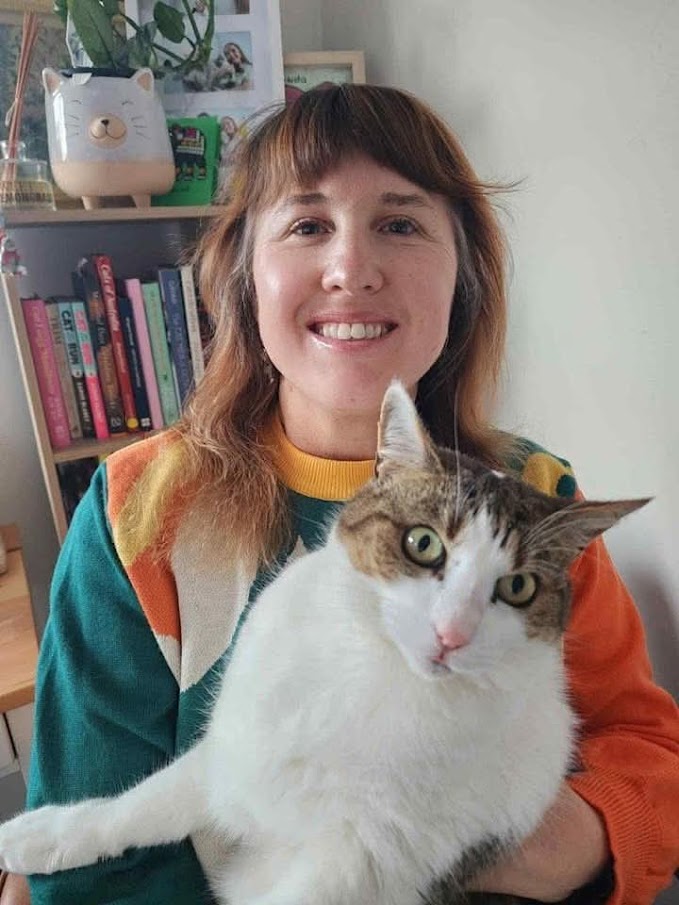
A smiling woman with brown hair holding her tabby cat

Doctor Jodie Stewart just might be Australia’s only cat historian – and assistant Poppy keeps a close eye on her work. Photo: Jodie Stewart.

Doctor Jodie Stewart is the first to admit humans and cats have a “very complicated relationship”.

It’s also one that the Merimbula local – and cat historian – knows more about than most, after spending several years studying humans’ connections with our feline friends.

But her field of study came about essentially by accident.

“I acquired a cat via my daughter, who brought in a rescue tabby to our home. As some children often do, she left this poor, skinny tabby in my hands to care for and we quickly bonded,” she said.

“She was the most loving, adorable, sentient being I’d ever encountered – before this, I’d always considered myself a dog person.”

The arrival of the unexpected furry friend kickstarted the historian’s investigation into how – and why – the mammal became so loved.

In search of answers, she delved into historical records, newspaper clippings and other sources.

“I tended to come across a lot on feral cats, environmental damage – but there wasn’t a lot about cat companionship,” she said of her research.

“I thought there’s a real opportunity here to start a conversation around our history of cat companionship … beyond the quote-unquote ‘feral cat issue.'”

The result is her upcoming book, Cats of Australia, set for release through HarperCollins later this year.

READ ALSO Celebrating 20 years of Bermagui’s sculpture exhibitions

Dr Stewart said that while there were plenty of explicit mentions of cats in historical documents, others were implied or made in passing.

“They’re not coming up to you and shaking your hand.

“You’ve got to, you’ve got to search for them. … The more layers you peel back, cats just tend to appear everywhere.”

She’s found that cats have long been part of our lives, but their stories often go untold.

“They were in the trenches with us in World War I and World War II,” she said.

“They were eating ice creams at Balmoral Beach, they were climbing all over the east tower of the Sydney Harbour Bridge.”

And while most cats prefer to keep their paws dry (and on land), there are cases of some seafaring cats.

She found reports of owners hand feeding their seasick cats on boat journeys. And Matthew Flinders and his cat Trim circumnavigated Australia in 1801.
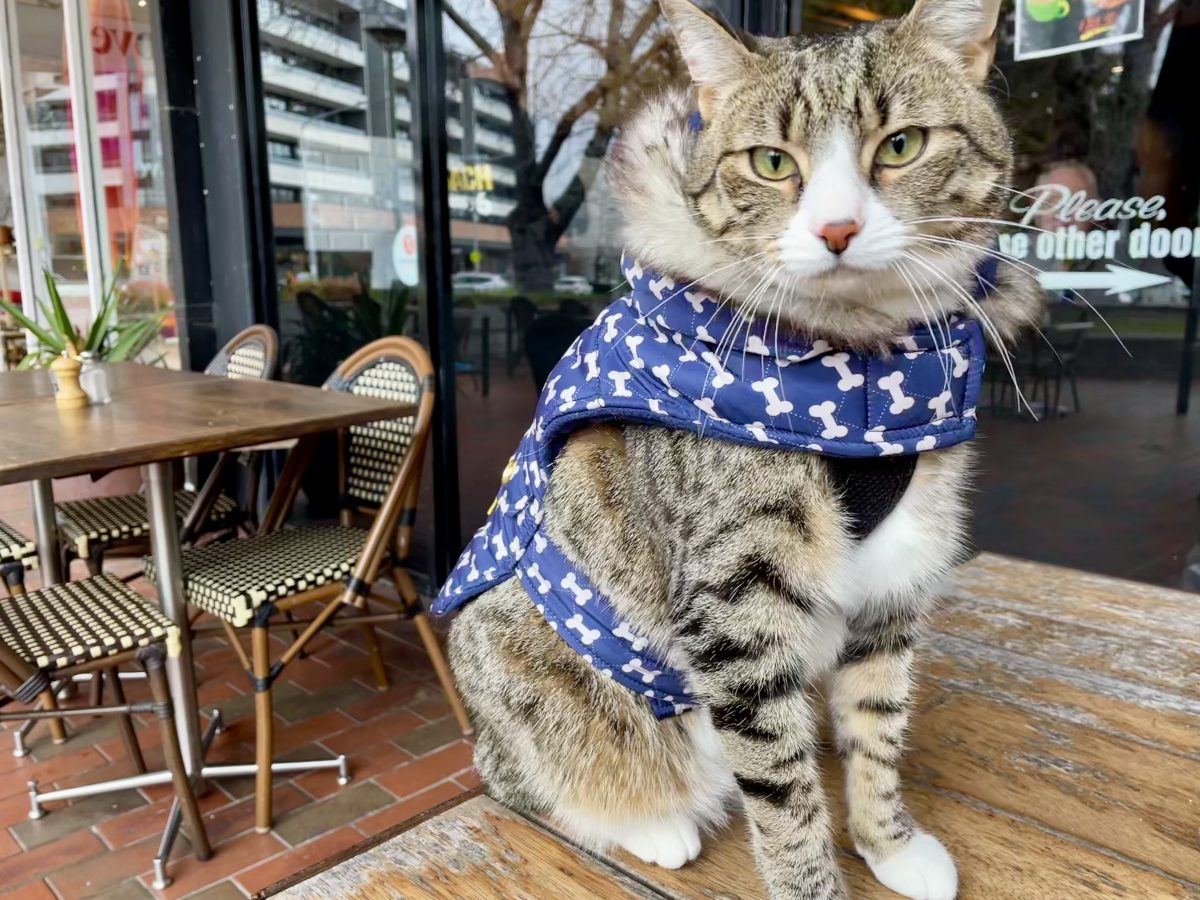
A cat wearing a harness and sitting on a cafe table

The tale of Queanbeyan assistance cat Bandit is one of those found in the new book. Photo: Lizzie Waymouth.

The book also touches on our modern idea of mostly seeing cats as companions, which Doctor Stewart said occurred in the first half of the 20th century.

For this section of the book, she interviewed the owner of Bandit, the first registered assistance cat in Canberra.

“That was a fascinating insight into the support that cats can provide during disaster, and also elevating and highlighting the importance of cats as support animals, as well,” she said.

“We often equate dogs with support and assistance, but cats can also play a really important role in providing that.”

Other interviews were also conducted with a South Coast family about their relationship with cats.

READ ALSO Eurobodalla’s botanic garden celebrates 40th – with some help from Friends

Dr Stewart said the “centrifugal force” behind her book was revealing the unique roles cats had played.

“I didn’t want to rehash a story about quote-unquote ‘feral cats’ … I wanted to tell a different story about cats in Australia.

“I think that’s really, really important, because whether you like them or not, they’re here, and they have had a profound effect on us.”

Cats of Australia will be released in June and is available for pre-order.

Free, trusted local news delivered direct to your inbox.

Keep up-to-date with what's happening around the Capital region by signing up for our free daily newsletter.
Loading
By submitting your email address you are agreeing to Region Group's terms and conditions and privacy policy.

Join the conversation

6
All Comments
  • All Comments
  • Website Comments
LatestOldest

Lovely article. Sad the usual local old cat hater lady has been so negative.

Philip Creagh6:09 pm 04 Feb 26

You are completely wrong Patricia Gardiner. I have been a Veterinarian in Canberra and down here for more than 50 years. I have seen the bond that owners have with their pet cats and the demonisation of cats by ignorant people.

Feral cats are a huge problem, they first appeared in Australia in 1788 and have wreaked havoc through the Australian landscape.. However to say so vehemently that cats have no place in society only makes folks who appreciate cats feel guilty and victimised. Modern day cat ownership stresses desexing, keeping cats inside at night and keeping their front claws clipped. This is far and away the best remedy to prevent damage by owned cats.

In my experience owned, well looked after cats were a pleasure to own and to treat. They are a HUGE comfort to older people who may be living on their own. I have seen first hand the saddness that owners had when they moved into a retirement home that didn’t allow cats. Several retirement homes in Canberra did allow cats and the mental health of the owners was, to my eyes, noticeably better.

Of course as a Veterinarian I HAVE seen the damage that feral cats do to native wildlife, I certainly treated and had to euthanise a lot of them over the years.

patricia gardiner5:38 pm 05 Feb 26

You completely missed the point of my comment, Phillip Creagh. Of course cat owners get comfort from their moggies, otherwise they wouldn’t have them.
However, not all cat owners do the right thing by confining their cats in order to protect the native wildlife, even grannies can be guilty of such negligence.
As you are well aware, unconfined cats roam, kill and breed – and what happens to the kittens? Usually they are dumped outside the town perimeter.
My point was and is, you cannot dissociate cat companionship from cat predation – cute furry moggies also kill, even if their claws are clipped.
It is naive to think that a pampered domestic cat will not kill if given the opportunity.
The instinct to hunt is deeply ingrained.
This inherent hunting drive persists even when they are regularly fed.

Philip Creagh11:58 am 06 Feb 26

So you are saying Patrica Gardiner that because some cat owners do the wrong thing (agreed) then ALL cat owners should be villified ?

The point of my comment is that Feral cats are well entrenched in Australia. By my reading of the studies probably 95% of the land mass. My other point is that responsibly looked after domesticated cats contribute little to the wildlife destruction. On our small farm here on the outskirts of Narooma we have a feral cat that I have nearly ‘removed’ a couple of times – they are smart. Our domesticated cat of 15 years life (now deceased) hardly ever touched a native animal.

Villifying the vast majority of cat owners for the misconduct of a few is similar to the blaming of responsible firearm owners for the actions of a few. It was a good , but terrible, scapegoat for Labor to use.

patricia gardiner7:12 pm 06 Feb 26

No! Of course responsible cat owners should not be vilified, but they should be aware of their responsibilities to confine their cats and be aware of the potential destruction they cause.
Saying that ones unconfined moggie has never harmed a native animal is simply rubbish.
Kangaroo Island is the best example I have seen of an overpopulation of cats. They are the most common road kill animal seen and businesses actually sell their skins or attire made from their skins.
Am attending an LLS cat trapping/eradication presentation tomorrow in the Deua Valley.

patricia gardiner6:56 pm 03 Feb 26

It is the ‘human connection with cats’ and ‘cat companionship’ that has created the feral population now destroying our small native fauna.
Therefore, you cannot isolate the feral issue from the ‘cute little furry moggy’ syndrome that caused the problem in the first place..
Anyone who has discovered the mutilated carcass of a feather tailed glider or a Gouldian Finch, for example, could never consider a cat as a “support animal.”
The only “unique role” of cats is one of death, destruction and environmental slaughter.

Daily Digest

Do you like to know what’s happening around your region? Every day the About Regional team packages up our most popular stories and sends them straight to your inbox for free. Sign-up now for trusted local news that will never be behind a paywall.

By submitting your email address you are agreeing to Region Group's terms and conditions and privacy policy.