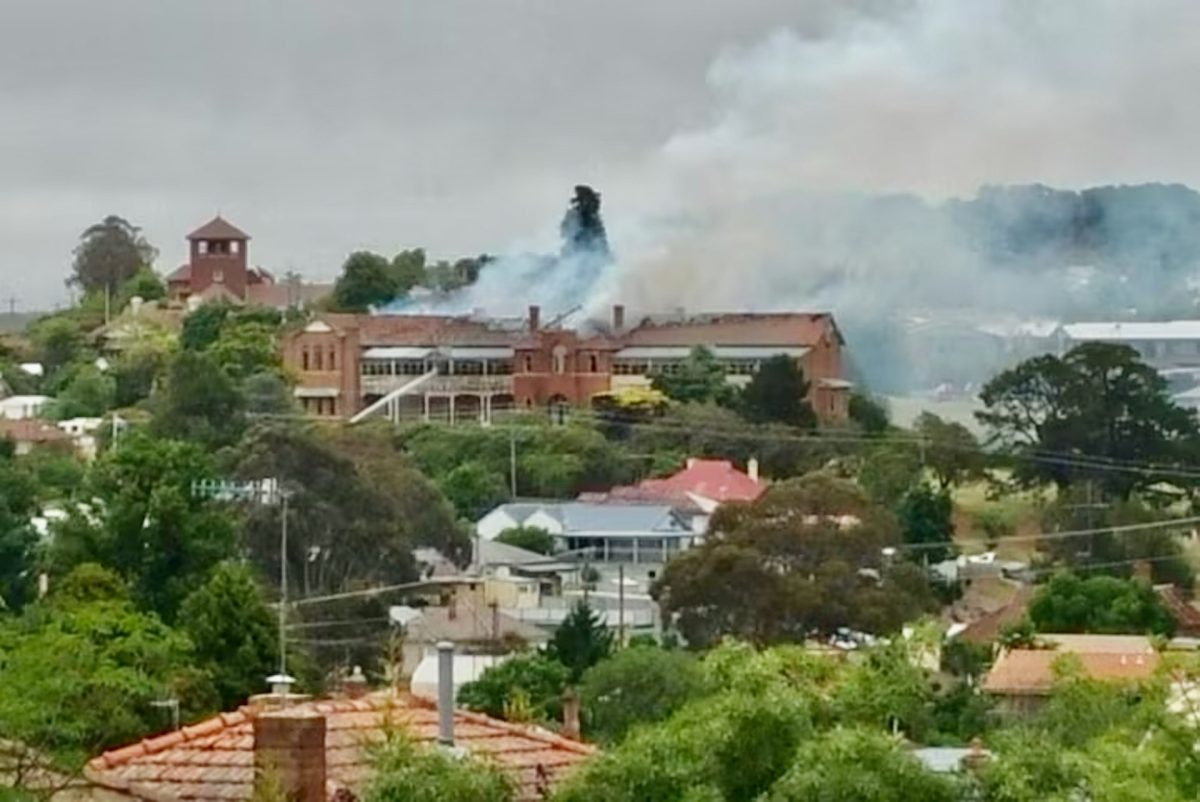
One of three separate fires keeps the slow and sure destruction of St John’s Orphanage on track in November 2015 in Goulburn. Photo: NSW Fire and Rescue.
Goulburn has a dire shortage of one and two-bedroom dwellings, a surplus of vacant buildings and a history of fires repeatedly destroying its built heritage.
The strengths and weaknesses of the city’s housing market are worth reviewing as the NSW Government applies planning levers to bring more housing stock into the market and drive down the cost of a home.
Developers are responding to the demand for more suitable accommodation, targeting residential streets in Goulburn, rather than the vacant buildings with proposals. If some of the developments are allowed, compromises will be needed on the heritage and charm of neighbourhoods.
But why should there be compromises when so much other land is sitting idle, ripe for redevelopment? There must be a better way forward.
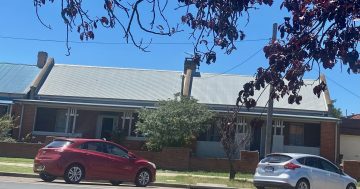
The point was well made in a submission earlier this year by Goulburn resident Scott Keys who is among many people opposing the redevelopment of two Victorian cottages at 61-63 Bradley Street, Goulburn, into 27 single-bedroom ‘co-living’ units.
His submission says this development is unnecessary in this location, and many other more suitable locations are available for such an overbearing development of this nature.
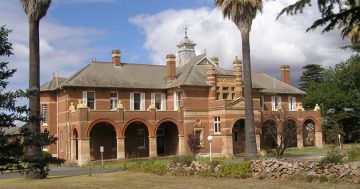
He asks if planners have tried to persuade developers to reuse existing empty structures, including Kenmore Hospital’s nurses home, Gill Memorial Home and St John’s Hospital.
Without being repurposed, empty buildings face a bleak future. Too often, fires have determined their fate. Three separate fires ended up levelling the historic St John’s Orphanage. The latest outbreak happened in October in one of Kenmore Hospital’s old wards, ultimately destroying it.
Having found significant damage and a deplorable lack of care across many of the buildings at Kenmore, Heritage NSW ordered the site’s owner to take immediate measures to redress disrepair or risk to a (heritage) listed place.
In July Kenmore’s owners lodged a development application for a 20-lot subdivision facing Taralga Road in Goulburn’s north, raising hopes that finally something was happening to redevelop the valuable site.
But that DA was withdrawn in September because of several unresolved issues, the most significant being the Heritage Council of NSW refusal to issue its general terms of approval (GTAs). The stalemate continues.
The Gill Memorial Home has sat vacant for years. The Salvation Army says it will develop the property to meet the needs of the community and the ongoing contribution of the Goulburn Salvos to the lives of the most vulnerable among us.
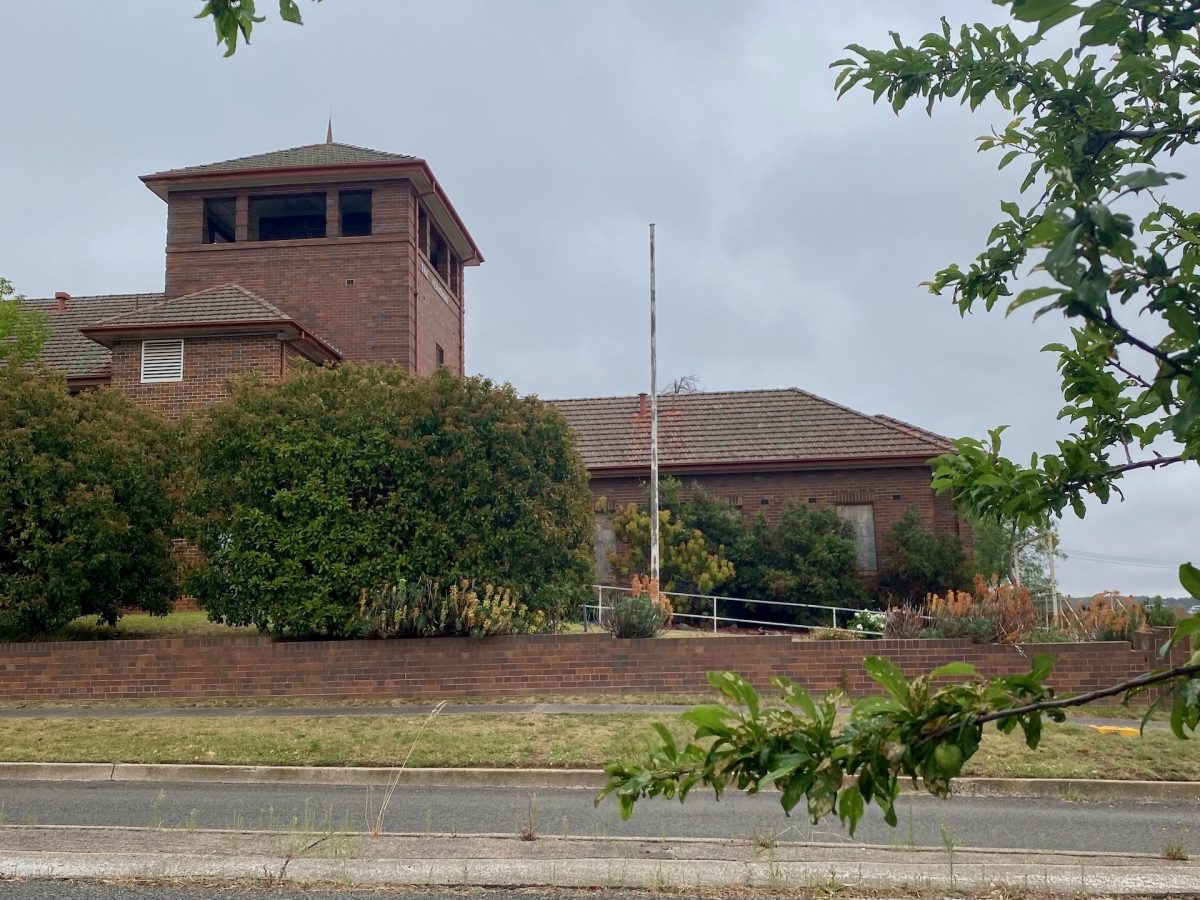
The Gill Memorial Home stands in a prime residential position overlooking Goulburn’s central business district. Photo: John Thistleton.
But the Salvos are waiting for financial incentives to do something. A spokesman said: “The scope of what’s possible is heavily dependent on the social and community aspects gaining appropriate support from government – we are pursuing co-funding opportunities as they become available.”
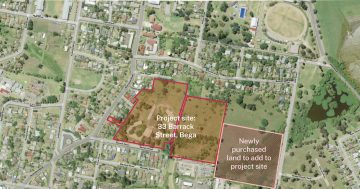
Another prime site that could provide residential accommodation, or meet the big demand for more childcare is the former Conolly’s Mill site at 285 Sloane Street in the central business district.
A Sydney developer with a track record of mixed-use projects bought the large site opposite Goulburn Square shopping centre in March 2024. The property has been bought and sold several times in recent years for projects including a car museum, motel and childcare centre.
So far no development application has been forthcoming. Council officers have met with representatives of the owner several times exploring opportunities for the site.
Many other properties are standing unoccupied. The Catholic Presbytery in Verner Street is empty and the Police Station in Sloane Street will become vacant once the new station is completed on McDermott Drive, near the NSW Police Academy.
In the meantime, developers continue picking over prime sites in Goulburn’s residential area, overlooking opportunities in empty buildings.
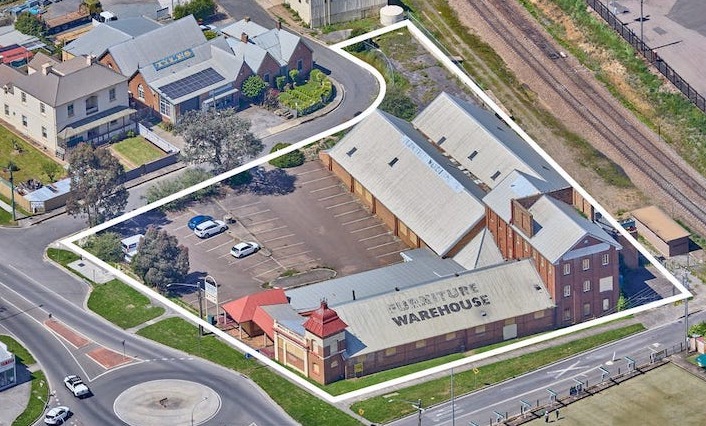
An aerial view of the huge former Conolly’s Mill, which has been purchased by a Sydney developer. Photo: CBRE Real Estate.
How much easier would it be to achieve the aims of developers and government to increase housing stock by redeveloping these old properties, rather than going through the angst and delays and objections that inevitably arise from shaking up residential areas with ill-suited proposals for multi-level accommodation?
Too costly, you might say. But is it? When developers encounter delays and challenges their costs rise in interest payments and redrawing their plans. If the project ends up in the Land and Environment Court both developers and objectors, or the council representing them, face enormous legal costs. And the price of homes continues to rise, due to a shortage of homes.
There has to be a better way.