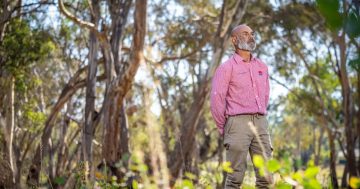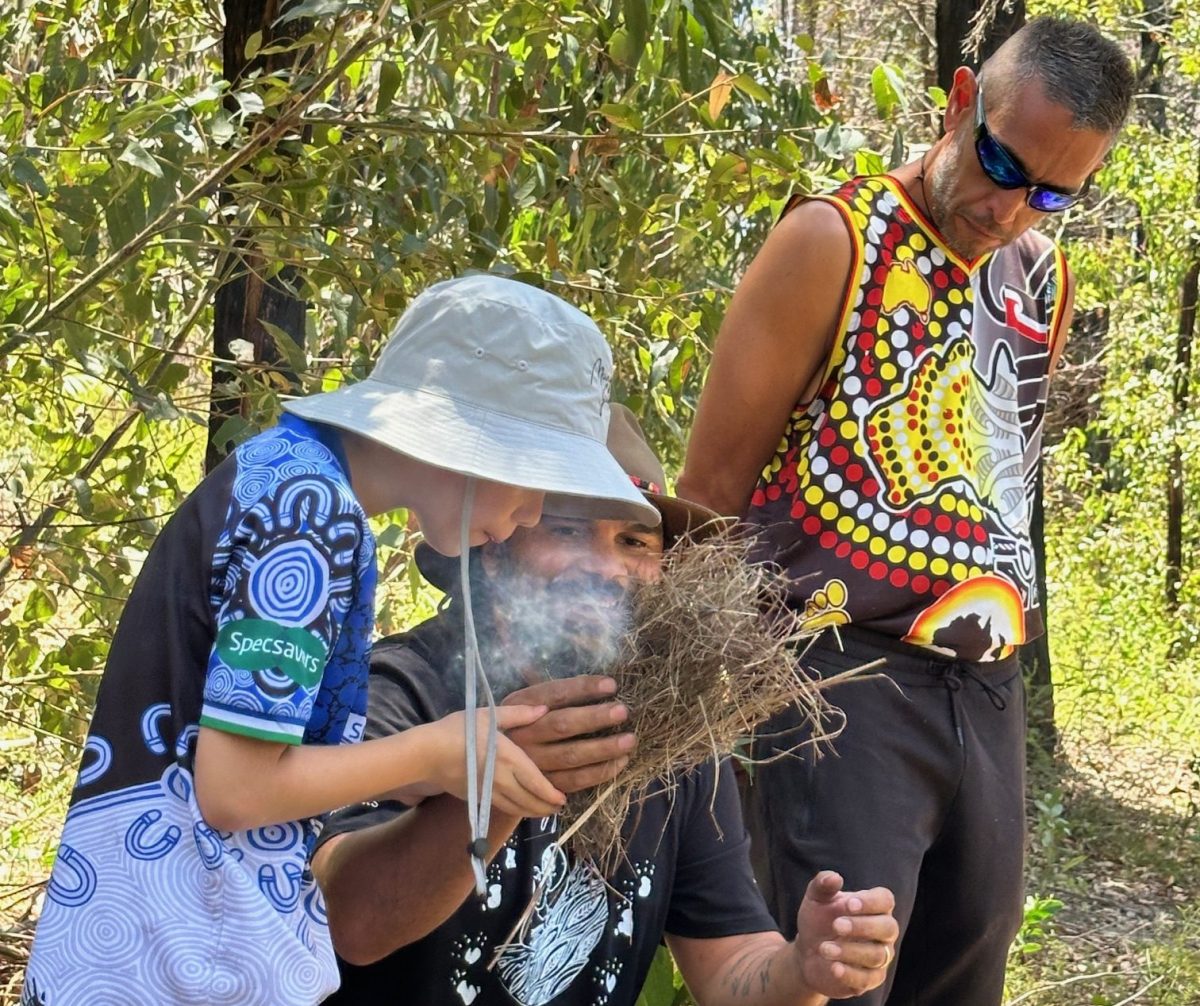
Darcy Dingle, with Koorin Campbell and Peter Townsend of Firesticks. Photo: Firesticks.
In the first week of December, around 30 people gathered for a cultural burn to support the healing of koala habitat that was damaged by the October 2023 Coolagolite Road bushfire.
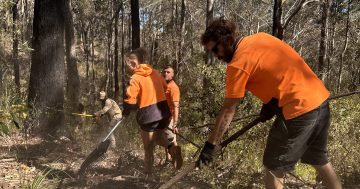
Over four days they completed a preparatory cultural burn to get rid of some invasive species. Others walked around the area counting koalas, collecting koala scat and surveying the area at night using drones with heat sensors and spotlights.
Drone surveys over four days found 22 koalas, including four joeys, in the area.
The cultural burn was on private land near the home of one of the last remaining coastal koala populations between the Illawarra and Victoria.
The private property has a conservation agreement with the NSW Government’s Biodiversity Conservation Trust.
The burn was led by national Indigenous network Firesticks, which brought cultural fire practitioners from Queensland, Victoria, Western NSW, Western Sydney and the NSW Far South Coast.
Joining them were rangers from the Illawarra, Eden and Merrimans Local Aboriginal Land councils. There were also people from World Wildlife Fund (WWF)-Australia, people who are delivering the government’s NSW Koala Strategy with Firesticks, and volunteers from the Far South Coast Koala Action Network and Landcare.
Peter Townsend is a Wiradjuri, Wayilwan and Gamilaraay man from western NSW and one of Firesticks’ lead fire practitioners. He joined the Firesticks network 10 years ago, having acquired his plant and Country knowledge and completed a land management and conservation diploma.
He said the property owner had given them an area of around two hectares as practice for a restoration area. The findings and results will become a case study. “When you burn for koalas, all the other marsupials benefit,” he said.

Doing the preparatory cultural burn. Photo: Firesticks.
The preparation included removing the proliferation of wattles plus another native species that should have been growing closer to the property’s wetland.
Durramah Parsons-Campbell, who has been with Firesticks for two years, said the wattles dried the soil. “They are little straws sucking up that water,” he said.
Mr Townsend said the invasive species were creating a monoculture and fuel load. “There is no biodiversity.”
The burn is slow and gentle, leaving the soil cool so that nutrients aren’t destroyed, and seeds aren’t burnt.
Gebro Buli, Firesticks’ community network lead who had travelled from Queensland, said it was very different from the hazard reduction burns that western agencies did.
“You would not be standing here, and I would not have my three-year-old around here if it was a hazard reduction,” Ms Buli said. “It is very strategic because they can read where the fire will go.”
She said the property owner had been a supporter of Firesticks since it received grant funding after the Black Summer bushfires. Firesticks ran training and mentoring programs across some key regions affected by the bushfires.
“She has been patiently waiting for her opportunity to become part of it,” Ms Buli said.
Jennifer Jones, a member of the Far South Coast Koala Action Network, said she would not have missed the cultural burn for anything, describing it as “so profound”.
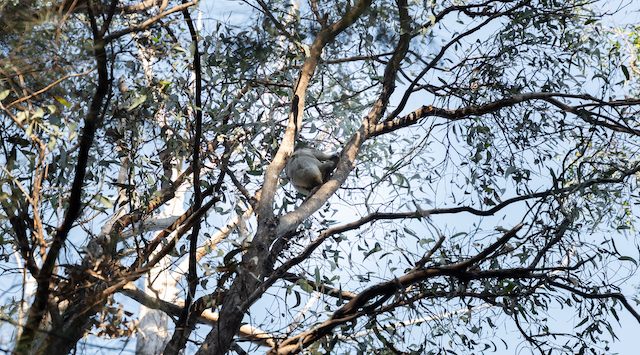
One of the 22 koalas. Photo: Bella Laifoo.
Mr Townsend said the area was stringybark and koala country, similar to the Central West where he comes from.
The rock in both areas is shale and the soil is loamy. The cooler climate around Bermagui meant they could do the burn a few weeks later than they could in the Central West.
He said the cool temperature of the burn cleaned the carbon off the forest floor. “It is relieving suppression so good plants can come up,” he said. “It’s like taking the jacket off.
“It is getting the invasive species out first and when it is the right time, we will come back and burn for Country.”
WWF-Australia is one of the funding partners of Cultural Fire for Koala Recovery.
Djarra Delaney is WWF-Australia’s Indigenous land management specialist. He said the Cultural Fire for Koala Recovery project was born out of need after the bushfires.
“A big part of that is returning degraded ecosystems back to health, monitoring koala populations after the burn and looking at their habitat,” Mr Delaney said. “These are important feed trees.”
Mr Townsend said the cultural burn was a spiritual experience.
“It is supporting Country to heal and getting it back to better health,” he said. “Your mind is always on Country and what other practices we can use to help.”