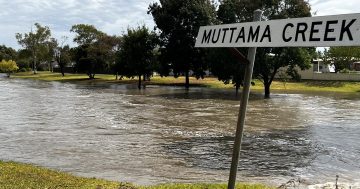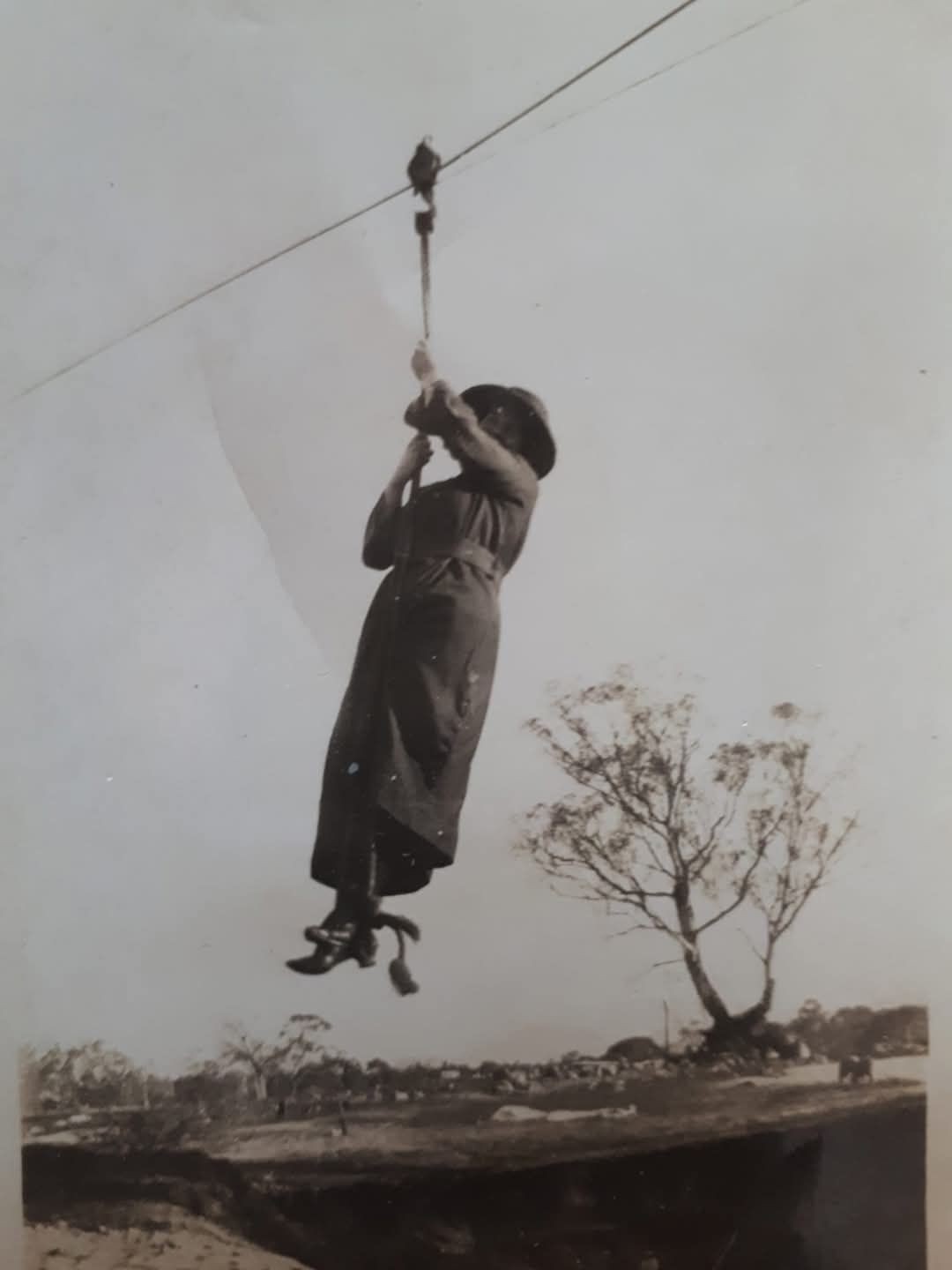
Without the Warri Bridge, residents of Braidwood got creative with their transportation. Photo: McGrath Family Photo Album.
The Nomchong family of Braidwood are cemented in history for their industrious and entrepreneurial success in the region.
Having immigrated to the goldfields around Braidwood in the 1860s, Mr Shong Foon Nomchong was soon followed by his brother Mr Chee Dok Nomchong in 1877 and together they seemingly had a finger in every pie, from a successful general store to farming, trucking and entertainment.
When the one-in-a-hundred year flood hit the Braidwood district in May 1925, the Nomchongs took an ingenious course of action to ensure the wheels of industry kept turning.
The flood itself was epic. Reports state the region was pounded with 635 millimetres of rain in a week and a staggering 1118 millimetres in a month, an amount of rain only rivalled in 1860 when the region suffered its worst ever recorded flood.
To put that into context, that’s the entire year’s average annual rainfall coming down in a week and close to two years’ average rainfall within the month.
The massive amount of rainfall, as you can imagine, caused the Shoalhaven to swell, swallowing up all in its path.
“The whole surrounding area was like a sea,” reported the Goulburn Evening Penny Post.
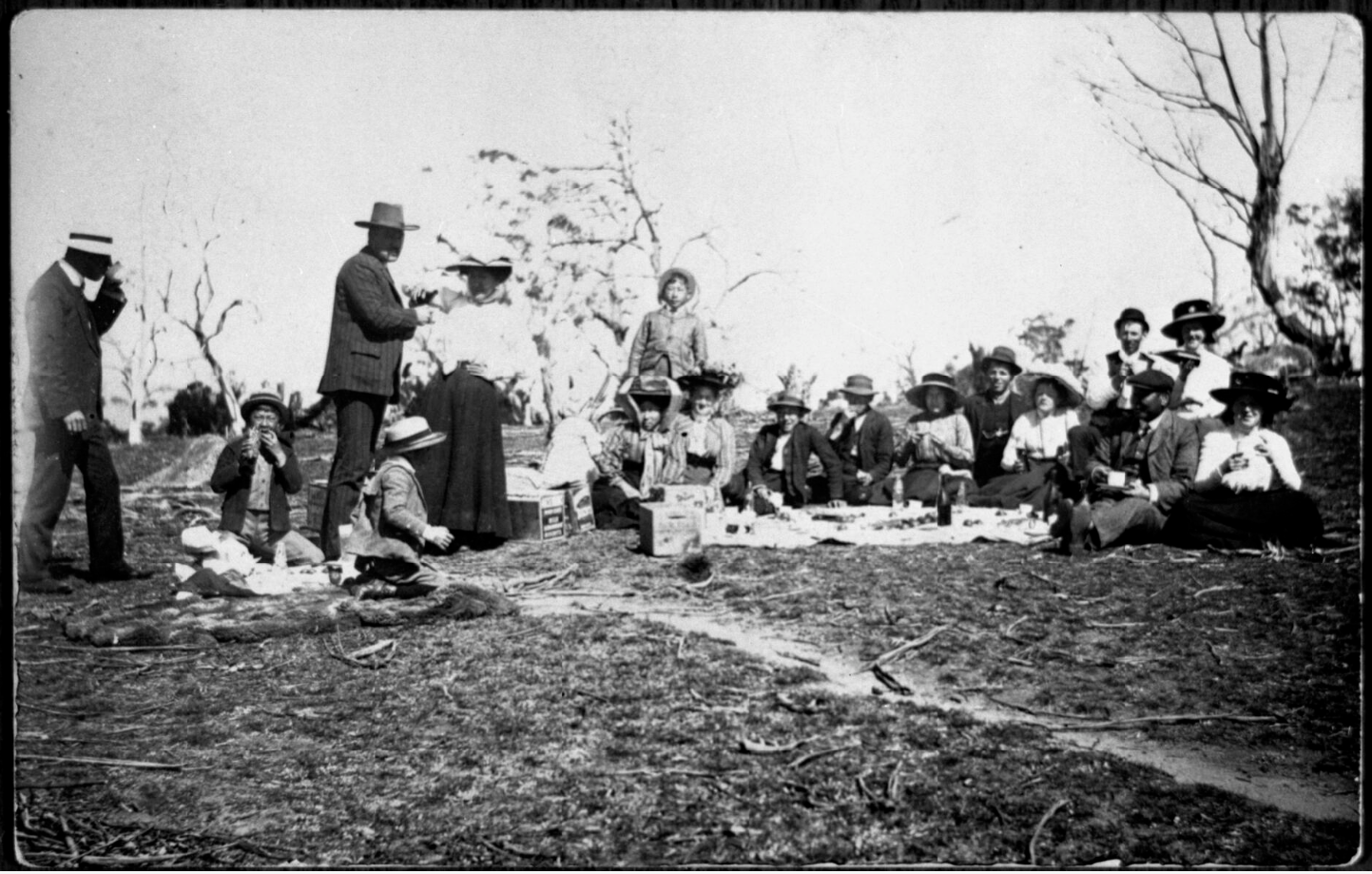
Chee Dok Nomchong is pictured here second from the right on a family picnic. Photo: National Library of Australia.
For a week reports of losses flooded in. Livestock, houses, livelihoods, it was all washed downstream with the flow of the swollen river.
At Jinglemoney, Mr J Burke’s cultivation land was washed clean away, including four tonnes of potatoes and half a tonne of turnips. A Mr Larbert was said to have lost 260 head of sheep, and properties all around the region from Nerriga to Araluan and down to Moruya were inundated or washed away.
The town of Braidwood was largely unaffected due to its position on higher ground, but the roads connecting Braidwood to the rest of the region were cut, including the main road to Bungendore and Goulburn, where the Warri Bridge was partially swept away.
The bridge itself had been constructed in 1875 to withstand a deluge of the Shoalhaven, and its position, 10 metres above the flow of the river and 1.5 metres clear of the highest flood markers, was designed to keep it clear of damage, but it wasn’t enough when pitted against the biggest flood the region saw in the 20th century.
“The river was running over the Warri Bridge, and Mr Grigg’s residence has disappeared from the landscape. Huge logs were striking against the bridge with terrific force,” reported the Goulburn Evening Penny Post.
When the river did recede, portions of the bridge had been washed away, leaving it impassable by traffic and foot.
It was reported that the repairs were slow to get underway, and residents were starting to take risks to pass over the damaged bridge.
“The damage at Warri Bridge is the chief concern to the residents of Braidwood. The service and mail cars resumed running on Friday, but the mail and the passengers had to be taken up the side of the bridge at some risk.”
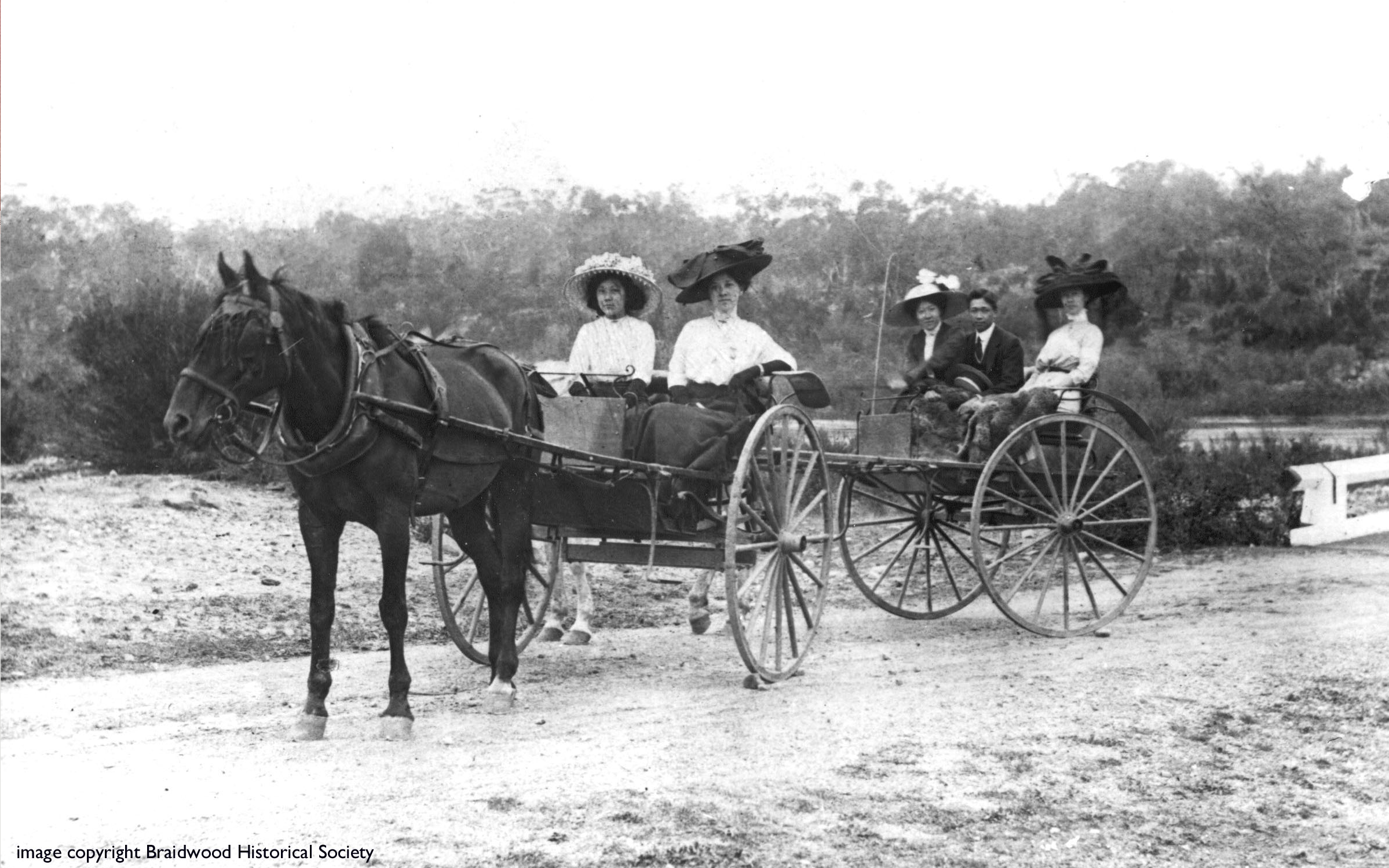
Maud and Dolly Nomchong on sulkies on the nearby Bombay Bridge which was also flooded in 1925. Photo: Braidwood Historical Society.
With a livelihood that was dependent on the movement of goods in and out of Braidwood, this situation wasn’t going to suit Braidwood’s most prolific traders, the Nomchong Family.
To ensure they could still access supplies for their businesses, they took it upon themselves to erect a flying fox across the chasm above the river.
The Goulburn Evening Penny Post referred to the caper as protecting the public interests.
“It was left to private enterprise to make the necessary provision to safeguard the interests of the public. Nomchong Bros. constructed the flying fox to transmit flour and other goods from the bridge to their lorries.”
Early reports spoke of the flying fox being used for the transportation of goods, but later reports and photographic evidence show it was also used by people. The inventive mode of transport was possibly safer than scaling and traversing the damaged bridge itself, and even women in their long dresses and hats made their way across the river on the contraption.
The bridge repairs took around three weeks, and presumably once complete, the flying fox was decommissioned. The photo included in this story is still shared among Braidwood-based history and community groups, a tiny remnant of a historical flood and the family who wouldn’t be stopped by it.
Repairs to roads and bridges across the region were still taking place in December that year, but you can rest assured, the Nomchong family never slowed down, securing their place in history and with a legacy in Braidwood that is still tangible.