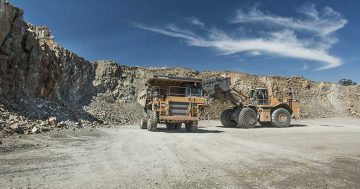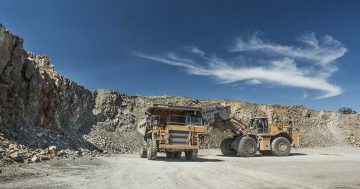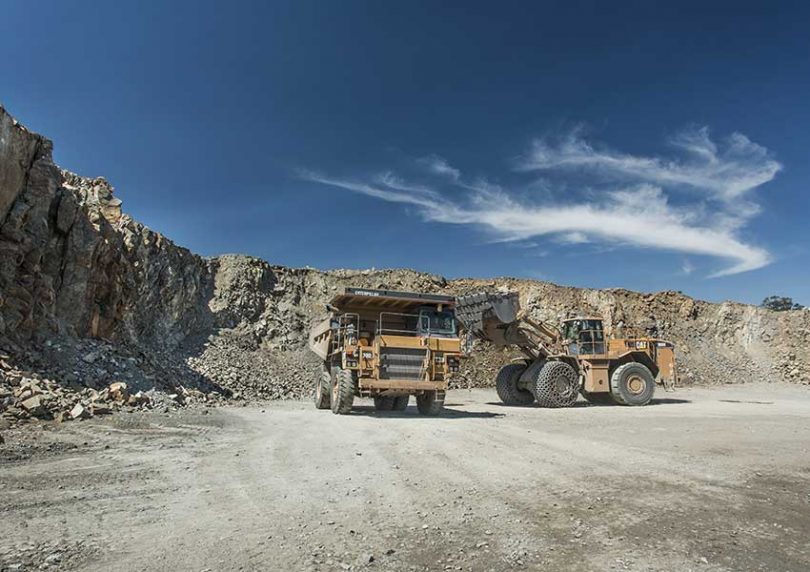
Braidwood Sand and Gravel, in south-east NSW, is looking to expand. Photo: Gunlake Quarry.
A south-east quarry is looking to expand its capacity.
A development application (DA) lodged with Queanbeyan-Palerang Regional Council (QPRC) seeks permission to expand its sand extraction area to extract an estimated extra 1.23 million tonnes.
The plans have been lodged on behalf of Braidwood Sand and Gravel, which operates in Larbert, about 14 kilometres north-west of Braidwood.
DA documents state the company also holds a deed of license for the extraction of sand and gravel from the Larbert site.
According to an environmental report, the proposed expansion would see it extract up to 200,000 tonnes per annum.
“The existing sand extraction operations [supply] the regional sand market as well as a recently opened concrete batching plant, owned by the same family, situated at No. 29 Industrial Close, Yass.”
The council’s website lists the DA with an estimated cost of $1,075,494.
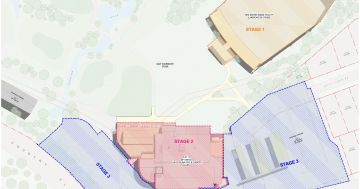
Documents lodged with the DA state that the expanded extraction operations would take place across two lots – 332 and 333 – which are currently used for cattle grazing.
The total new quarry pit area would come in at about 18.1 hectares (excluding the existing approved sand pit).
The works would be staged, and occur in an anti-clockwise direction around the site with progressive rehabilitation work during extraction.
“The rate of sand extraction from the site will vary from day to day, week to week, depending on market demand,” according to the documents.
“The average rate of extraction would be approximately 400 tonnes per day, and at a maximum of 50 loaded trucks per day carrying loads of 32 tonnes would mean that up to 1600 tonnes of sand product could conceivably be exported from the site on any one day.”
No extraction is proposed in a third lot – 331 – which has an existing access route to Larbert Road.
The proposal could see the quarry extract up to 200,000 tonnes per year, according to the documents. Photo: Kazuri Photography.
Among the proposed impact mitigation measures are plans for some work to be adapted or stopped during adverse weather (to avoid the spread of dust), progressive rehabilitation works as the sand is extracted and a 30 km/h speed limit for haulage vehicles within the site.
The DA documents also state that the quarry’s location (in a sparsely populated rural area) means that neighbouring properties are unlikely to be affected by its noise.
Sand extraction and processing would only be done between the updated hours of 6 am and 6 pm (Monday to Friday), or 7 am to 2 pm (Saturdays).
However, the decision to close on Sundays and public holidays would remain in force.
A traffic report notes the applicant is proposing a maximum upper limit of about 50 loaded trucks leaving the quarry each day.
This report also describes Larbert Road, which has direct access to the quarry site, as having a low traffic volume.
“The southern section of Larbert Road is sealed (up to the quarry access) then unsealed to the end in the north.
“The sealed formation width of Larbert Road varies in width between 5.5 and 6.5 m, with minimal crushed gravel shoulders on both sides.”
After leaving the quarry, the trucks would follow Larbert Road for about six kilometres before turning onto the Kings Highway.
“Based on the above SIDRA modelling results, the existing intersection layout has adequate capacity to cater for the estimated traffic increases to be generated by the subject sand quarry expansion, with no significant reduction in safety or efficiency,” the report found.
The quarry is expected to operate until 2039, though the environmental report notes this will depend on market demand.
Rehabilitation is predicted to take two years once commercial operations finish.
The DA, with the application ID of DA.2025.0541, is on public exhibition until 11 March.