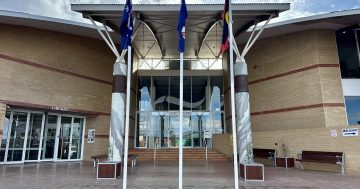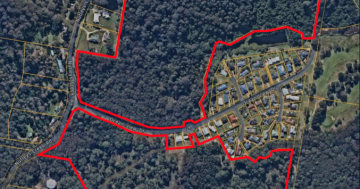
The Morrison Low Advisory report said the Black Summer bushfires and COVID pandemic, combined with DA requirements becoming more complex in recent years, led to a substantial rise in the volume and complexity of DAs. Photo: File.
An independent review of Bega Valley Shire Council’s development assessment service has found inadequate resourcing, poor understanding of the process across the council’s departments, and a culture that focuses on strict compliance rather than finding solutions.
It also identified several external factors, outside of the council’s control, that had contributed to lengthy processing times and a backlog of development applications (DAs) in the early 2020s.
The council’s own initiatives have led to some improvement. Since 2023, the council has assessed more DAs than it received, thereby reducing the backlog.
The council first surveyed community satisfaction with its development assessment service (DAS) in 2024. It scored the lowest satisfaction level of all council services surveyed. When compared with all other NSW councils, Bega Valley Shire scored the lowest satisfaction of those surveyed. Hence, the council commissioned Morrison Low Advisory’s (MLA) review.
The report said the Black Summer bushfires and COVID pandemic, combined with DA requirements becoming more complex in recent years, led to a substantial rise in the volume and complexity of DAs.
This was compounded by staffing shortages, with up to 40 per cent of planning positions vacant for extended periods, and problematic internal and external referral procedures.
Like other councils, the transition to the NSW Planning Portal in 2020/21 brought extra operational challenges.
The shire has considerable bushfire and flood risks, biodiversity values, complex topography, and heritage considerations. With the easiest land to develop already used, remaining projects are often more difficult and need more detailed evaluation.
Being a relatively remote area, there are fewer local town planning firms, so a high proportion of DAs are lodged by unqualified people, are often less complete and any inquiries are less well understood, so staff spend time helping applicants.
The report said growing community expectations for transparency and efficiency in the DA process meant increased scrutiny and pressure on council operations.
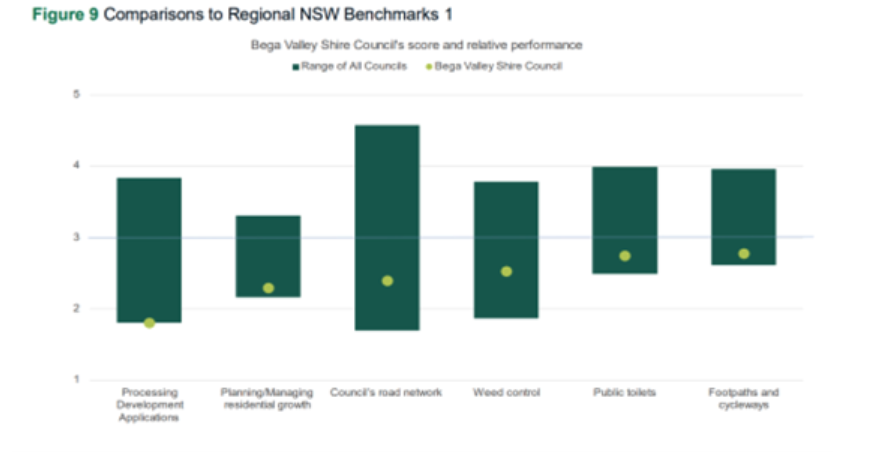
Comparison of Bega Valley Shire Council versus regional NSW benchmarks. Image: Via Bega Valley Shire Council website.
MLA spoke to council staff, councillors and external development professionals, and surveyed 43 owners and applicants.
The development professionals view the council’s culture as overly focused on process compliance rather than solutions. They want a more pragmatic approach so that minor issues can be fixed, and more flexibility to address minor deficiencies after DAs are lodged.
Strict adherence to Development Control Plan requirements leaves no way forward if all criteria are not strictly met, resulting in stalled DAs and frustration among applicants and consultants. The plan is a few years old. The provisions are difficult to understand and assess against.
The process is perceived as lacking flexibility, with officers moving quickly to assessment with little chance for applicants to resolve issues. DAs are rejected due to missing non-critical or minor information.
Repetitive requests for information, delays and changing requirements have led to redesigns and significantly more costs for applicants, while the “over-the-top” assessment matrix suggests an evaluation framework too complex or demanding for the proposal’s scale.
Dissatisfied owners and applicants complained about the DA requirements and staff communication, responsiveness, expertise and availability, plus interpretations within the DA process.
The external feedback highlighted frustration with a regulatory process and the way the council applies it.
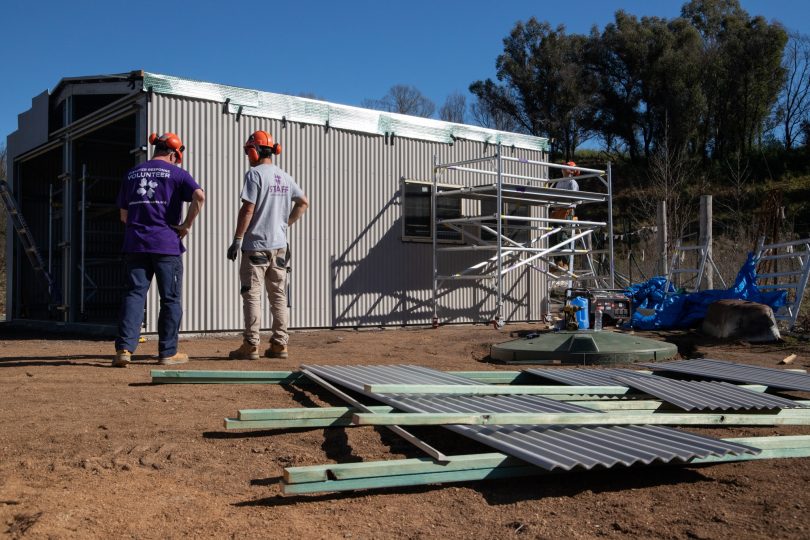
MLA made 15 recommendations, including building an assessment process that meets or exceeds the average expectation timeframe. Photo: File.
MLA’s review of internal processes found the high levels of rigour, diligence, wariness and assiduousness in all steps of the DA process were likely key issues when comparing the council’s DAS with other councils’.
It found limited understanding or oversight of the assessment process across the organisation despite it being one of the few council functions that touch almost every department.
There is no clear and consistent framework, which contributes to lengthy processes, as do internal referrals with a higher-than-best-practice level of rigour.
Referral information often comes back in a piecemeal way, impeding planners’ ability to form a holistic view of the DA, identify possible conflicts between referral advice and present a timely, consolidated request for information to applicants.
MLA noted that instead of a local planning panel, councillors determine DAs that staff cannot. That is not best practice. It makes it difficult to quickly refuse DAs that should be turned down for proper reasons, slows down assessment time and could be seen as the council introducing bias into a regulatory decision.
Nor is councillors’ ability to “call in” a DA best practice.
The assessment reports are much longer and detailed than other councils’. That takes significant staff time, poses an increased chance of errors, takes longer to review and edit post-review, and makes it difficult for applicants to understand.
MLA made 15 recommendations, one of which had 10 parts. Suggested objectives included building an assessment process that meets or exceeds the average expectation timeframe and offers a balance between customer service and process.
The review was dated December 2025 and noted at the council’s 28 January meeting.