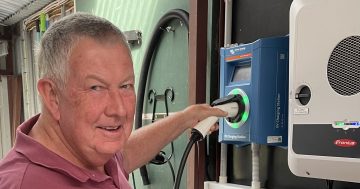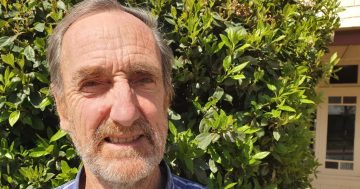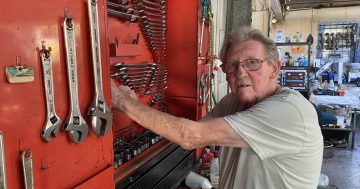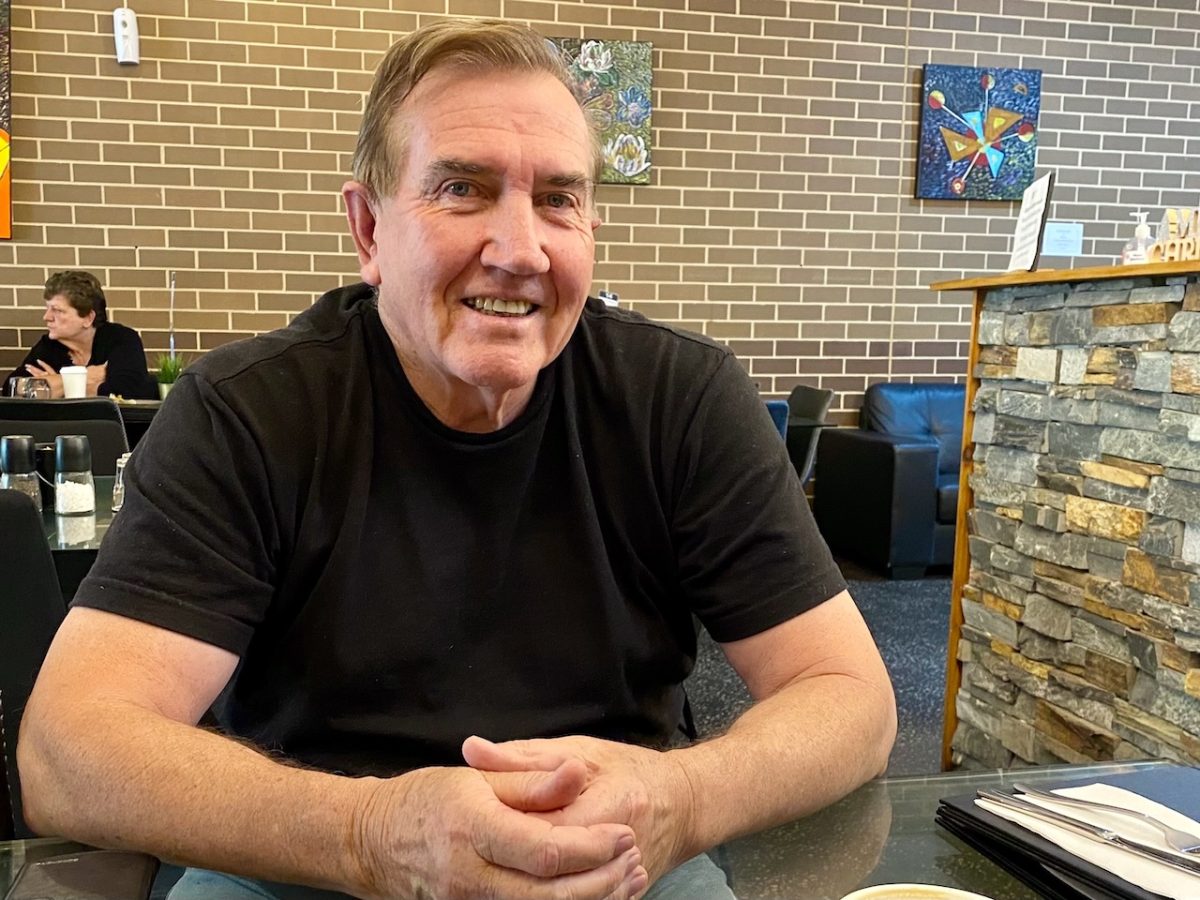
Being the first into a new market can be a costly and time-consuming exercise, nevertheless Tony Egan made the journey and helped many others follow. Photo: John Thistleton.
In 2020 when Tony Egan began work for Goulburn Solar, he told founder Phil Joyce he did not like that he was approaching 70 and would count back future birthdays and retire at “65”.
The time arrived late last year. True to his word, one of Australia’s pioneers in domestic solar systems called it a day.
Years ago his unconventional thinking had led him out of Sydney with his wife Karen to Goulburn, building a mud-brick home eight kilometres off the Hume Highway in the bush, then identifying a potential solar market in Goulburn and earning a living from it.
“When I started, all the solar panel manufacturers in the world were oil companies: Total, Shell, BP and Texaco,” he said. “They had developed the technology and got it working better to have lighting at anchor near their drill rigs so ships could come in and pick up fuel.”
Imagine that? Oil companies discarding oil-powered generators in favour of solar.
Raised in Sydney, studying geology at Macquarie University and working for mining companies exploring for nickel near Kalgoorlie, Western Australia, and uranium in the Northern Territory, Tony had become aware of climate change and sought a more sustainable lifestyle away from the city.
He, his brother John and their wives were keen on a change.
“Let’s go and have a look around Goulburn, it seems like a really nice place,” Tony had suggested. Years earlier he had broken down near Goulburn while on a trip to the snowfields and wandered the streets, enjoying the locals’ friendliness.
In the late 1970s the Egans bought a property on Tiyces Lane east of Goulburn. Tony completed a short course on Gyprock plastering and acquired a better understanding of structures while working for a construction company. By 1985 a home with ironbark door and window frames and thickened walls of CSIRO-approved mud bricks (which the Egans had made themselves) was completed.
Without electricity they relied on a block-ice fridge and kerosene lamps, tinkered with solar panels and batteries, helped by friends including Telecom technician Brian Divall and broadened their understanding of clean energy.
“I then began thinking about maybe that’s something I can get into,” Tony said. “ I started doing courses at the local TAFE here. At that stage Goulburn had a terrific electrical section; you could be an electrician, do all your apprentice work there and electronic courses as well, which I did.”
Head teacher Frank Davenport, who had previously worked in that role in Sydney TAFEs and the Goulburn college’s equipment were perfect for what he needed.
“There was a lot of stuff happening and all of a sudden it got canned and equipment was taken to either the Illawarra or Moss Vale TAFEs or just sold,” he said.
By now his new retailing venture was underway with a shop in Goulburn’s main street which captured walk-in business from people like himself who needed solar panels and batteries for their remote locations.
One curious visitor from the United States arrived telling Tony he had a solar system in Milwaukee where authorities decommissioning a $300 million power plant had asked customers to pay for the work.
“A whole bunch of us said forget it, we are going off grid and got into solar panels and batteries and ran the whole thing,” the American told Tony. “He’d just come in to say solar works and is great.”
The unexpected reassurance from abroad was appreciated given at this stage Tony was among only a handful of solar distributors across Australia. Their national get-togethers attracted about 25 people.
“We worked together to establish a course for accreditation for people doing the installations to try and make it better,” he said.
Tony had borrowed $20,000 from his father Michael Egan, a radiologist practising in Sydney and sought bank finance too as he developed the innovative business. He made about $100,000 in his first year, a tidy sum except tax and expensive outgoings soaked up much of the money.
Eight years after he closed the energy shop in 2012 Tony joined a team of clean energy professionals at Goulburn Solar, including electricians who were not born when he opened his business. His role was designing stand-alone power systems for people living off-grid.
“What is interesting now is the number of people who have (grid-connected) power who have said, we want to get rid of it, we want to go stand-alone,” he said. “It’s totally different to what it was in the 1980s and 90s.”