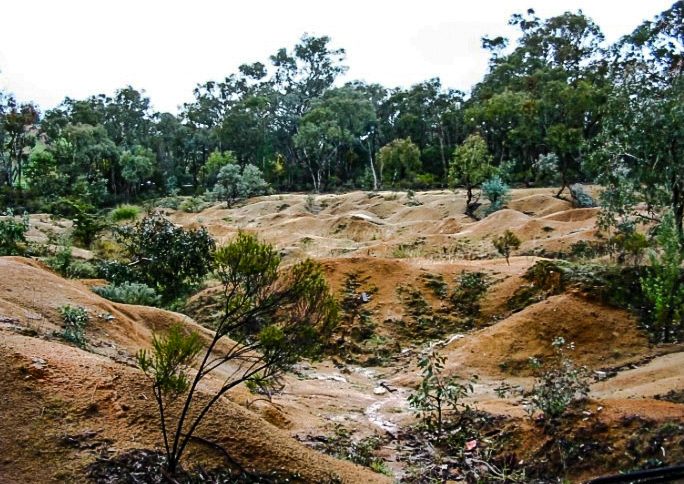
Gold-mining activity shaped Blackguard Gully in the 1860s when the Hilltops town of Young was known as Lambing Flat. The gully sits beside the Garibaldi Gully Bridge, east of Young. Photo: Young Historical Museum.
When Hilltops Council convened in November, a seemingly routine infrastructure update — the Garibaldi Gully Bridge Replacement Project — passed quietly into the minutes.
Councillors noted the report without debate, yet the history of this crossing and its surroundings reveals layers of the region’s past, bridging gold rush-era hardship to 21st-century planning ambitions.
The bridge spans Garibaldi Gully, part of the Burrangong goldfields that shaped the early growth of Young during the 1860s.
Along with neighbouring Blackguard Gully, it was heavily worked by alluvial miners, leaving a landscape marked by sluicing, water races and altered creek lines.
Blackguard Gully was the site of a Chinese mining camp and the focus of anti-Chinese unrest during the Lambing Flat riots of 1861, and is now recognised as a state heritage site.
The crossing’s history is closely tied to the former Burrangong Hotel, which still sits beside the bridge.
The hotel, initially a house, was built by Charles Johnson in the late 1860s.
By 1874, Johnson had been granted his publican’s licence, “for the house near the bridge over Garibaldi Gully”, to be called the Burrangong Hotel. Its location beside the crossing made it a natural stopping place for miners, travellers and teamsters moving through the district.
The red-brick and granite inn fell into disrepair for decades before being painstakingly restored to its 1800s form by local owners Susan Hardy and her son Sam.
Today, the restored building — now the Old Brick Pub — operates as a bed-and-breakfast and events venue, its revival returning a 19th-century landmark to everyday use.
With the bridge replacement planned, Suez Hardy is concerned about the potential impact on the property, which sits just 12 metres away.
Hilltops Council general manager Anthony O’Reilly said the council was in the early stages of investigating a replacement for the Garibaldi Gully Bridge.
“The reasons for replacing the bridge include structural defects and the need to replace it before it fails and is unable to safely carry traffic,” Mr O’Reilly said.
He added there were also safety and traffic flow concerns associated with the bridge being a one-lane structure on one of the main entrances to Young.
“The current load limits prevent the road from being used by larger vehicles such as A-doubles,” he said.
He said the council was aware of the significant heritage constraints affecting the bridge replacement.
“Potential heritage impacts will be assessed during the design process, which has not yet started,” Mr O’Reilly said.
The project is currently in the planning and design phase, and the Request for Quotation (RFQ) for the bridge design was scheduled for release in November.
“The design will include assessments of geotechnical and structural constraints, environmental and heritage impacts, and detour routes to ensure the replacement meets current engineering standards and site constraints,” Mr O’Reilly said.
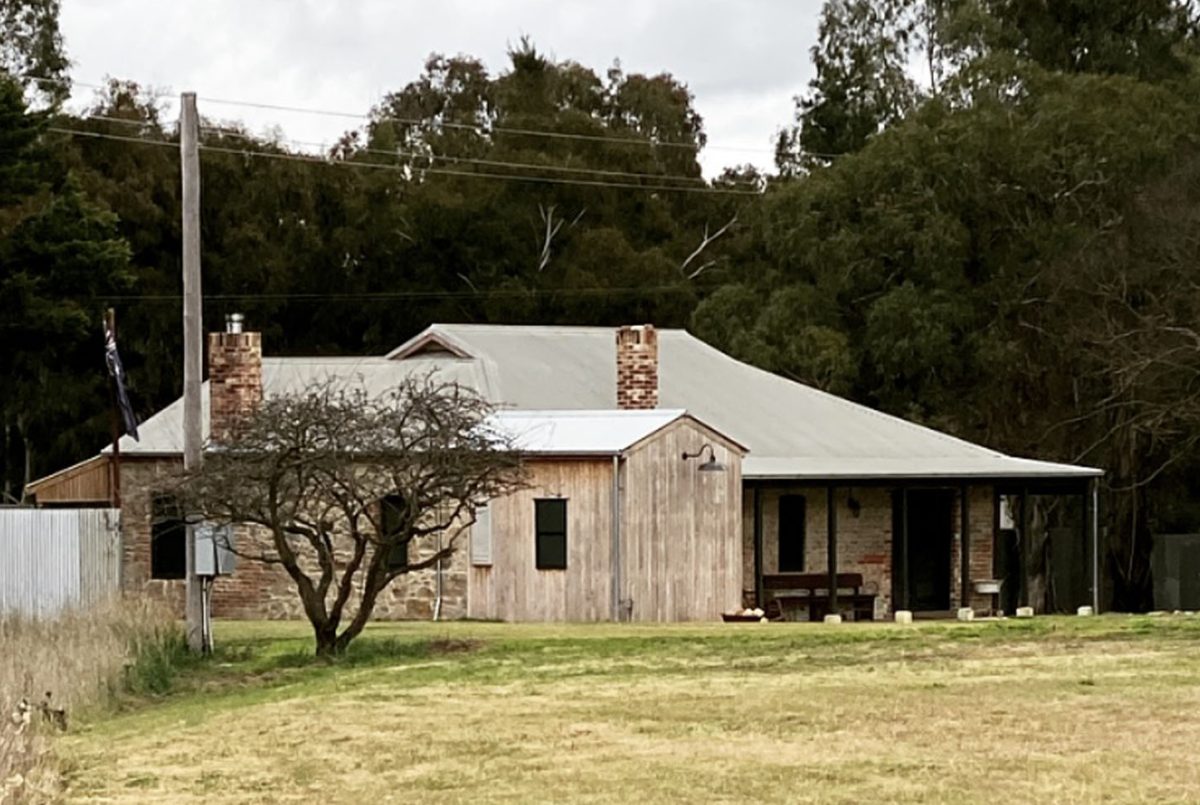
The old Burrangong Hotel — recently painstakingly restored to its former 1860s glory by the Hardy family — sits just 12 metres from the Garibaldi Gully Bridge. Photo: Suez Hardy.
Mr O’Reilly said that would determine the preferred bridge structure, alignment and construction method and produce the technical documentation needed to support future funding applications and project delivery planning.
But, in a report tabled at the November Hilltops Council meeting, Mr O’Reilly said investigations into maintaining traffic movements during construction had contributed to delays in releasing the RFQ.
“Council expects it will need to close Whiteman Avenue to allow construction of the new bridge, in order to avoid disturbing areas of higher heritage significance outside the existing road corridor,” he said.
While a temporary bypass through Crown land was investigated, Mr O’Reilly said heritage restrictions meant the option could not go ahead.
“As a result, a detour route is now being investigated for construction,” he said.
The detour would also be designed to operate as a permanent heavy-vehicle route, allowing trucks to bypass the Young CBD and access the industrial area to the west.
A separate specification is being prepared to assess six potential detour options, including routes via Commons and Issacs roads, Apps Lane, McDonnells Road, Forsythe Avenue, Chums Lane, Moppity Road, Western Avenue, Lachlan Street and Briggs Street.
Once the design is complete, and subject to the findings of the relevant reports, the council will develop a project delivery plan and identify funding options for construction of the bridge, including a proposal under the Safer Local Roads and Infrastructure Program.
No community consultation had been undertaken at this stage, Mr O’Reilly said.
“Council will consider the appropriate level of consultation once the design has progressed,” he said.