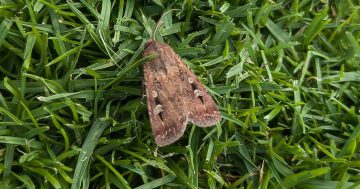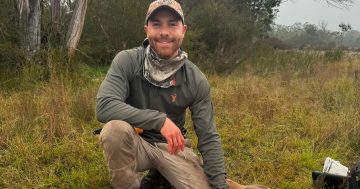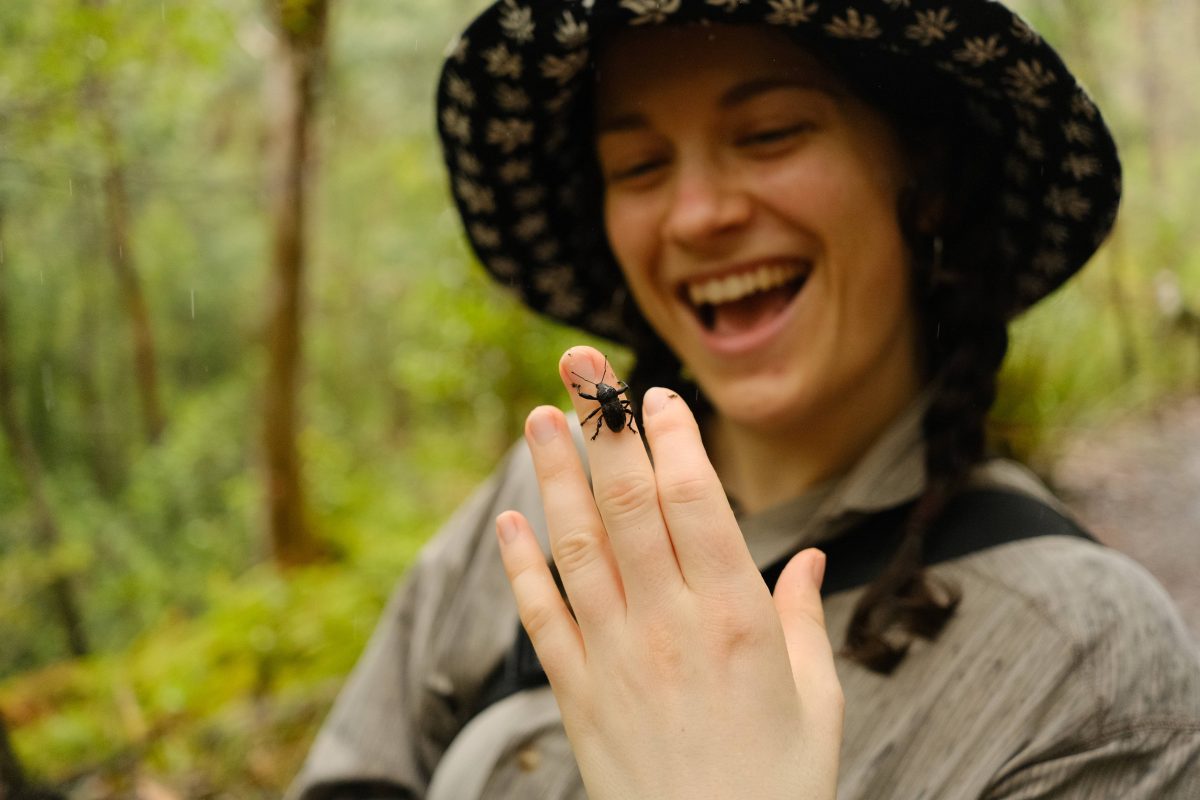
Not all bugs are scary, says the Invasive Species Council’s Jess Ward-Jones, and she wants you to help her find them. Photo: Hayden Starr.
When she’s out looking for bugs, the velvet worm is Jess Ward-Jones’ favourite one to find.
“The best thing that they do is they have little slime glands on each of their cheeks, and they spray Spider Man glue.
“They’re definitely strange, but evolutionarily perfect. They’ve remained unchanged for millions of years.”
Ms Ward-Jones, from the Invasive Species Council, is also the Bug Hunt’s coordinator.
The self-described “bug nerd” says the initiative, launched in 2023, is a chance for Aussie citizen scientists to try their hand at finding invertebrates of all kinds.
“All we’re asking is that when you’re out and about – if you’re just in your backyard, or maybe you’ve gone to a park, a playground or somewhere new near a waterway – and see a bug, you snap a photo.
“The general population’s energy is huge – we’re really grateful for it, because invertebrates are so small, it is pretty hard to do systematic surveys across a giant continent.”
While the Bug Hunt has funding for two more years (with plans to keep it going beyond that), she says summer is an especially great time to find some unique bugs.
“Christmas is a particularly interesting time because it’s warmed up, and lots of different bugs are on the move,” she said.
“There are some bugs that people associate with Christmas, which you might be able to find.”
(Think Christmas beetles (all 35 species of them), ever-noisy cicadas and the bogong moth on their migration.)
The Bug Hunt is also a chance for citizen scientists to help authorities in their fight against the entry – and the spread – of invasive species.
“We’d love it if you didn’t find them, but we would also love it if you did!
“To know that people are on the lookout for new incursions would be incredible.”
Jess said tropical regions of the country, such as parts of Queensland, were often the first place where invasive species became established.
“Far North Queensland is definitely, unfortunately, a hot spot for invasive ants because so many of those ants are tropical, so they’re a bit more susceptible to those kinds of things.
“Electric ants, yellow crazy ants and fire ants in Far North Queensland are something that we definitely look out for.”
She said people could keep their eyes peeled in southern NSW for other invasive species, such as stink bugs and spongy moths.
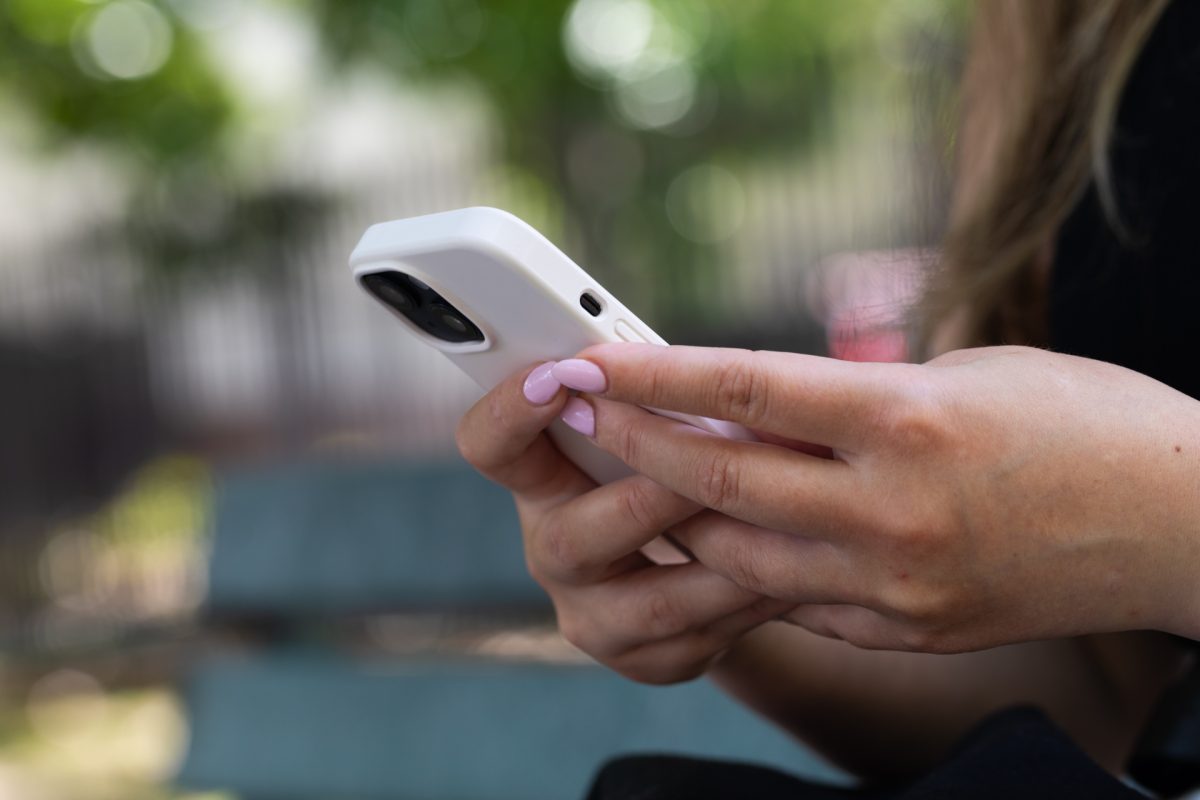
The bug snaps are uploaded to the iNaturalist app. Photo: Michelle Kroll.
Once they’ve taken their bug photos, participants can upload them through the iNaturalist app.
The platform lets citizen scientists upload their nature snaps and receive help identifying the plants and animals featured in them.
They can learn about native and introduced invertebrate species living across the continent.
“A photo recognition algorithm will tell you what bugs you found with a certain degree of confidence,” Jess said.
“Human experts will come and confirm [what the algorithm says] or suggest a new identification. The record will go off to the Atlas of Living Australia, which is the national biodiversity database managed by CSIRO.”
Jess urged people to keep their distance from the bugs, for their safety and the bugs’ well-being.
“We encourage you not to touch them – just respect their space. Let them keep going about their day.
“It’s best to give them their space but appreciate them through your camera lens.”
(She recommended taking photos from different angles and cropping them so you don’t get too close and disturb the bugs.)
The Bug Hunt is a national project by The Invasive Species Council in partnership with Invertebrates Australia and Australian Geographic. Those interested can register online.