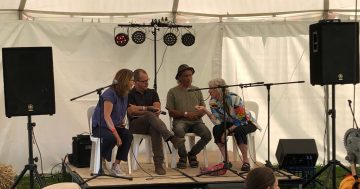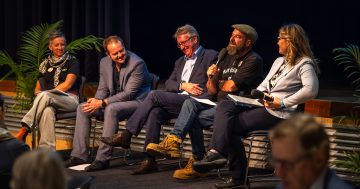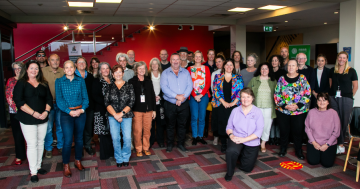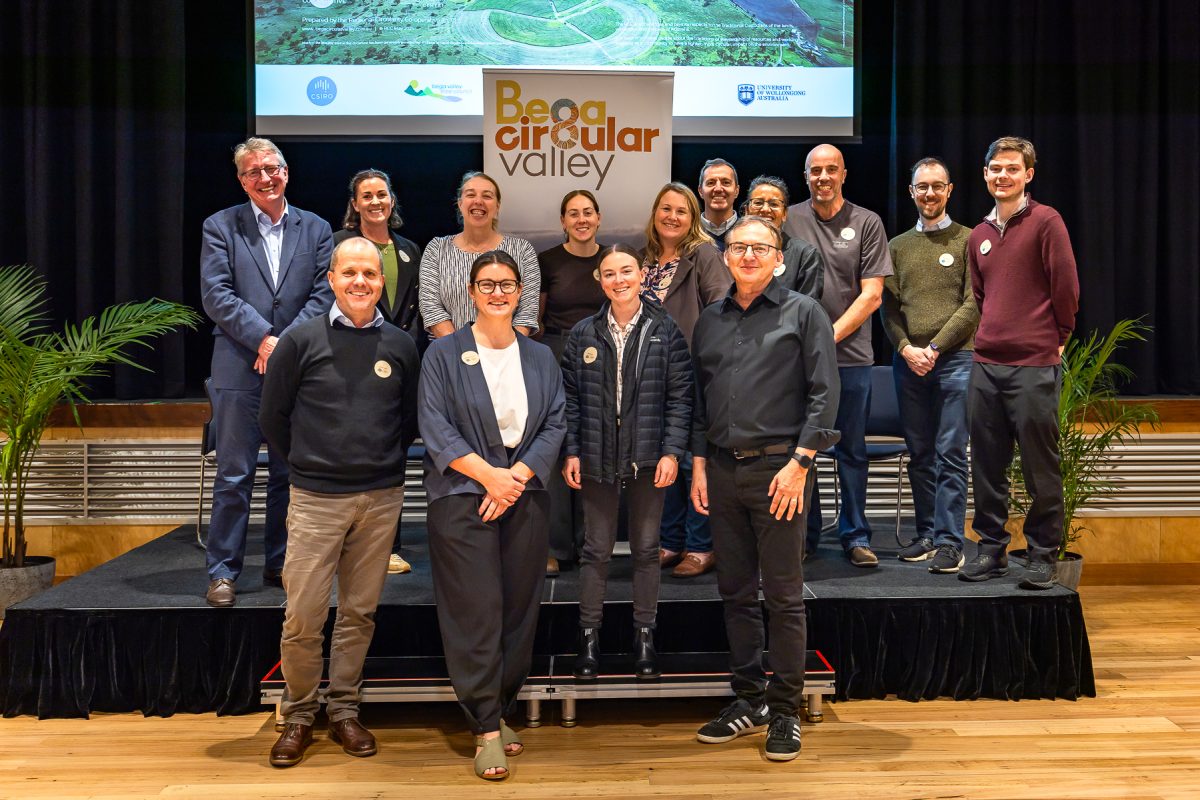
Members of Regional Circularity Cooperative and CSIRO at the Bega Circular Valley Workshop. Photo: David Rogers Photography.
A Bega Valley Shire teacher has developed a framework for embedding circularity principles into school curriculums, giving students the skills and knowledge needed for the jobs of the future.
The circular economy, as opposed to the predominant linear economy, involves keeping items and materials in the economy as long as possible.
The framework has five progressive modules spanning Kindergarten to Year 12 that slowly teach the foundations and pillars of the circular economy over 14 years.
Students will leave school with 21st century skills including environmental literacy, critical thinking, systems design, problem-solving and collaboration.
Born and bred in the Bega Valley, Kate Mamone has 20 years ‘ experience teaching in Australia, London and the US. It includes private, independent and government schools, schools in cities, rural and remote areas, co-educational and single-sex, and from the most well-resourced schools to the most basic.
She returned to Merimbula 10 years ago where she teaches Design and Technology.
Ms Mamone has always been interested in sustainability and biomimicry, so hearing about circularity and the Regional Circularity Co-operative’s (RCC) aim to make Bega Valley Australia’s first circular economy piqued her interest.
She said the next generation must be aware, equipped and ready to contribute to ensure a lasting shift towards circularity.
“I approached Andrew Taylor of RCC and said we have to get this into schools,” Ms Mamone said.
The framework focuses on the practical and realistic.
“Kids love to pick apart things and find problems and come up with real solutions,” she said.
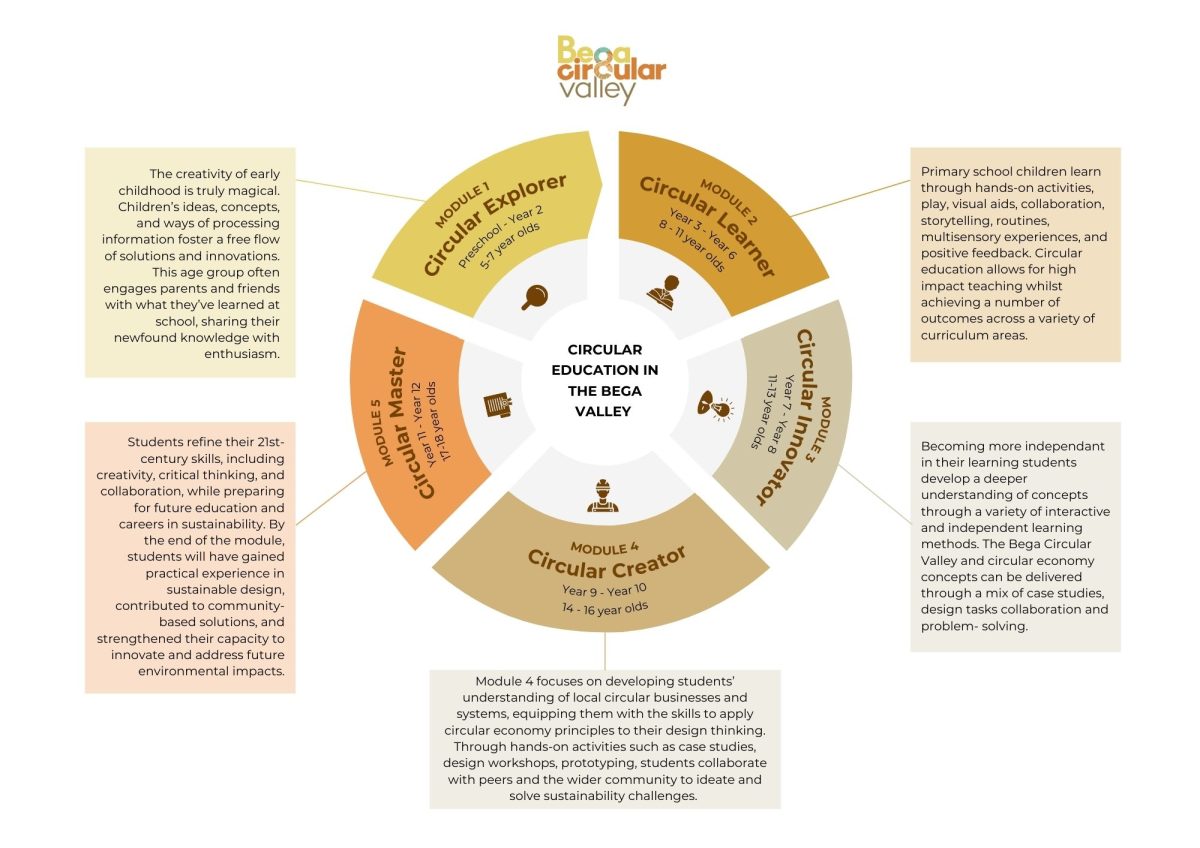
The Circular Education Strategy has five modules covering Kindergarten through to Year 12. Photo: Supplied.
Mindful that schools and teachers are time-poor, the framework provides the resources that make it easy for teachers to embed circularity into their programs and achieve outcomes.
Meanwhile, RCC is already collaborating with a large education provider that creates “amazing resources”.
Sapphire Coast Anglican College is the pilot K-12 school while Eden Marine High School and Lumen Christi are incorporating circularity into some of their programs. Other schools are looking to follow.
Ms Mamone hopes to run an information session in early 2026, followed by professional learning that gives teachers the tools and confidence to bring circularity into classrooms.
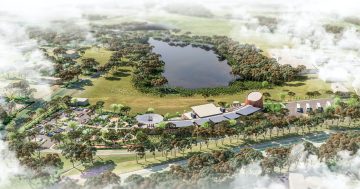
Bega’s new National Circularity Centre (NCC) will have an education centre and online resources.
“We have had schools from Sydney and Melbourne wanting to visit the NCC,” Ms Mamone said. “Just like schools go to Canberra to learn about politics, they will come here to learn about circular economy principles.
“We will provide students with stage-appropriate programs and resources to establish a strong foundation before they arrive and they will have the opportunity to explore circular businesses and farms,” she said. “They will experience the NCC and the wider Bega Valley and share their experience with family and friends.”
Ms Mamone envisages it will be a new form of tourism, bringing many visitors to the area.
Also given that parents learn from their kids, the ripple effect of the valley’s 3400 students developing new habits and providing solutions will be big.
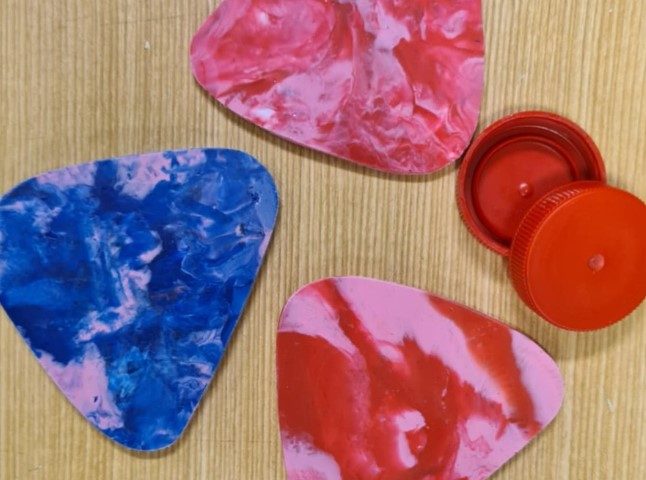
Children collected HDPE bottle caps from local cafes and schools to create products such as coasters, wax combs, herb strippers and chopping boards. Photo: Supplied.
She said the Circular Education Strategy can be embedded into all primary school STEM (Science, Technology, Engineering, Mathematics) subjects. At the high school level it aligns with Design, Engineering, Business Studies, Technology, Environmental Studies, Science, Agriculture and Geography.
Ms Mamone said circularity starts at the very early design stage. Educators will have access to engaging and high impact resources and case studies of circularity in businesses’ products and systems and link them to many different outcomes.
Circularity principles will be embedded in student practice, empowering them to apply these skills in apprenticeships, HSC subjects, post-school courses and beyond.
She said teachers were excited by the Circular Education Strategy.
“We are at that point we can’t prepare kids for future careers because the jobs haven’t been created yet, but we can give them the 21st century skills to learn, adapt and problem-solve, establishing circular thinking as a core skill alongside numeracy and literacy,” Ms Mamone said.
“Every university and employer will see these Bega Valley students have that extra level of critical thinking and systems thinking and that knowledge of circularity,” she said. “I would love every student to graduate being confident and a voice in circularity because it has been embedded into their education.”