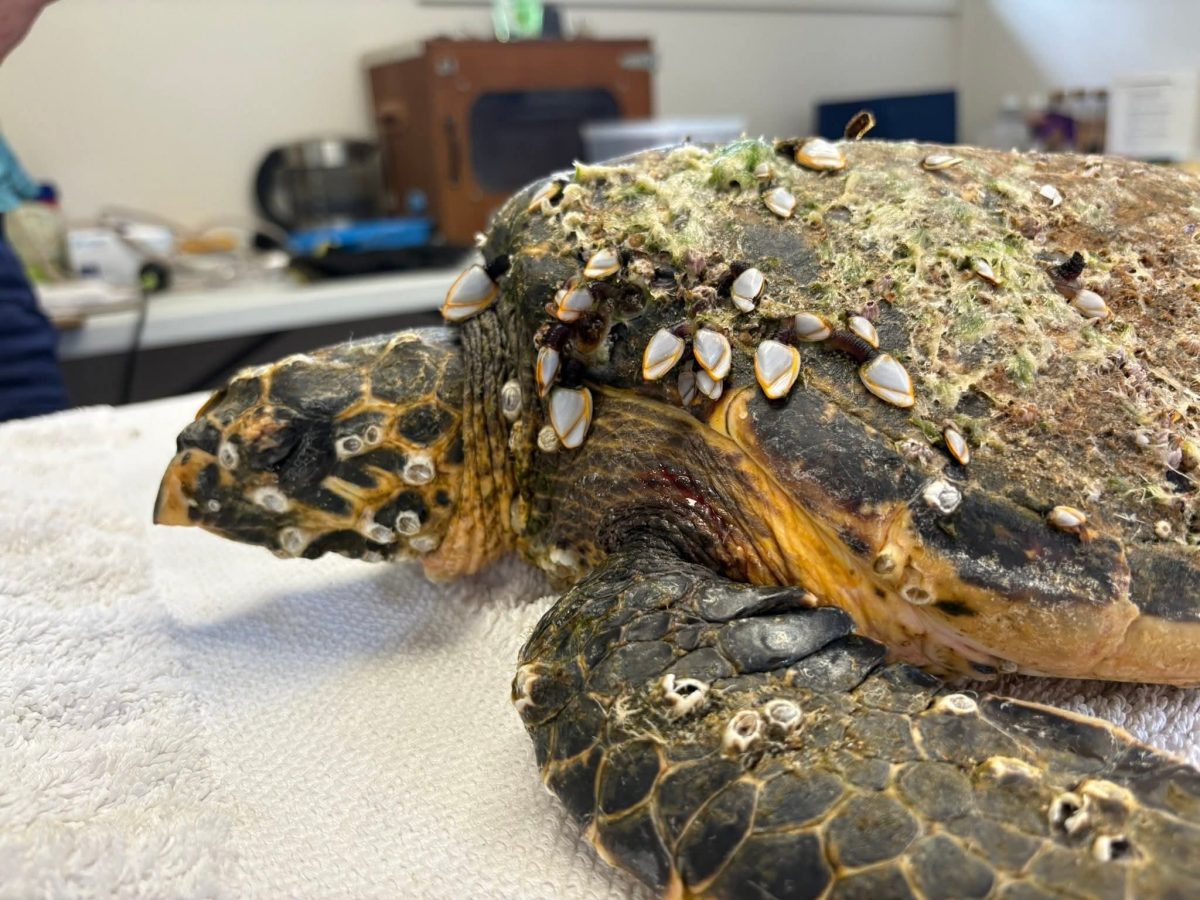
This is Bear, who was discovered at Bermagui after washing ashore. Photos: Bermagui Veterinary Clinic Facebook.
A South Coast vet clinic is calling on people to keep an eye out for “pretty, beautiful animals”, after an injured critter was sent off for some TLC.
Practice manager at Bermagui Veterinary Clinic Motria von Schreiber said the turtle – nicknamed Bear by a refuge giving him specialist care – was recently discovered on Beares Beach in Bermagui.
She said people walked past him over several days, before someone saw his head move and called the clinic.
Once Doctor Carl assessed him, a full rescue and recovery operation was launched to save his life.
“It was very, very lucky for that turtle that somebody noticed the head moving – otherwise he would still be there,” she said.

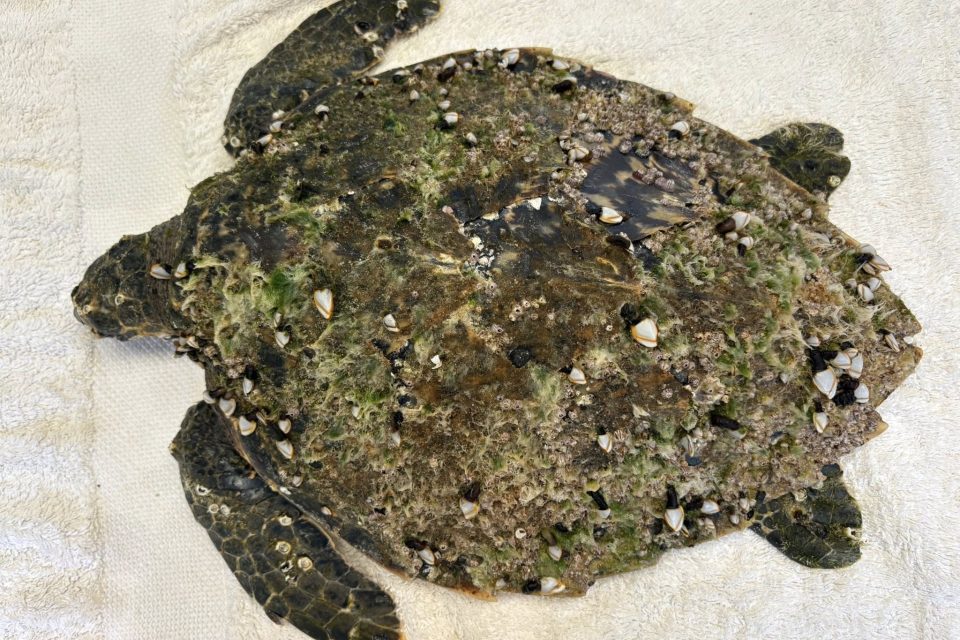
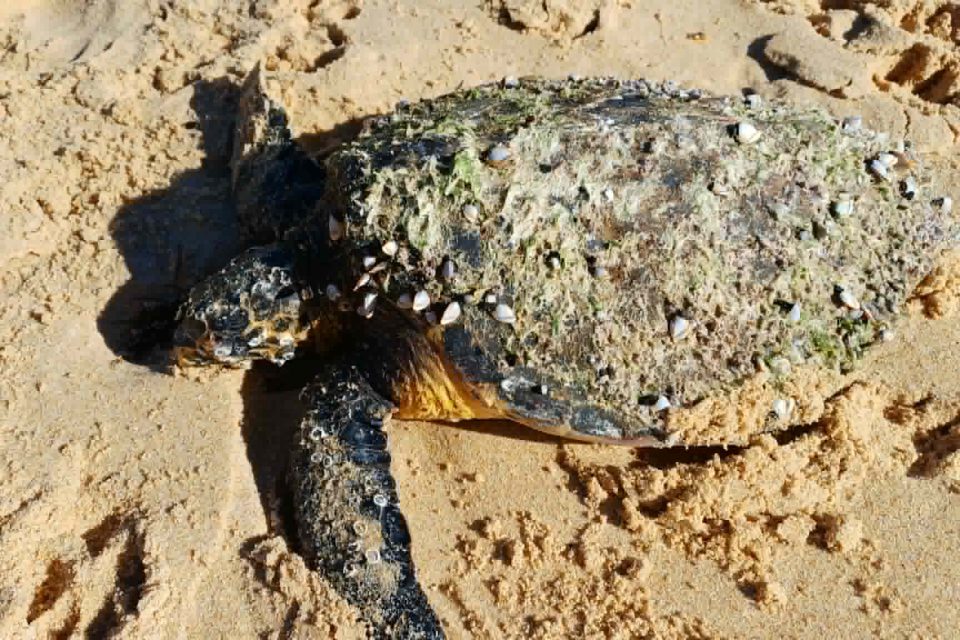
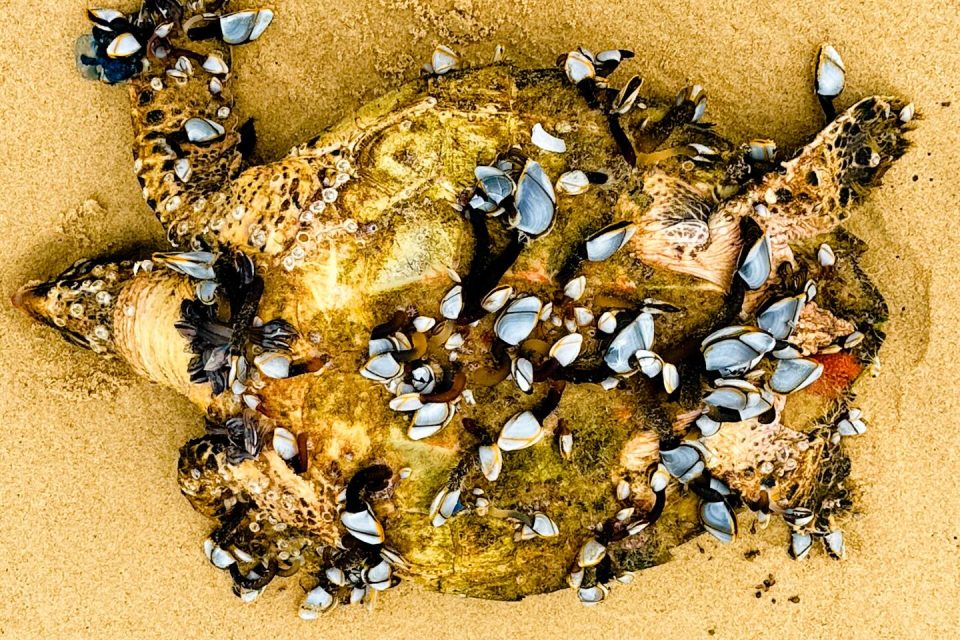
Vet staff worked with wildlife rescuers to move him from the beach and send him to a rescue centre in the NSW Shoalhaven region – but his fight had just begun.
He was covered in barnacles (including over his eye), was underweight and generally in poor shape.
“To some degree, barnacles are OK on a turtle. It’s natural that they pick [up some] – a lot of marine life picks up barnacles,” Ms von Schreiber said.
“When it gets to be too much and the turtle is in weakened condition, then something has to be done.
“That turtle had signs of sepsis. It was very weak, undernourished, and had an infection. All that’s being treated. Yeah, and also arthritis.”
An arthritis diagnosis also means Bear is possibly an older turtle, but his exact age is hard to tell, as Hawksbill sea turtles are “not giant”.
The last information she had from the refuge was that Bear was eating on his own and continuing his recovery at Mudgeroo Wombat and Wildlife Refuge.
After arriving, he spent some time eating a puree (deliberately packed with the nutrients he needed) and having a good soak so the barnacles could fall off safely.
Ms von Schreiber had never seen a Hawksbill turtle at Bermagui before.
The Hawksbill sea turtle is a critically endangered sea turtle, which normally enjoys its time in tropical and subtropical waters.
She said the South Coast was “way out” of their normal feeding range and away from their normal habitats.
“The big picture for this turtle, and why it’s so special, is that they are in decline.
“[The population on] the coast of Australia is likely to face extinction for lots of reasons.
“Climate change is the driving factor warming oceans and changing currents. … We’re already seeing signs of tropical marine life drifting further [down the coast].”
Ms von Schreiber believes his story is a reminder of why it’s so important to keep an eye on your surroundings for any animals in need.
“Beares Beach is really popular because it’s a dog walking beach, so it’s really easy to be focused on your dog and ignore anything that might be unusual.
“It’s very easy to not notice [an animal like Bear] half-buried in the sand.”
And what about Bear’s future?
Once he recovers, the plan is to release him back where he should be.
“I’m sure they’ll arrange with someone to transport him to go further north when he’s ready to go – that’s where his DNA gene pool is,” she said.
If you find a turtle on a NSW beach, you can call NSW National Parks and Wildlife Service on 1300 072 757 or the WIRES hotline on 1300 094 737.