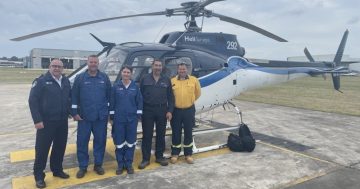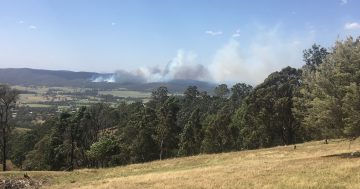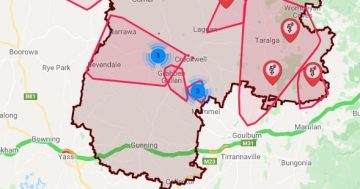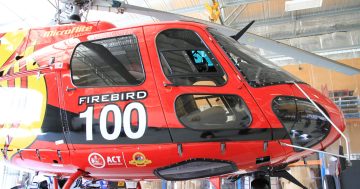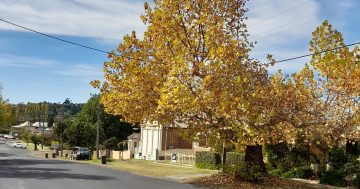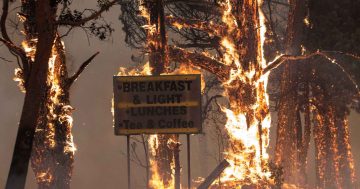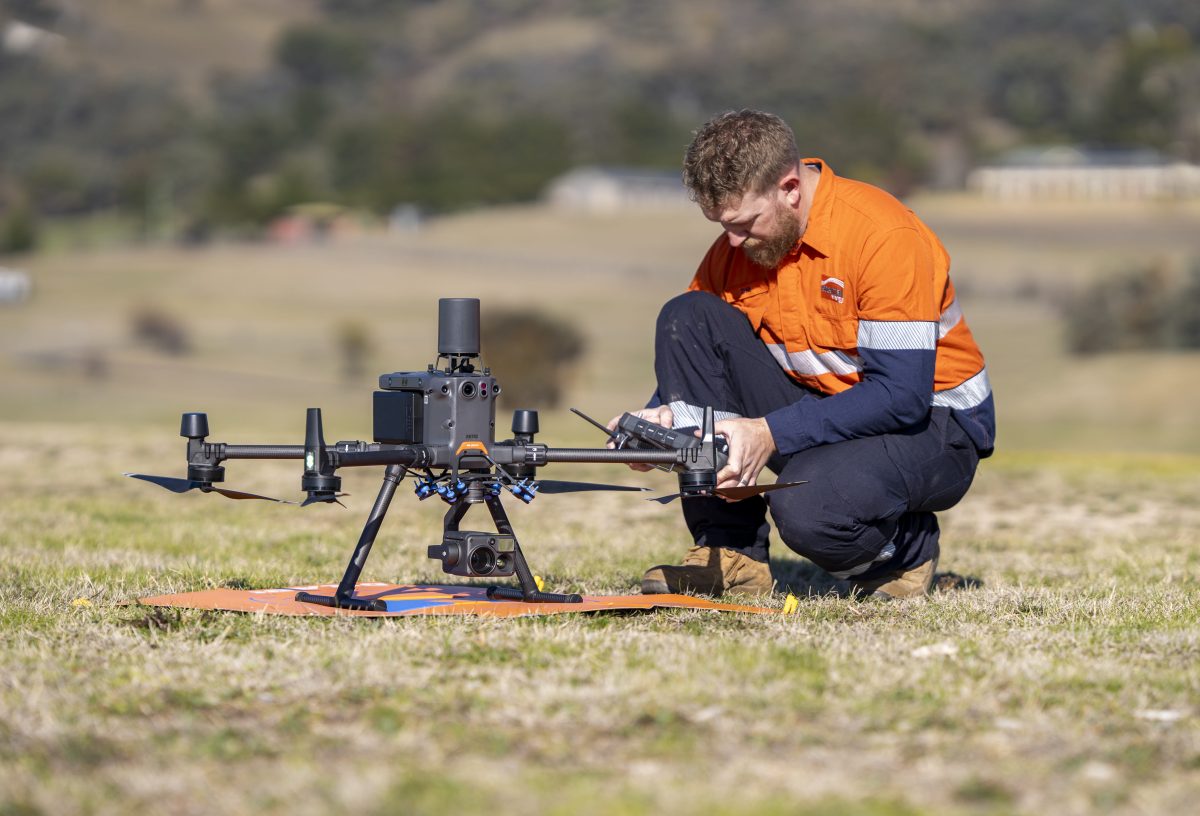
Drones and helicopters will be seen over Capital Country in the coming weeks. Photo: Essential Energy.
If you see something flying low over Capital Country over the next few weeks, it could be part of a bushfire preparation program from Essential Energy.
The company will run its yearly Pre‑Summer Bushfire Inspection (PSBI) program over the next month, covering Yass, Queanbeyan, Braidwood and the surrounding area.
For Essential Energy’s head of vegetation and specialised services Belinda Kallmier, inspecting the network on a regular basis is an important part of how the energy distributor manages bushfire risk.
“These inspections provide us with high-quality vision of our network that helps us to identify potential hazards early,” she said.
“From there, we can prioritise critical maintenance and vegetation clearing before the next bushfire season.”
These aerial inspections help identify vegetation or equipment issues that could turn into hazards during the summer.
By detecting problems early, crews can prioritise maintenance and vegetation clearing in the areas where communities will benefit most.
This year’s program will include expanded drone use, helping authorities safely reach hard-to-access locations.
They also reduce disruption for customers and provide more detailed images of the network.
Where drones cannot be used, they’ll turn to helicopter‑mounted cameras.
It’s hoped they can identify potential issues ahead of time, Ms Kallmier said.
“Drones are improving the way we inspect our network as they allow us to capture high-quality information safely and efficiently from the air.
“We’re checking for things like trees that are growing too close to the powerlines, damaged or worn components, and anything that might compromise safety or reliability.
“By combining drone imagery with AI‑supported analysis, we can detect issues earlier, prioritise work more accurately and continue to keep both our communities and our people safe.”
The PSBI program is supported by advanced bushfire risk modelling developed alongside the University of Melbourne and other NSW electricity distribution networks.
Ms Kallmier said the high-tech approach considered a range of factors.
“Technology helps us better understand how factors like temperature, fuel load, vegetation and the network interact and how we can prioritise operations in higher risk areas.”
As the program gets underway from the middle of February, people may see low‑flying drones or helicopters in their area over the next few weeks.
Essential Energy customers in inspection areas will receive notifications before the aerial activity begins.
If property access is required, service providers will contact customers.
For more information on our aerial inspection schedule, people can visit Aerial Inspections.