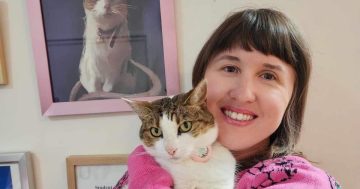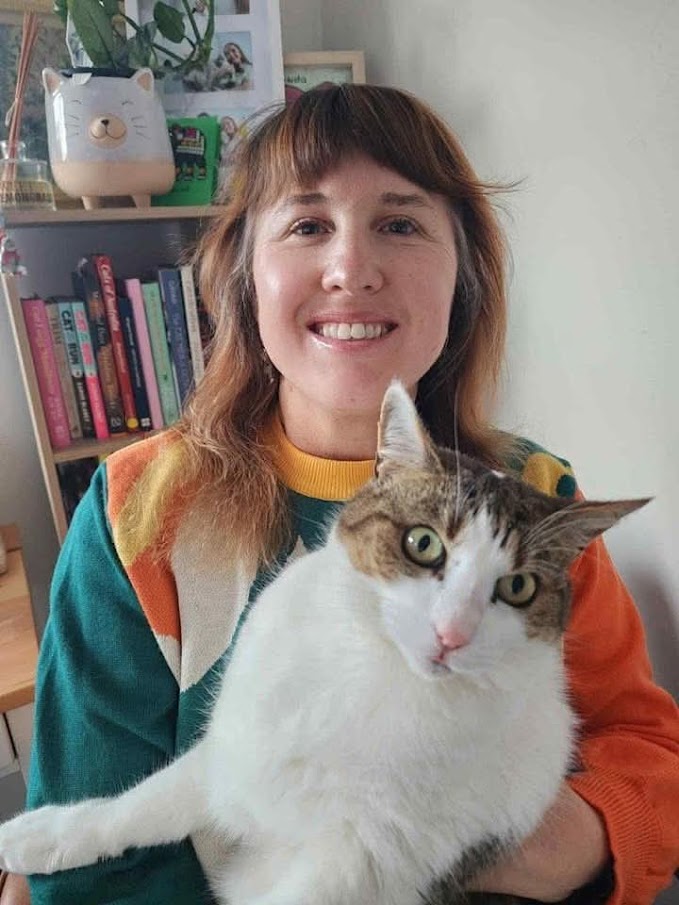
Doctor Jodie Stewart just might be Australia’s only cat historian – and assistant Poppy keeps a close eye on her work. Photo: Jodie Stewart.
Doctor Jodie Stewart is the first to admit humans and cats have a “very complicated relationship”.
It’s also one that the Merimbula local – and cat historian – knows more about than most, after spending several years studying humans’ connections with our feline friends.
But her field of study came about essentially by accident.
“I acquired a cat via my daughter, who brought in a rescue tabby to our home. As some children often do, she left this poor, skinny tabby in my hands to care for and we quickly bonded,” she said.
“She was the most loving, adorable, sentient being I’d ever encountered – before this, I’d always considered myself a dog person.”
The arrival of the unexpected furry friend kickstarted the historian’s investigation into how – and why – the mammal became so loved.
In search of answers, she delved into historical records, newspaper clippings and other sources.
“I tended to come across a lot on feral cats, environmental damage – but there wasn’t a lot about cat companionship,” she said of her research.
“I thought there’s a real opportunity here to start a conversation around our history of cat companionship … beyond the quote-unquote ‘feral cat issue.'”
The result is her upcoming book, Cats of Australia, set for release through HarperCollins later this year.
Dr Stewart said that while there were plenty of explicit mentions of cats in historical documents, others were implied or made in passing.
“They’re not coming up to you and shaking your hand.
“You’ve got to, you’ve got to search for them. … The more layers you peel back, cats just tend to appear everywhere.”
She’s found that cats have long been part of our lives, but their stories often go untold.
“They were in the trenches with us in World War I and World War II,” she said.
“They were eating ice creams at Balmoral Beach, they were climbing all over the east tower of the Sydney Harbour Bridge.”
And while most cats prefer to keep their paws dry (and on land), there are cases of some seafaring cats.
She found reports of owners hand feeding their seasick cats on boat journeys. And Matthew Flinders and his cat Trim circumnavigated Australia in 1801.
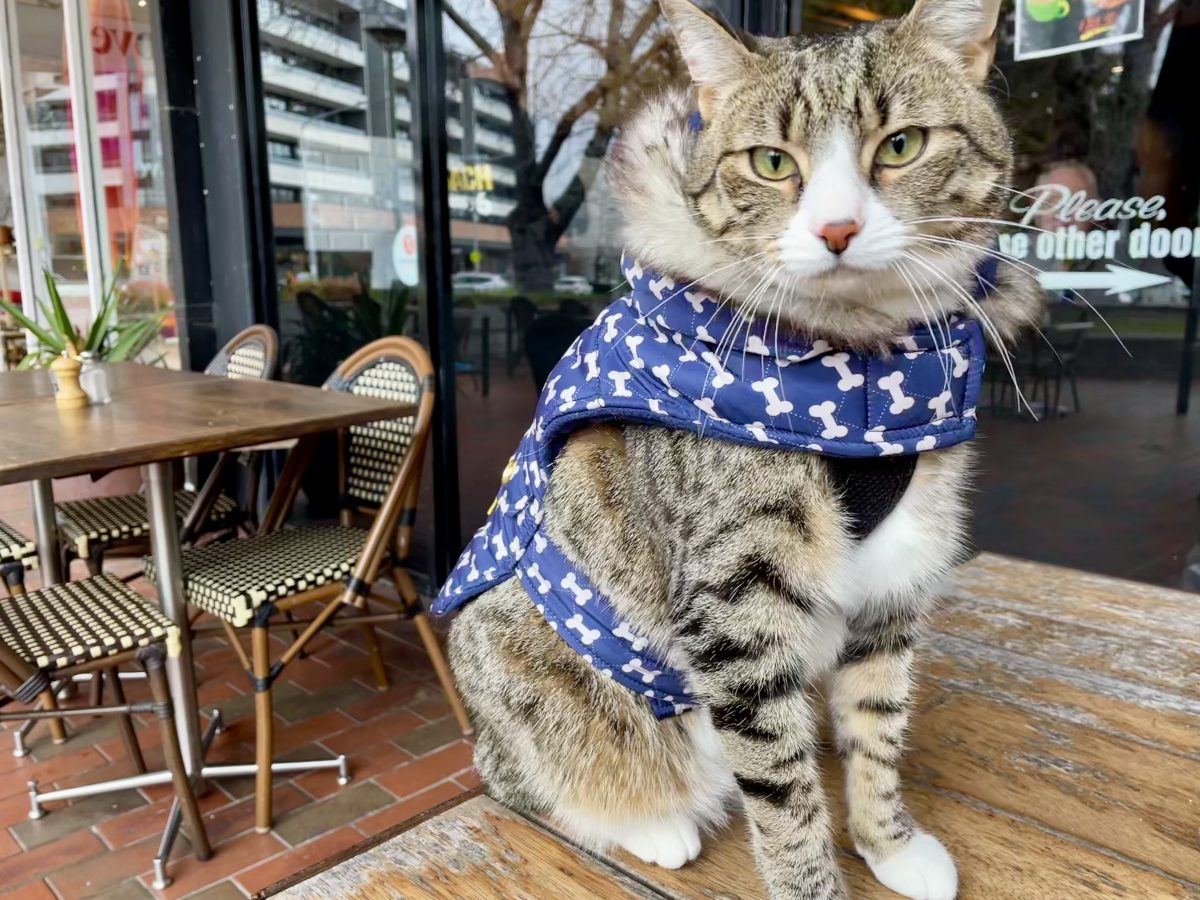
The tale of Queanbeyan assistance cat Bandit is one of those found in the new book. Photo: Lizzie Waymouth.
The book also touches on our modern idea of mostly seeing cats as companions, which Doctor Stewart said occurred in the first half of the 20th century.
For this section of the book, she interviewed the owner of Bandit, the first registered assistance cat in Canberra.
“That was a fascinating insight into the support that cats can provide during disaster, and also elevating and highlighting the importance of cats as support animals, as well,” she said.
“We often equate dogs with support and assistance, but cats can also play a really important role in providing that.”
Other interviews were also conducted with a South Coast family about their relationship with cats.
Dr Stewart said the “centrifugal force” behind her book was revealing the unique roles cats had played.
“I didn’t want to rehash a story about quote-unquote ‘feral cats’ … I wanted to tell a different story about cats in Australia.
“I think that’s really, really important, because whether you like them or not, they’re here, and they have had a profound effect on us.”
Cats of Australia will be released in June and is available for pre-order.