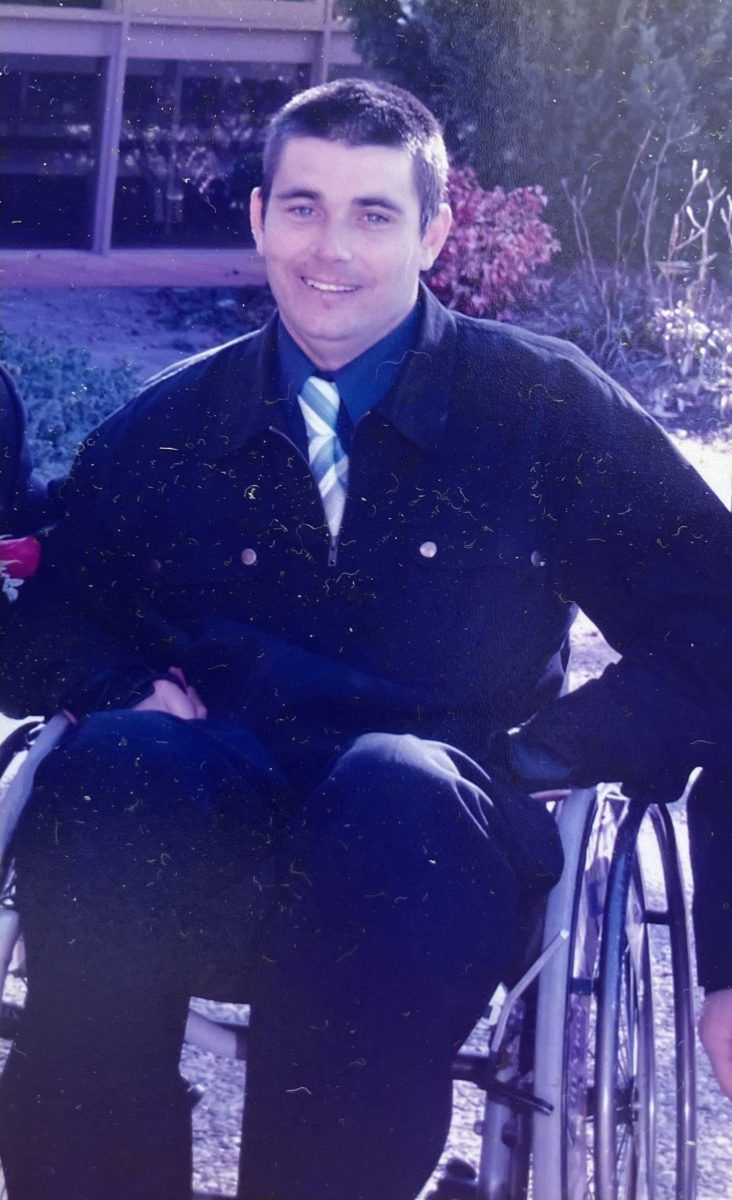
Chris Campbell in 2002. Photo: Supplied.
Chris Campbell would be very happy to know that he was one of the first to have a natural burial at Walawaani Way.
He had lived the past 10 years in Tuross and was well known in the community for the things he did.
His brother Wes said that as a kid Chris was very active and liked camping and nature.
An accident when Chris was 19 left him a quadriplegic.
“Following his accident Chris was pretty amazing,” Wes said. “He lived independently for periods.”
Chris really got into painting and with the help of his carers he would put on exhibitions in Tuross and other areas.
The Campbell family came from Wagga Wagga and Canberra but had strong connections to the Batemans Bay area through holidays. Chris’ parents moved to Tuross when they retired 15 to 20 years ago.
Chris was 53 when he passed away in October 2025.
He had mentioned that he wanted a natural burial, but Wes knew little more than that.
“It was only after he passed and we reviewed his will that we knew he had made arrangements and spoken with Fiona McCuaig of Walawaani Way,” Wes said. “We knew that was what he wanted, and he had made the arrangements anticipating it would be done.”
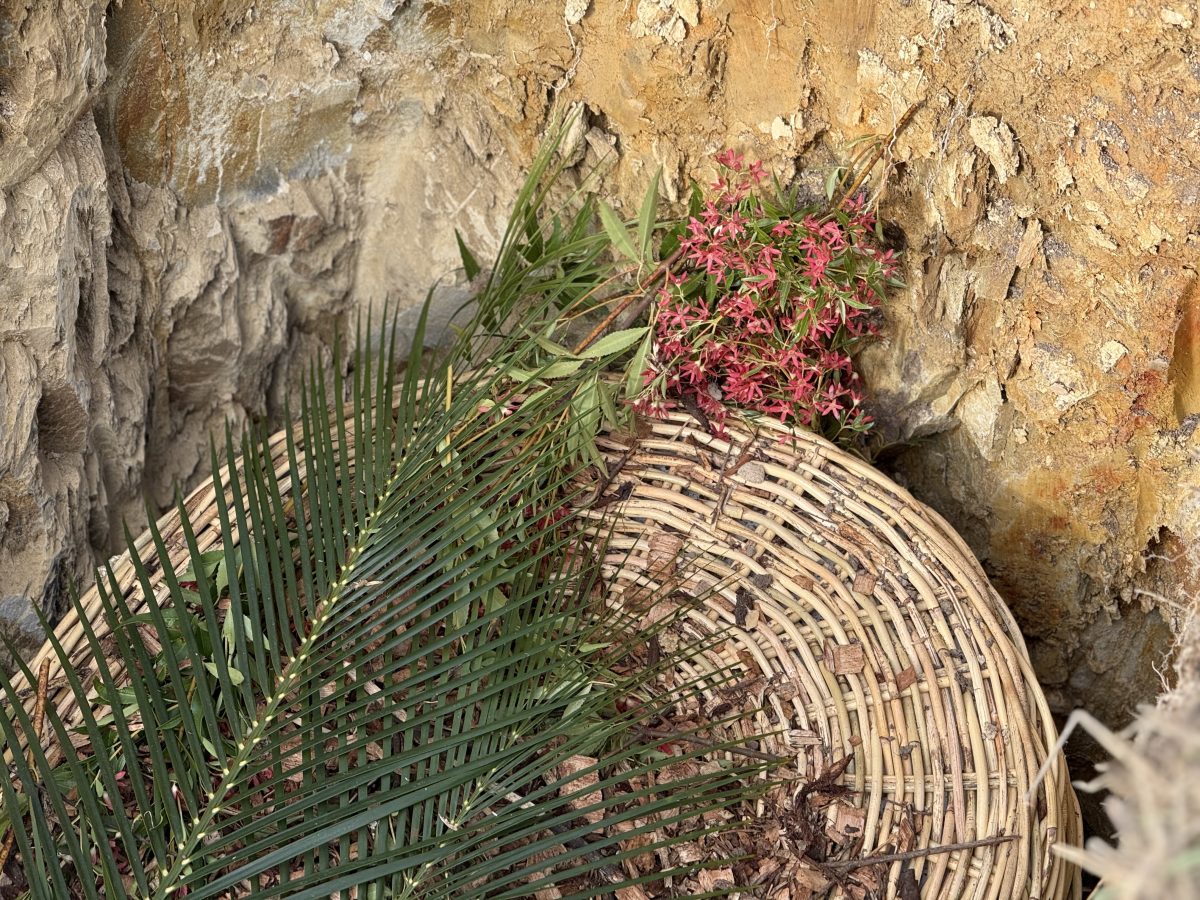
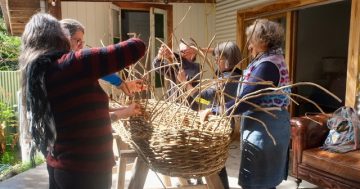
A wicker coffin used at a burial at Walawaani Way. Photo: Olivia Andrews.
Chris left some broad yet specific instructions indicating he wanted a simple funeral.
“His body would return to nature and contribute to regrowth,” Wes said. “At a minimum if we could do that for Chris that would be great. It was all driven by Chris.”
Walawaani Way founder Fiona McCuaig said Chris was one of the first people to contact her and express his wishes to be buried there.
“Chris was the first person to be buried in a shroud, as well as a cardboard coffin, at Walawaani Way,” she said. “Chris really knew what he wanted and it was so important that we carried out his wishes as he had planned.”
Wes said the appeal of a natural burial might have been influenced by his paralysis.
“In life he was constrained by his circumstances, but being laid to rest with the type of coffin and the shroud over his body was very natural. Maybe it was a sense of freedom in death that he didn’t have in life, and his love of nature.”
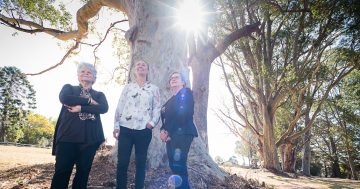
Around 50 people attended the graveside funeral in the beautiful surroundings of the natural burial conservation site in Bodalla.
Wes said it was a relatively large group, so it was lovely to have it all in one spot instead of having to drive from the funeral service to the cemetery.
He was one of the pallbearers. He said onlookers would not have been able to tell that the coffin was made of rigid cardboard that biodegrades quite quickly.
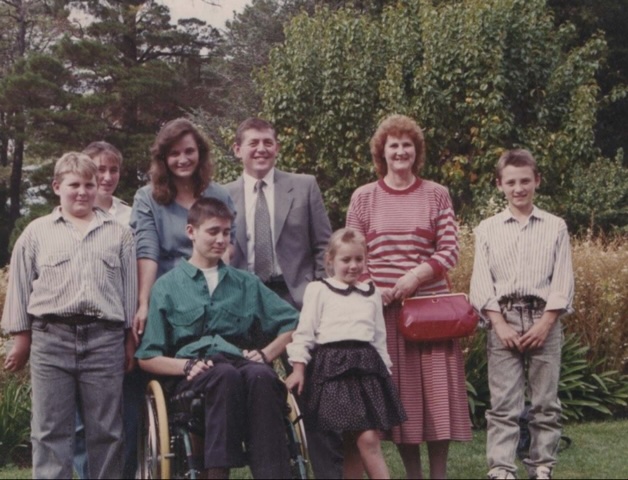
Chris Campbell and his family in the early 1990s. Photo: Supplied.
He said there would never be any “distracting” headstones at Walawaani Way.
“It makes it feel more personal in the years to come when people want to visit and remember Chris,” Wes said.
He said Walawaani Way went above and beyond to get permission from Eurobodalla Shire Council to hold the funeral service and burial in October before construction of the road was complete.
Ms McCuaig said as well as being a 100 per cent natural burial ground, in an Australian first, Walawaani Way went one step further by regenerating the burial area back to endemic forest for wildlife habitat.
Wes appreciates the fact that Chris is buried not too far from the Moruya cemetery where their father is buried and is really pleased that Chris got what he wanted.
“He didn’t have control over a lot of things in his life. This was one thing he could have done in a particular way,” Wes said.
“I think he would have been pleased knowing we could lay him to rest there rather than in a more traditional cemetery which wasn’t so much his thing. Someone at the funeral had said that the natural burial ‘was very Chris’.”