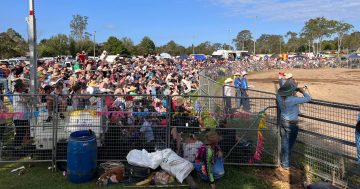
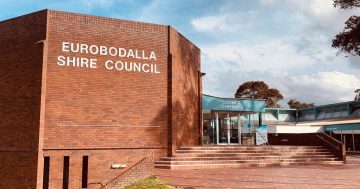
Moruya Markets is an outlet for local producers and artisans. Photos: Supplied.
For more than 40 years Moruya Markets has provided an outlet for local producers and artisans. Over that time its scale and reputation has grown. It is now the largest weekly market south of Sydney, regularly bringing locals and visitors into the centre of Moruya which benefits the town’s businesses.
As a not-for-profit Moruya Markets has given thousands of dollars over the years to local charities and community members in need.
Behind the market is a group of volunteers including market supervisor David Riches. His wife Kerri recently became president of the management committee. Both have been involved with the market since it was first set up in the carpark behind the Adelaide Hotel in the very early 1980s.
“We started with about 10 stalls and a few craft ladies,” Kerri said.
The ladies made things like babies’ booties and there was an array of second-hand items displayed on an ironing board.
Billy Turner brought produce from his farm north of Moruya. “He would park his very old truck with all the veggies in the back of it.”
The arrangement worked very well for nearly 30 years until the carpark was no longer available.
Around that time, the caravan park on Crown land near the river had left and council was in the process of fixing up the land and planting trees.
“Council approached us,” Kerri said. “They were doing up Riverside Park and designed the pathways with the market in mind so that stallholders could drive in and not hurt the grass.”

Moruya Markets run every Saturday.
Kerri said they now had around 120 stallholders most Saturdays.
“We are the only weekly market anywhere on the coast that sells everything – fresh produce and local crafts and wares – and we have at least 95 per cent locals.”
Moruya Markets is on a five-year lease with council. It expires in June.
Moruya Markets charges permanent stallholders $30 each Saturday. In turn council charges Moruya Markets $22 per stall each Saturday, leaving Moruya Markets with $8 per stall each week. For powered sites, Moruya Markets charges stallholders $40 and pays $28 to council, leaving $12 per week.
From its share, Moruya Markets pays for advertising, insurance for the paths and walkways, annual registration as an incorporated not-for-profit, and insurance for the management committee.
Kerri said that on 1 July council would increase the charge per site for stallholders by $2.
“In our last letter to council’s Andrew Greenway we said we are going out the door backwards and don’t have enough money to give to the community as we used to,” she said. “His advice was to put up our fees.”
Some stallholders have been coming to the market for 40 years. “They are lucky to fully cover their fees,” Kerri said. “They come for the social aspect and the activity. It is their weekly outing.”

Moruya Markets brings huge crowds into Moruya.
Kerri said over the years they had donated to many local charities and organisations including sporting events, children going overseas, chairs for the hospital’s chemotherapy unit, the RSPCA, Carols by Candlelight, the poultry club, CanAssist and BeyondBlue.
“Our aim is to give locally such as if someone’s house burns down or someone can’t afford a funeral,” she said.
Kerri said council’s charges for markets held by not-for-profits on weekends resulted in Moruya Markets paying $113,500 in the financial year that ended 30 June 2025.
“It will be more this financial year as we have had a significant number of permanents coming regularly,” she said. “The markets have been fuller, look good and feel great.”
Council’s website said those rates of $22 and $28 were partial cost recovery. That means, keeping low-income users in mind, council is subsidising operations such as Moruya Markets that benefit the broader community.
Markets run by not-for-profits on weekdays get a 25 per cent discount from the weekend rate, while the weekly SAGE Farmers Markets receives a 40 per cent discount from the weekend rate. SAGE charges stallholders $45, or $50 for a powered site.
Voluntary service and rescue clubs such as Lions and Marine Rescue are charged a flat rate of $124 for a market. If one of those organisations held a weekly market, they would pay council $6448 this year.
“If we didn’t have a lease and went on a casual basis we would be charged half, but there is no guarantee we would have that space,” Kerri said.
The question is will Moruya Markets charge its stallholders more, will council agree to a discounted rate like SAGE Farmers Markets has, or will Moruya Markets find it unviable to renew its lease in June?