


The Royal Hotel Marulan. Photo: Bec Duncan, Australian Pub Project Facebook.
Standing proud on Earth’s 150th meridian in the town of Marulan is a private house of unusual proportions. Built as if it stands on a corner, but it’s not on a corner. Abruptly chopped at one end as if it should be attached, but it’s not attached, and with a parapet bearing a business name, but it’s not a business.
It’s the former Royal Hotel, and it hasn’t poured a beer since Australia’s federation in 1901.
That moment marked a seismic shift in New South Wales’ pub landscape. A coordinated push from the temperance movement triggered a widespread cull of licensed premises, leaving behind a drastically reduced drinking scene.
To understand how it got there, you have to rewind to the colony’s earliest days. By the 1790s, Australia had a booming trade in smuggled rum and a serious drinking problem. In 1796, Governor John Hunter introduced the first liquor licences in an attempt to regulate the issue — just 10 across the colony. But with strict curfews and limited supply, sly-grog shops flourished, and drinking simply moved underground.
The system was too limited and failed to curb consumption, so authorities swung the other way. By the late 1800s, liquor licences were handed out liberally, and towns such as Goulburn boasted up to 75 pubs and liquor sellers. Unsurprisingly, drunkenness remained as popular as ever.
Enter the teetotallers, or, as they preferred to be called professionally, the temperance movement. They had global roots, were organised and were one of the most successful lobby groups of the colonial period. Their goal was simple: limit the sale of alcohol to achieve the holy grail — full prohibition.
Across a 100-year period from the 1830s, they reshaped the social fabric of our state. Coffee palaces sprang up. These pub-like structures were designed for socialising without the demon drink. More significantly, licensing laws tightened. A uniform renewal system was introduced, and many venues simply didn’t make the cut.

The Albion Hotel in Braidwood, pictured in 1928, failed to make the licensing cut in 1933 when the owners couldn’t afford to bring it up to standards. Photo: Time Gents Facebook.
For Marulan’s Royal Hotel, the uniform cessation of licences, coinciding with Federation, was the end of the line. For countless others, it was the beginning of a slow, drawn-out extinction.
On paper, these reforms read as policy. In reality, they were devastating. Publicans who had invested heavily in their businesses suddenly faced ruin.
In 1905, George Smith of Sydney’s British Lion Hotel voiced what many were feeling and his words bring the human side to the story.
“If I lost my licence, I would have a twenty-year lease on my hands. In taking this house, I got a long lease in consideration of spending nearly 1000 pounds on improving the premises. I had to take the building next door to comply with the requirements of the Licensing Act. The whole place had to be remodelled in order to satisfy the inspectors under that act. This outlay is, of course, in addition to what I paid for the licence. The government was the direct cause of my expending so much money on the place, and to deprive me now of my licence would be hard.”
If you consider the reshaping of licensing laws, the major cull of drinking establishments across the state and a 17-year period of full prohibition in Canberra, the temperance movement was successful, but when you look more closely, you see that the people will always find a way.
When pubs’ trading hours were restricted, working men’s clubs emerged, operating outside the new licensing laws.
Canberrans simply hopped across the border to Queanbeyan, where the pubs thrived.
Coffee palaces, the temperance movement’s great hope, largely failed and failed fast. In an ironic twist, many of these grand buildings reverted to licensed pubs within a few years and have been enjoyed by drinkers ever since. The Dromedary Hotel in Tilba is a case in point: opened as a coffee palace in 1895, it was serving alcohol by 1899 and does so to this day.
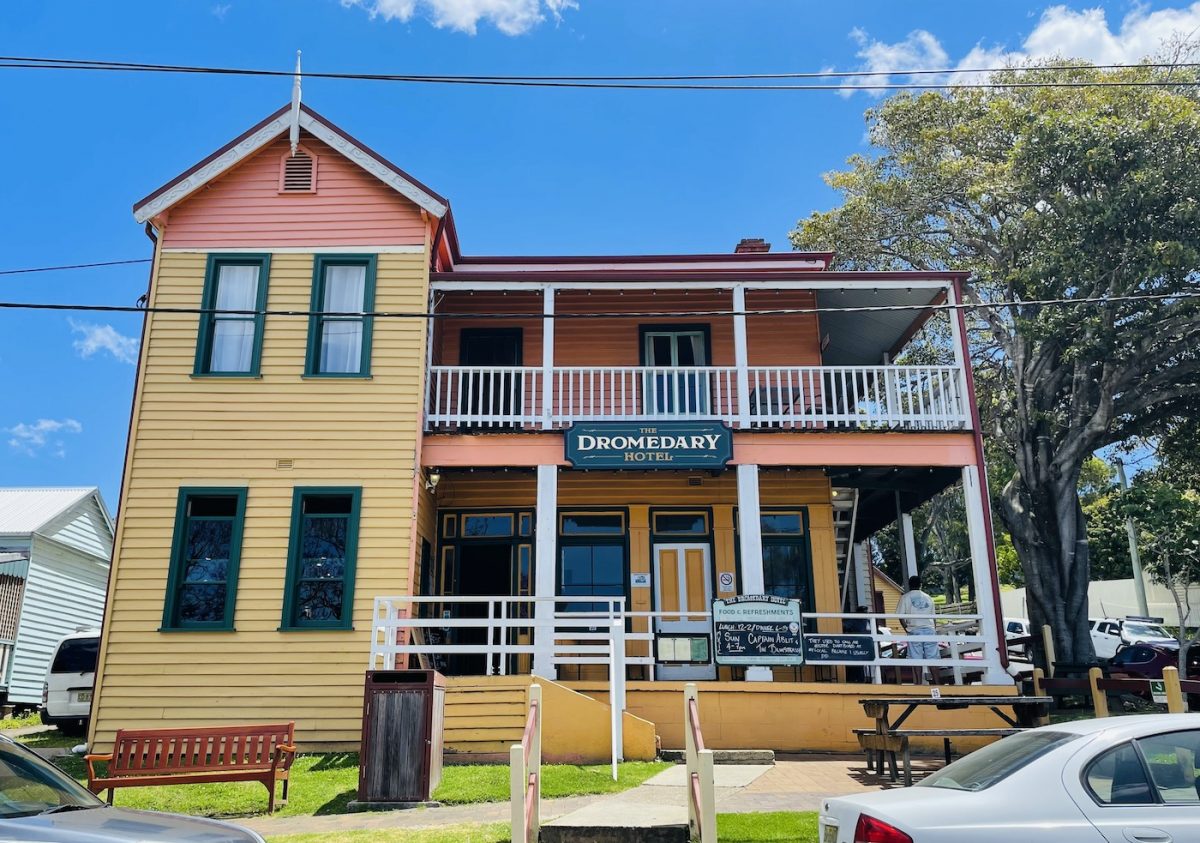
The Dromedary Hotel, once a temperance movement coffee palace, has served alcohol for 127 years. Photo: Lisa Herbert.
Curfews came and went. The 9 pm closing time tightened to the infamous 6 pm swill, only to be scrapped in 1954 after decades of unintended consequences: namely, drinkers simply finding other ways and places to imbibe.
No matter how you look at it, Australians continued to drink no matter what was thrown in their way. Fast-forward to today, though, and one wonders whether the temperance movement could have saved itself the trouble and let time do the heavy lifting. Alcohol consumption in Australia is at a 50-year low, driven not by regulation, but by shifting social habits, particularly among the younger generations.
As for the pubs that survived the great cull of the early 20th century, they now face the century’s greatest social shift when it comes to a nation’s desire to enjoy a cold schooner. But if history tells us anything, it’s that Australians will always find a way to gather, whether over the golden ale or perhaps, as the temperance advocates once hoped, a cup of coffee.







