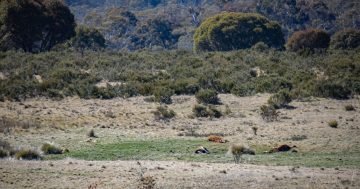
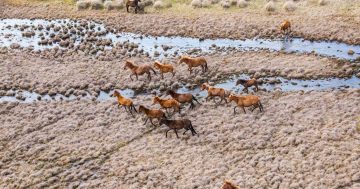
The ACT’s bogs and fens can be found in its mountainous areas and are a vital part of the water catchment. Photo: NPA ACT/ACT Parks and Conservation Service.
A delicate ecosystem is hidden in the higher mountain areas of Namadgi National Park, working hard to provide Canberrans with clear water to drink.
They’re freshwater wetlands, also known as bogs and fens, rich in peat and usually covered in sphagnum moss.
The endangered ecosystems also support some of our most vulnerable native species, such as the Northern Corroboree Frog, the Broad-toothed Rat, Verreaux’s Alpine Tree Frog, Riek’s Crayfish, Kiandra Greenhood and Brandy Mary’s Leek Orchid.
They were decimated by the 2020 Orroral Valley bushfire, which burned more than 80 per cent of Namadgi National Park, and climate change is hindering their recovery.
“We’re going to have less winter, less snow, and longer, warmer summers in the years ahead,” National Parks Association (ACT) president Dr Rosemary Hollow explained.
“This means some of these areas will dry up … If they dry up, these species have nowhere to go.”
Canberra’s protected areas are managed by ACT Parks and Conservation with help from other organisations.
Icon Water is deeply involved in helping to rehabilitate the mosses and ensure bogs stay wetter for longer.
Environment and sustainability spokesperson Ben Bryant described them as Canberra’s “green kidneys”.
“When [the area] burned in 2020, there was no vegetation … without that vegetative cover, we had ash and dust and nutrients washed into our waterways,” he said.
“When there is vegetation in our waterways … we get that natural filtration back. We want the best water quality possible before putting it through our multi-barrier treatment systems.
“Nature does so much of the heavy lifting.”
Rehabilitation work has included installing shade cloths over living areas of sphagnum moss, coir logs to prevent erosion and slow water flow through the wetlands, and silt curtains to prevent sediment from moving down the system.
Icon Water also has an adaptation plan for when the season brings higher temperatures, reduced cool-season rainfall, and increased evaporation.
Canberra has three catchments to choose from for its water supply, which also serves the Queanbeyan and Googong areas: the Cotter River Catchment, the Queanbeyan River Catchment and the Murrumbidgee River Catchment.
Mr Bryant said that Icon Water was already having to consider population models alongside climate change impacts to ensure the region continued to have a secure water supply.
“If the population continues to grow, we potentially have to look for other water supply options for the area,” he said.
“We’ve projected … [we’ll] have to start to look at other water supply options over the next few decades.”
The ACT also has an ecological action plan for its high country bogs and associated fens.
Work to be done includes establishing long-term monitoring and management programs and mapping to establish baseline data on the location and extent of the Territory’s alpine wetlands.
An ACT Government spokesperson said more than 30 monitoring sites had been set up since September 2024.
“All sites have been surveyed at least once, with the first round of revisits planned over the next 12 months,” they said.
“The program is already helping to identify priority weed issues, inform annual pest management programs, and guide rehabilitation works. It will also contribute to future fire preparedness planning.
“The Bogs Monitoring and Management Program collected baseline data across all target sites between 2024 and 2026. This information will be used to establish target conditions and management trigger points, which are currently being developed in consultation with Parks and Conservation Service staff. Future remapping may be considered as climate change impacts continue to emerge.”
The Commonwealth-funded Managing Threats to High Country Wetland Project provides for a full-time program coordinator and on-ground management actions until 2028.
But the NPA ACT is worried there isn’t enough money in the pipeline to ensure Parks ACT can cover not only the bogs and fens but also all the land it’s responsible for.
“The current funding is totally inadequate,” Dr Hollow argued.
“[Parks ACT] doesn’t have enough funding and staff to manage such large areas … there needs to be long-term funding for these people to do their work.”
The government spokesperson said much of the division’s funding was recurrent, and the 2026-27 ACT Budget also included initiative and capital funding.
“This is further supplemented by Australian Government grants and other revenue sources,” they said.
As the battle over funding continues, there are ways ordinary Canberrans can help to preserve bogs and fens.
These include people respecting the rules in catchment areas, such as staying out of the water and taking rubbish away.
“That all helps to protect the quality of the water supply,” Mr Bryant said.
Original Article published by Claire Fenwicke on Region Canberra.