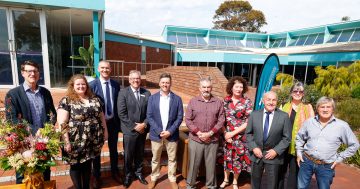
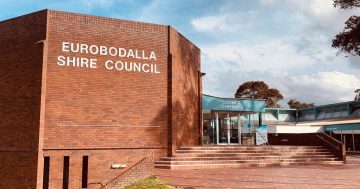
The pump station upgrades are forecast to cost $50.7 million over a decade. Photo: Karyn Starmer.
Starting 1 July 2027, Eurobodalla ratepayers will pay higher sewerage rates to fund essential upgrades of the Tomakin sewage treatment plant and 21 sewerage pump stations.
At a councillor briefing open to the public, councillors learnt that over the 10 financial years from 1 July 2026 to 30 June 2036 projected expenditure on sewerage is $179.5 million. That is $67.9 million above the current budget of $111.6 million.
The Tomakin sewage treatment plant upgrade is forecast to cost $62 million, $34.6 million higher than the current budget of $27.4 million. Staff said the upgrade’s current budget was based on 2018 estimates and there had been significant cost escalation since, including during the period of the COVID pandemic.
The sewerage pump station upgrades are forecast to cost $50.7 million over 10 years, $25.7 million above the budgeted $25 million. Council staff said the current budget annual allowance of $2.5 million was insufficient for the scale of work required and 21 sites had been identified as requiring work in the near term.
Councillors were told about the budget shortfalls when they were briefed on the water and sewerage capital works delivery program 2026-2036. The background to the program is council’s Integrated Water Cycle Management Strategy that was reviewed and updated in 2022. Council said much of the work that had been identified was put on hold for a few years after the bushfires and COVID, and only picked up again in the past two years.
The 30-year strategy ensures current and future water security, water quality and sewerage management needs and risks are addressed.

A slide from council staff’s presentation to councillors. Photo: Eurobodalla Shire Council website.
The Tomakin plant upgrade is needed because the facilities at Batemans Bay are at capacity and any expansion there is constrained. Work on the Tomakin upgrade is expected to start in 2027 and on the associated Malua Bay diversion in 2029.
To fund the $67.9 million budget deficit council will borrow $61 million next financial year.
Against that ratepayers will pay a one percent rate variation on the sewer access charge in the 2027-28 financial year, a one per cent variation in the 2028-29 financial year and a 1.5 per cent variation in the 2029-30 financial year. Based on the current average residential sewer access charge of $1230, staff said the cumulative effect would be $52 per year.
Councillor Rob Pollock OAM asked why the upgrades at Tomakin would use more expensive operating systems. Staff said the Tomakin plant did not meet current phosphorous and bacterial requirements, so newer and costlier systems were needed.
Councillor Sharon Winslade said it was a shock to learn that a $61 million loan was needed.
Council’s general manager Mark Ferguson said the NSW Environment Protection Authority had higher expectations of delivery of water into the environment, and “there have been massive increases in construction costs and material costs”.
In response to questions by Councillor Colleen Turner, staff said the 10-year program took into account population growth and seasonal variations in demand on water and sewerage infrastructure and services. They said it had become very difficult to get state government grant funding for water and sewerage projects.

Deep Creek Dam near Mogo. Photo: Eurobodalla Shire Council.
The good news is that projected 10-year expenditure on water is only $7.7 million higher than the current budget. That is due to the Dalmeny Water Main upgrade project that is forecast to cost $8.8 million. It had not been included in the current budget.
The big ticket item in the water budget is the Southern Water treatment plant, forecast to cost $22.5 million. Staff said the current treatment plant did not meet standards and they would rather not use it.
Cr Winslade asked when the Southern Storage Dam would come online given drought scenarios.
Staff said they were comfortable with the capacity of Deep Creek Dam near Mogo and harvesting water from the Deua River. There is 1.4 years of water in the dam, plus water harvesting, to keep levels at 97 per cent capacity. “We would rather not use the current water treatment plant,” staff said, adding the best way to manage drought was to manage leaks and through conservative water use.
“It is better to get a new up-to-standard treatment facility up as quickly as possible so we can access the water storage system,” Mr Ferguson said. Construction is expected to start in 2029.