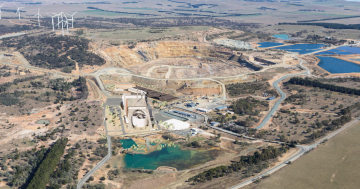
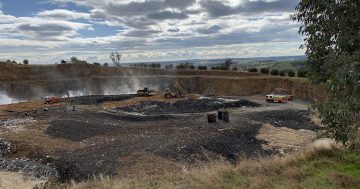
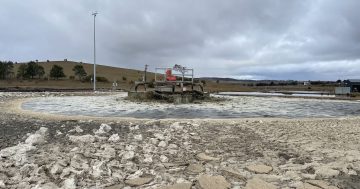
The Woodlawn Eco-Facility at Tarago, in the NSW Southern Tablelands, run by Veolia. Photo: Veolia ANZ.
The state’s environmental watchdog has fined Veolia over “ongoing compliance issues” at its landfill outside Goulburn.
Woodlawn Landfill at Tarago, located about 30 minutes from Goulburn in southern NSW, is managed by Veolia Environmental Services (Australia) Pty Ltd.
It was recently hit with a NSW Environment Protection Authority (EPA) fine totalling $48,000.
EPA Executive Director of Operations Stephen Beaman said this regulatory action was part of an escalating EPA response to what it saw as ongoing environmental performance issues at the landfill.
“We’ve been conducting frequent inspections of the landfill since late March, after an EPA investigation identified significant issues with the site’s landfill gas and leachate [a kind of waste water] management systems,” he said.
“During several inspections, EPA officers observed extensive areas of exposed waste across the landfill slopes, with evidence that daily cover material was not being consistently applied.
“This is particularly concerning because daily cover is both a fundamental landfill management practice and a requirement of the site’s licence. Veolia is aware of this, and the community is entitled to expect better environmental performance from a licensed facility of this nature.”
Earlier this year, the company was handed a prevention notice over concerns around elevated leachate levels, surface liquid pooling and impaired landfill gas extraction at the landfill site.
“The EPA reasonably suspects that the licensee’s existing internal monitoring, assessment and response arrangements have not been sufficient to reliably identify, manage and prevent the conditions contributing to fugitive landfill gas emissions and odour impacts,” the notice outlined.
The fines were issued across four penalty notices.
One of the notices concerns a $45,000 penalty for failing to apply a daily cover to landfill waste.
A Veolia spokesperson did not explicitly answer a question from Region about the strategies used to ensure waste is appropriately covered at Woodlawn Landfill.
“Recent attempts to improve management of odour and to keep as many gas wells active as possible saw us change how we applied daily cover in certain areas,” they said.
“Unfortunately, this change inadvertently led to some areas becoming exposed. Following discussions with the EPA, we immediately remedied the situation.”
The spokesperson also said Veolia remained committed to reducing odours at the landfill, pointing to a “consistent reduction” in complaints over the past four years.
The company said it was also waiting on EPA approval for plans to expand its leachate treatment and increase liquid storage capacity.
“We expect this will support the downward trend in odour complaints,” the spokesperson said.
Veolia also received three $1000 penalties for failing to publish landfill gas extraction data on three occasions.
Mr Beaman said the EPA had previously reminded the company about its obligations.
“Monitoring and reporting requirements are not optional. They’re essential licence conditions that demonstrate whether environmental controls are operating effectively.
“The failure to publish this information over multiple months points to ongoing compliance issues rather than a one-off administrative oversight.”
When asked about its data reporting by Region, the Veolia spokesperson said the company was committed to transparency.
“One of the three data points that the EPA questioned was available but through administrative error had been mislabelled. The other two were uploaded as soon as we became aware of their absence,” the spokesperson said.
“As a commitment to transparency, we have updated our website to ensure the data of most interest to the community, including air monitoring data, is more easily accessible.”