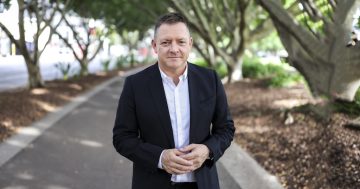
As inquiry chair, Nichole Overall used her foreword to call for increased transparency and engagement around waste incinerator technology. Photo: Supplied.
Proposed waste incinerators are missing “numerous critical elements” and shouldn’t go ahead, a state inquiry has recommended.
The technology, also known as waste-to-energy or WtE, burns rubbish and uses the heat to generate power.
There are two proposed incinerators in NSW, put forward for sites at Tarago (about 40 kilometres south of Goulburn) and the Central West town of Parkes.
If approved, these facilities would become the first waste incinerators operating on Australia’s eastern seaboard.
A NSW Parliamentary inquiry has spent months investigating the possible use of the technology in the state, including at a two-day hearing in Goulburn earlier this year.
In its final report, published on Tuesday afternoon (20 October), the committee outlined what it saw as a widespread lack of community support for the proposals.
It also noted fears around risks to human health, agriculture and farming, land contamination and Aboriginal cultural heritage.
In her foreword, Nichole Overall MLA said the inquiry had heard “consistent questions” about why regional sites were chosen for the proposals and whether there had been genuine community consultation.
She described the state as “searching for a ‘silver bullet’ solution” without focusing first on other, more structural challenges around waste management.
“The NSW government needs to look beyond the next landfill deadline, the next facility or the next immediate crisis and ensure that decisions made today do not simply shift the burden of waste from one community to another, and from one generation to another,” she wrote.
In its 22 recommendations, the committee called for the NSW Government to establish a moratorium on the current proposals before an independent review into site selection and their impacts is carried out.
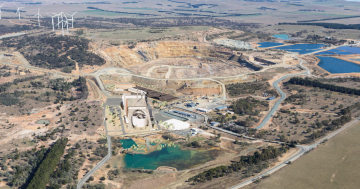
Several recommendations concern Veolia’s proposed Woodlawn Advanced Energy Recovery Centre at Tarago. The incinerator could process up to 380,000 tonnes of waste a year, generating up to 30 megawatts of electricity.
The project has long triggered community backlash, with the Goulburn Mulwaree Council pledging its “total opposition” to the facility.
Nearby Queanbeyan-Palerang Regional Council also denounced it in 2022, while Yass Valley Council (YVC) has also flagged its opposition to the project.
In its report, the committee pointed to fears that the area’s farming community could become contaminated — especially from residents who rely on harvested rainwater for personal or farming use.
“Against this background, stakeholders expressed concerns that pollutants, including heavy metals, dioxins, and furans, could disperse from WtE facilities and accumulate in soils, crops, pastures, and waterways, affecting livestock, agricultural production, and human health,” the report states.
Veolia already operates the Woodlawn landfill in the area.
The committee found that community confidence in the NSW Environment Protection Authority has been “eroded by compliance issues” at the precinct and a perceived failure by the agency to act.
“Community concerns also extend to the NSW Environment Protection Authority’s capacity and resourcing to regulate emerging waste-to-energy technologies, and its dual role in implementing waste-to-energy policy and regulating the sector,” the report states.
The committee recommends that an independent review of the facility’s “compliance history, regulatory breaches and rectification measures” be carried out.
It also recommends independent monitoring of the proposed incinerator’s impact on the Sydney drinking water catchment to ensure it follows water quality standards.
Its other recommendations include calls for NSW to expand its landfill capacity, publish a cost-benefit analysis for different waste management approaches, establish minimum buffer distances between waste incinerators and other facilities and establish a dedicated agency with clear responsibility for waste management.
Deputy chair Dr Amanda Cohn MLC lodged one of two dissenting statements to the inquiry.
She called for an existing prohibition on incinerators to be extended across the state, and said this would stop communities living with “uncertainty for years to come”.
“It is extraordinary that the government continues to promote incineration as a necessary part of the solution to waste management in NSW, when not all steps have been taken to reduce waste at its source.”
In a separate statement, Labor MP Emily Suvaal said that the state’s existing waste management framework was already struggling.
She said a combination of methods would be needed to deal with rubbish, with waste incinerators to play a part in that framework.
“A moratorium on Energy from Waste is not possible without viable alternatives in place … The state may also require additional landfills and must increase recycling capacity.”
A NSW Government response is due by 20 January, 2027.
Veolia has been contacted for comment.