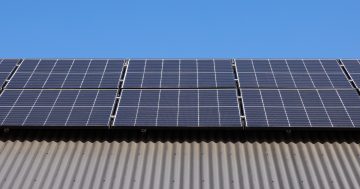
A 40-hectare property in southern NSW could host a new solar farm. Photo: Michelle Kroll.
A proposed 14-hectare solar farm in southern NSW has been referred to a statewide planning body.
EDPR Renewables Australia lodged plans with Queanbeyan-Palerang Regional Council (QPRC) for the Ballalaba project, which was referred to the Southern NSW Planning Panel late last month.
The documents state that it would comprise about 10,800 solar panels in 120-metre rows running east to west.
“The height of each module is approximately 2.0 metres to 2.75 metres and the mounting system is constructed on piles that are driven into the ground, typically within the depths of 1.5 metres to 3.0 metres,” the proposal says.
“Each row of solar photovoltaic (PV) modules will rotate to track the sun across the sky from east to west each day.”
The solar farm would be on a roughly 40-hectare property about 20 minutes from Braidwood.
A 2.9-metre-high battery energy storage system (BESS) also forms part of the proposal, as does a plan to install an additional power pole in the site’s north-west to connect to existing power lines.
“Any surplus electricity will be stored by the BESS and/or sent to the grid and any deficit will be drawn from the BESS and/or the grid,” the proposal says.
A three-metre-wide vegetation strip is proposed for the outside of the site’s security fence.
This would run along its eastern side.
An existing driveway off Wallaces Gap Road would also be used for access to the proposed project.
Meanwhile, a traffic assessment says the presence of three staff members once a quarter would have “no adverse impact” on nearby roads.
That assessment also states that B-double trucks would be used only during the farm’s construction.
“Indeed, it has been advised that the subject site will require approximately 45 trucks (up to and including 26 m B-doubles) for delivery over the entire construction period and is expected to generate up to eight (8) truck movements per day (4 inbound, 4 outbound),” the assessment says.
“The trucks will access the site throughout the day, generally between 10 am and 2 pm, and would therefore not contribute to morning or afternoon peak-hour traffic.”
The DA documents predict that construction would take about three months, with about 50 workers on site (but only 30 expected to be there at a time).
Once built, the facility is expected to operate for about 35 years.
“The solar panels and related infrastructure will be decommissioned and removed upon cessation of operations,” a statement of environmental effects outlines.
“This is likely to occur within two years of the end of the project. The site can then be returned to the pre-development land use or as agreed upon.”
An FAQ document lodged as part of the DA states the solar farm could supply 13,300 MWh of electricity a year, which would be enough to power about 2150 homes.
According to the documents, the site is currently zoned RU1 — Primary Production.
“The proposed development is satisfactory to the objectives of the zone RU1 in that renewable energy through the harnessing of sunlight is a form of primary industry.
“The development will thereby maintain the rural function and primary production values of the land.”
The documents also describe impacts — including those around glare, traffic and biodiversity — as being considered “acceptable”.
EDPR Australia is also behind a push to establish a solar farm and battery system off the Princes Highway near Cobargo, on the NSW South Coast.
Plans for that project were lodged with Bega Valley Shire Council earlier this year, before being referred to the Southern Regional Planning Panel.
It also remains under consideration.