NPWS is hardening and sealing the parking area at Nelson Beach. Photo: Supplied.
Bermagui and Tathra residents are dismayed by National Parks and Wildlife Service’s (NPWS) recent work in Mimosa Rocks National Park’s Nelson Beach.
Residents said the new works – including proposed bitumen sealing of a much expanded parking area, black plastic bollards and concrete edging – were out of keeping with the park’s low-key character.
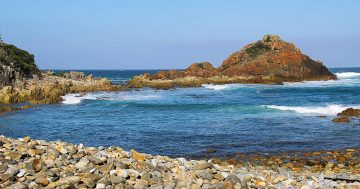
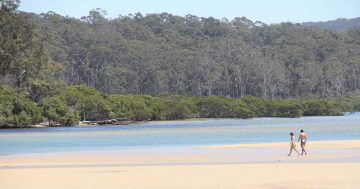
Mimosa Rocks is known for its pristine lagoons, beaches and wild coastline. It is popular with nature lovers, birdwatchers and artists.
In March 2025 the park was awarded $6.5 million from the Federal and NSW governments’ $200 million Infrastructure Betterment Fund for repairing and rebuilding public assets directly impacted by natural disasters. Localised flooding in 2021 and 2022 caused damage that led to temporary closures of some campsites and visitor precincts.
The funding is being used to upgrade the park’s drainage systems, to relocate some campsites to minimise future inconvenience due to flooding, some track surface repair and pedestrian beach access points to mitigate the effects of ocean storms and dune erosion. The work is targeted at Aragunnu, Gillards Beach, Middle Beach and Nelson Beach.

Nelson Beach in Mimosa Rocks National Park. Photo: J Yurasek/NPWS.
In February 2026 NPWS said Nelson Beach Road and car park, Moon Bay access and Wajurda Point Lookout would be closed from February until mid-2026 for the work.
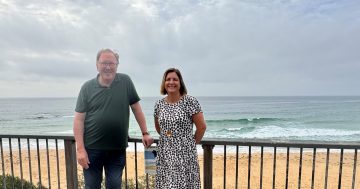
Residents Peter Hay and Cathy Griff are shocked by the extent of vegetation clearing and over-engineering at Nelson Beach. They agree that NPWS generally does great work, constrained by limited funding and resources, but think it has made grave mistakes at Nelson Beach.
They argue flooding had not been a significant issue at the beach and questioned the necessity of the work with such change to the site’s character.
NPWS said the work was necessary to protect vegetation from vehicle damage. Mr Hay said he was not sure how “dozing and chipping” ancient vegetation helped and that the actual changes were not revealed in early consultation.
Mr Hay believes NPWS has not understood the site and the notion of “place”.
“The concept of place refers to a location imbued with significance to locals, regular users and particularly Indigenous people,” Mr Hay said.

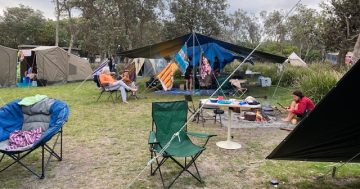
Work is also planned at Aragunnu in Mimosa Rocks National Park. Photo: J Yurasek/NPWS.
Ms Griff said work was clearly needed to address erosion damage on the beaches but doubling the parking would lead to damage to the fragile coastline from visitors.
Mr Hay said the Review of Environmental Factors (REF) showed that 1.35 ha of the 2.57 ha work site would be cleared and that more than 80 mature burrawangs and several spotted gums had been removed.
They have written to NPWS appealing to forego the asphalting in the parking area, leaving it unsealed like most other national park bush destinations.
David McMillan, a bushwalker for 50 years, claimed NPWS had not been maintaining the park’s walking tracks. He said the recently replaced Hidden Valley bridge now led to nowhere because the trail from the bridge to Bunga Headland was inaccessible due to regrowth and fallen trees.
In a statement NPWS said the works at Nelson Beach were designed to improve safety, enhance the precinct’s resilience to extreme weather and protect the park’s natural and cultural values, while sustainably managing existing visitation.