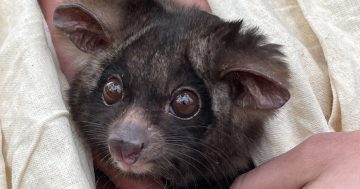
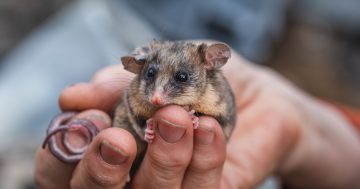
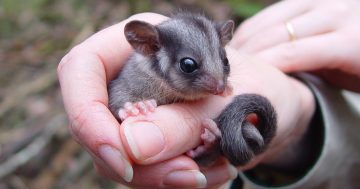
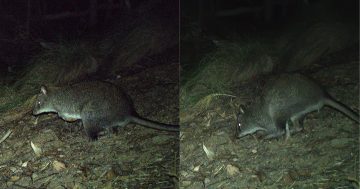
The Southern Greater Glider’s numbers are in decline on the South Coast. Photo: Gerroa Environmental Protection Society.
A Gerroa environmental group has called for Seven Mile Beach National Park to be expanded in a bid to protect an endangered marsupial.
The Gerroa Environment Protection Society (GEPS) says new scientific evidence that has come to light shows the urgent need to secure habitat for the Southern Greater Glider and protect one of the South Coast’s most ecologically significant landscapes.
GEPS spokesperson Liama Aesha said studies since 2021 confirmed that Greater Glider populations across the South Coast were in steep decline.
“Seven Mile Beach now stands out as one of the last remaining strongholds for the species on the South Coast,” she said.
“ … Research shows the local population is currently stable, but the existing national park does not contain enough habitat to support a viable population into the future.”
The Southern Greater Glider is the largest gliding possum in eastern Australia and can glide up to a horizontal distance of 100 metres, including changes of direction of as much as 90 degrees.
GEPS has written to NSW Environment Minister Penny Sharp, proposing an extension of the park, which currently spans from Gerroa to Shoalhaven Heads east of Nowra.
“SMB vegetation encompasses an association of seven Endangered Ecological Communities that support at least 13 endangered or threatened species (Jones, 2021),” the group’s letter to the minister said.
“It is most probably the last stronghold of the endangered Southern Greater Glider on the South Coast (Daly 2025) and encompasses the state’s most significant Coastal Freshwater Wetland.
“The existing SMB National Park protects approximately half this vegetation, however most of the scientifically important groundwater-dependent ecological communities, wetlands and significant areas of Greater Glider habitat are located on the western side of Crooked River Road outside the National Park.”

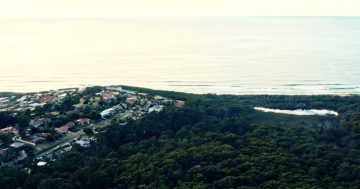
Seven Mile Beach in the national park. Photo: John Spencer/DCCEEW.
The group is proposing an extension into adjoining Crown and freehold lands at both the extreme northern and southern ends of the current park, as well as vegetation west of Crooked River Road and to the west of Gerroa Road.
It is concerned that much of the high-value habitat outside the current national park boundary is vulnerable to clearing, fragmentation and development pressure.
“GEPS is calling for the protection of these adjoining areas. These landscapes form the ecological backbone of the Seven Mile Beach system and are critical for maintaining the long-term survival of the Greater Glider and other threatened species,” Liama said.
“More than 80 hectares of Endangered Ecological Communities and primary Greater Glider habitat have already been cleared for sand mining at Seven Mile Beach.
“This clearing has fragmented the forest, reduced canopy connectivity and removed hollow-bearing trees — an essential resource for the species.
“Each Greater Glider requires between five and fifteen hollows, making the loss of mature trees a major threat to population viability.
“The Illawarra Shoalhaven Regional Plan acknowledges the conflict between sand extraction and biodiversity protection, noting that mining would have considerable impact on this ‘sensitive habitat and ecological link’.”
Original Article published by Jen White on Region Illawarra.