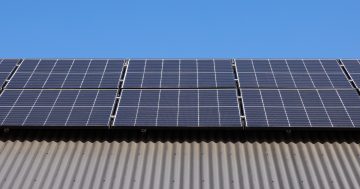
A multinational company has failed in its bid to bring a solar farm and battery system to a 14-hectare site near Braidwood, in southern NSW. Photo: Michelle Kroll.
A NSW planning panel has found in its assessment of a solar farm that the multinational company behind the proposal provided “insufficient information”.
EDP Australia had lodged plans with Queanbeyan-Palerang Regional Council (QPRC) to build about 10,800 solar panels near Ballalaba, about 30 km south-west of Braidwood.
The NSW Southern Regional Planning Panel (SRPP) has knocked back the proposal.
If approved, a 2.9-metre-high battery energy storage system (BESS), vegetation and other infrastructure would have been built across the 14-hectare site.
In its determination, the panel took aim at EDP Australia’s preparation of key documents assessing possible impacts to Aboriginal heritage, visual amenity and traffic flow.
“The panel notes that the applicant did not seek a deferral of the determination as previously requested but submitted at the public determination meeting that there was sufficient information for the panel to issue conditional consent,” members wrote in their decision.
“The panel concluded, however, that the applicant had not demonstrated that the site would be suitable for the proposed development [under the] Environmental Planning and Assessment Act 1979.”
The SRPP found “insufficient assessment has been undertaken to date” about how Aboriginal cultural heritage could be impacted if the development went ahead, and how the effects could be mitigated or avoided.
The panel members said without an Aboriginal Cultural Heritage Assessment Report (ACHAR), they couldn’t legally approve the proposal.
“The panel notes that no such assessment has been undertaken despite previous requests by the council that a ACHAR be prepared and submitted in support of the application,” they said.
In a statement to Region, an EDP Australia spokesperson said the company hadn’t decided whether it would lodge an appeal against the decision.
They said the company saw sections of the SRPP’s findings “differently”.
The spokesperson said while an Aboriginal cultural heritage assessment was completed, this flagged that further subsurface assessment would be needed.
“EDP Australia then sought independent expert advice on when that additional work should occur, and the advice – which was subsequently presented to the panel – was that the subsurface work would normally occur after development approval,” they said.
“Our position is not that further assessment was unnecessary, but that it was intended to occur at the appropriate stage of the process based on the professional advice we received.”
In making its decision, the SRPP also said EDP Australia hadn’t properly assessed the visual impacts on nearby residents, pointing to the lack of a viewpoint analysis from potentially affected residences.
“[They should], where possible, have established representative viewpoints to the proposed development … This is especially true for properties identified as highly or moderately affected.”
Earlier this month, a public meeting heard about a dozen speakers who urged the SRPP to reject the proposal.
At the time, a QPRC spokesperson noted the council’s opposition in its assessment report, and called for the proposal to be rejected.
After the decision, a council spokesperson told Region its objection came from an assessment of “several unresolved planning, environmental and heritage issues” within the proposal.
“Council’s planning team will meet with the applicant and provide advice on what is required if the DA is resubmitted,” they said.
During that public meeting, several community members said the solar farm and BESS would function as a microgrid and increase the area’s resilience.
But panel members found this hypothetical use wasn’t being assessed.
“The panel acknowledged some community support for using the facility as a microgrid during emergency periods; however, the panel noted this did not form part of the development application,” it said.
The SRPP also said it accepted concerns around the proposed development’s impacts on the road network, pointing to a risk to road users along Wallaces Gap Road.