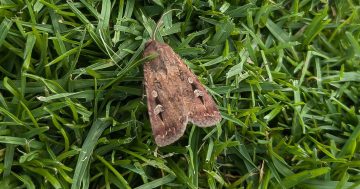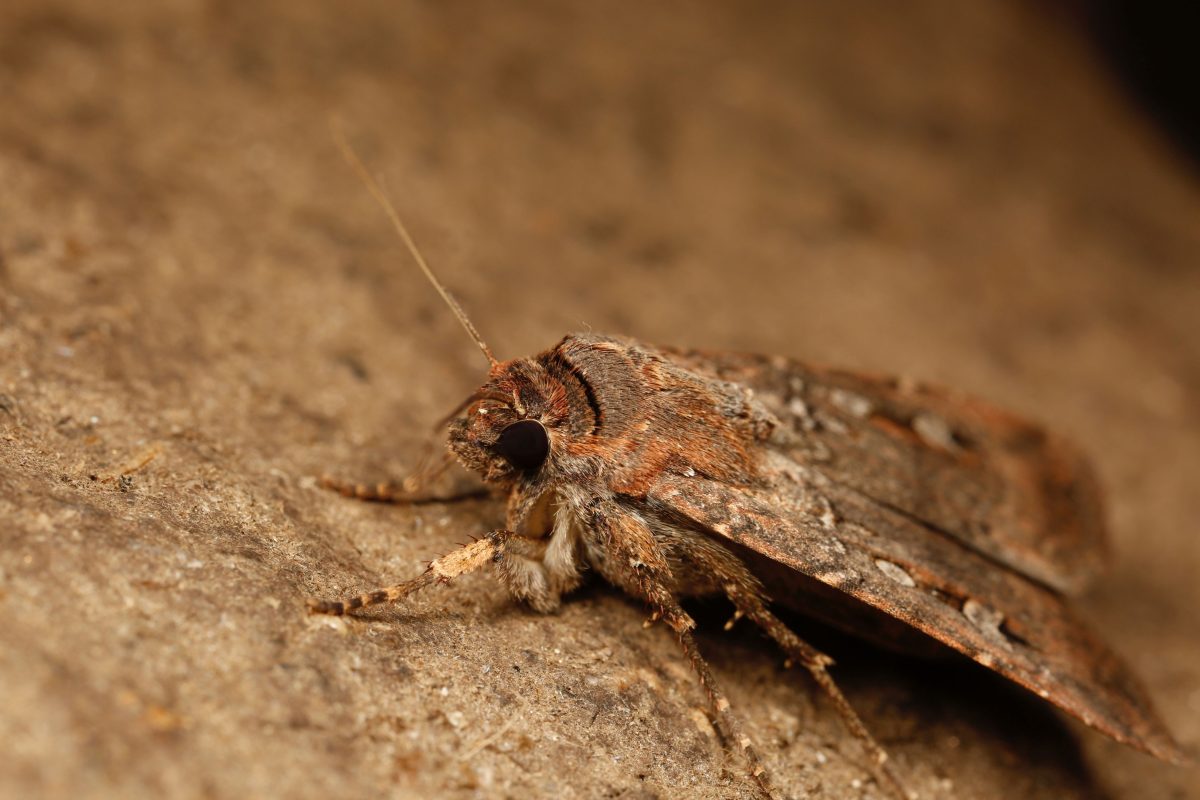
About 14,700 bogong moths were marked at Mount Kosciuszko in February, but none have been recaptured. Photo: Ajay Narendra, Macquarie University.
In February, researchers marked about 14,700 bogong moths at Mount Kosciuszko with tiny paper tags or non-toxic white paint before releasing them back into their caves.
The delicate process included briefly sedating moths with carbon dioxide and was designed to help researchers discover where they go after leaving the alps.
The moths were expected to disperse towards lowland breeding areas across south-eastern Australia, although their routes and principal destinations remain largely unknown.
Not one has since been recaptured.
Invertebrates Australia’s Bogong Watch project manager, Linnea Vilhelmsson Emneby, said researchers had known the odds of recovering one of the marked moths were low.
“This is not unexpected, however, considering we tagged such a minuscule proportion of the entire population,” she said.
The moths were likely to have behaved much like the wider population after leaving the mountains.
“Most went through with their migration, some got predated on or died,” Ms Vilhelmsson Emneby said.
What the project lacked in marked-moth discoveries, it gained in citizen science observations that built a broader picture of bogong moth activity around Mount Kosciuszko.
For five months, volunteers at 50 sites within a 50-kilometre radius of the release caves operated specialised “bug lanterns”, which used light to attract and temporarily trap moths overnight.
These volunteers – known as “bogong sentinels” – ran their lanterns night after night, checking them each morning for marked moths while recording when and where unmarked bogongs appeared.
Their efforts were supplemented by sightings submitted through Zoos Victoria’s MothTracker and the citizen science platform iNaturalist.
The volunteers may not have found a marked moth, but they greatly expanded the record of where and when bogongs were seen.
Sightings on iNaturalist increased tenfold, while moths continued appearing later in the season than researchers had expected.
“Although we didn’t recapture any moths, we have still learnt heaps from the bogong lantern keepers’ observations,” Ms Vilhelmsson Emneby said.
The unexpected timing added to what she described as “the mystery of the bogong”.
The search is not quite over.
Although observations declined during the final month of monitoring, some sentinels continue to run their lanterns each night.
“We could in theory find a tagged moth, but we are not holding our breath for it,” she said.
Western Sydney University PhD student Connor Marsland is now analysing the five months of lantern records, along with hundreds of hours of footage from bogong moth caves.
Researchers hope the work will show how bogong moth movements and abundance changed during the observation period.
Ms Vilhelmsson Emneby said wind was likely to influence the migration, but it was too early to determine how weather conditions shaped this year’s journey.
Attention is now turning to the moths’ next journey into the alps.
Bogong moths spend winter as larvae before emerging as adults from about mid-August.
As temperatures rise, they migrate to the mountains and spend summer dormant in cool caves and rocky shelters.
But an unusually warm winter in Kosciuszko National Park (KNP) has raised questions about where they will shelter this season.
The Bogong Watch team said the moths might seek cooler sites at higher elevations, although only continued monitoring and fieldwork would show whether that occurred.
Invertebrates Australia is planning another tag-a-thon, with its location, format and tag design still under consideration.
Another 100 bug lanterns will also be added to the Bogong Watch fleet, substantially expanding the monitoring network for the next season.
The work follows a bogong moth population crash of up to 99.5 per cent from 2017, although Ms Vilhelmsson Emneby said numbers in the alps still appeared to be around pre-crash levels.
Their recovery is important for the wider alpine ecosystem.
The moths carry nutrients into the mountains and provide a rich seasonal food source for wildlife, including the critically endangered mountain pygmy-possum.
“If there is one thing we have learnt about these moths, however, it is that the more we think we know about them, the more complexity they throw right back at us,” Ms Vilhelmsson Emneby said.