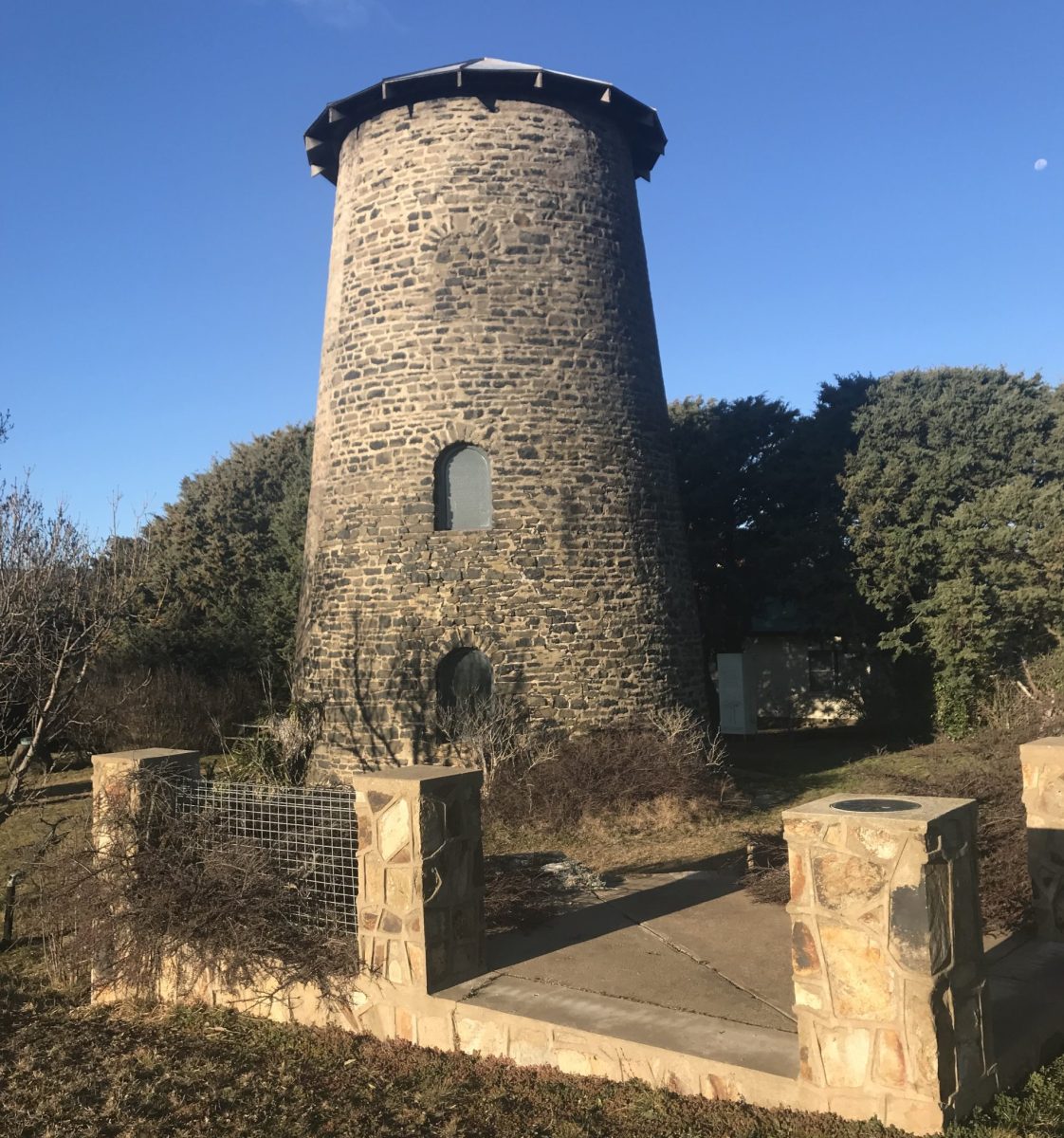
The Geldmacher Mill at Nimmitabel has stood for about 150 years. Photo: Genevieve Jacobs.
Restoration works have given a historic mill a new lease of life after a near-six-month closure because of storm damage.
Nimmitabel’s beloved Geldmacher Mill, which dates to the late 1800s, is a key tourist attraction for the area.
It closed in December 2025, after being damaged in wild weather.
This week, Snowy Monaro Regional Council (SMRC) confirmed it has reopened.
“Council’s building maintenance team and a small team of specialist contractors have been hard at work to complete these repairs in the months since the closure,” a council spokesperson said.
“The restoration of historic buildings is challenging work even under ideal circumstances, with the mill’s rounded shape and unique roof construction only adding further complexity to the already challenging task.”
Last year, a council statement said strong winds had damaged the mill’s roof.
“The structure may pose a risk to public safety in the event of further strong winds,” it stated.
SMRC brought in specialist contractors to manage the works.
In March, scaffolding was put up so the contractors could carry out repair assessments and to protect the historic site.
According to the council, there has since been a total roof replacement and structural mortar repairs.
According to heritage records, the windmill tower was built between 1865 and 1872 by John Geldmacher, a German-born cabinetmaker.
He constructed it almost single-handedly.
It would grind flour until 1885, when it was unsuccessfully converted to a sawmill, after which it was used as a storehouse before being abandoned.

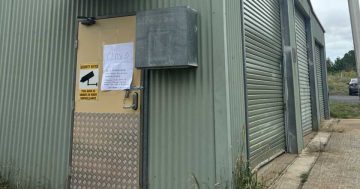
Fencing around Geldmacher Mill as of December 2025. Photo: Snowy Monaro Regional Council.
The then-Monaro Shire Council restored it in 1961.
Today, it is considered one of only two wind-powered flour mills still standing in NSW.
These works aren’t the first time the mill has needed some TLC — the council previously fenced it off in 2022.
At the time, the council pointed to visible structural defects that raised safety concerns, which led to a temporary closure and inspections by a structural engineer.
Following the detection of lime mortar degradation, the council organised specialised repointing of the mortar in the cracked area.
Changes were also made to the vegetation at the mill’s base to allow better drainage.