Financial modelling suggests Yass residents could face big rate hikes. Photo: Yass Valley Council.
Yass residents would face a cumulative rate hike of up to 76.55 per cent if its local council were to rely solely on rates to fix a more than $8 million budget hole.
AEC Group was engaged to review Yass Valley Council’s (YVC) financial situation.
Its report found the council needs $8.3 million a year by 2027/28 to maintain its position.
AEC Group’s Graham Jarvis told a council-organised community forum that while YVC had improved its budget, further action was needed.
“That needs to be corrected in terms of the cash generated from operations,” he said of the $8 million figure.
“You can either do that through increasing revenue, or you can do it through decreasing expenditure, or a combination of both. But the fix is $8.3 million dollars a year.”
He said costs associated with YVC’s general fund had grown at 8.45 per cent over seven years, while income from YVC’s general fund had only increased by about 5 per cent.
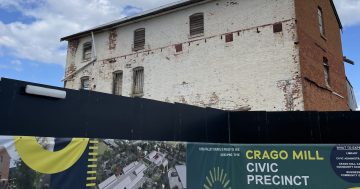
He also said the council is currently paying interest on loans taken out for the Crago Mill project.
“But once that requires you to pay interest and borrowings, it’s a $3 million commitment a year,” he said.
“Council, an additional $3 million a year in itself is 20 per cent of your rate base.”
He also said a “broad spend” on infrastructure maintenance was also needed, describing this as a “long-term burn”.
Mr Jarvis told the forum that if YVC wanted to rely on people’s rates to solve its financial problems, it would need a cumulative rate hike of up to 76.55 per cent.
The council has not yet decided whether to apply for a special rate variation (SRV), or what a potential increase may be.
For an increase to go ahead, YVC would need to make a formal application to the Independent Pricing and Regulatory Tribunal.
In late 2025, when it considered proposals to hike rates by between 40 and 58.70 per cent, councillors deferred a decision to 2026.
Mr Jarvis also said that service changes could be utilised to help cover the council’s budget.
“You could deliver the service in a different way, and yet still provide the same level of service,” he said.
Depending on the approach, this could include outsourcing, sharing service delivery with another council, changing how YVC staff schedule their shifts, or buying things at a lower cost.
The meeting heard that YVC roads and contractors were at the top of the list of where council’s money was being spent.
In a statement after the forum, YVC CEO Gayleen Burley said the independent review was confronting.
“Council has already made operational savings and improved efficiencies and that work will continue.
“But the independent analysis tells us that these steps alone will not close the gap while addressing our infrastructure needs, maintaining services and meeting our debt commitments.”
Councillors will consider a response at an upcoming public forum and extraordinary meeting on 14 October from 4 pm.
This will be livestreamed through the council’s YouTube page, while agenda information is available on YVC’s website.