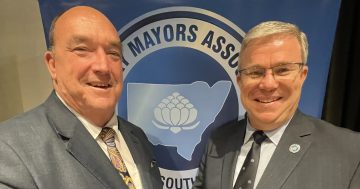
The Executive Board of the Country Mayors Association of NSW. Chair Rick Firman (fourth from right) has written to the NSW Grants Commission to express MMA members’ concerns. Photo: Country Mayors Association of NSW.
Anger and frustration are growing in councils across NSW after the Local Government Grants Commission (LGGC) indicated that almost half of all NSW councils would receive less from the annual untied federal funding from 1 July 2027.
Known as Financial Assistance (FA) grants, they help local councils deliver services to their communities.
The annual FA grants are given by the federal government but administered by the state government, and councils are free to use these untied funds at their discretion.
But the total FA grant pool has been steadily decreasing.
In 1996, it represented 1 per cent of NSW tax revenue, but now the 128 councils across NSW share 0.49 per cent. Calls have been made to increase the rate as councils face rising infrastructure costs, along with cost-shifting by the NSW Government through additional responsibilities.
But far from seeing any sign of increase, some councils are facing the possibility of even less money coming their way after a new method of allocating the FA grants was proposed by the LGGC, which makes recommendations to the Office of Local Government about the distribution of the FA grants.
The move to reallocate the same pot of money, but give more to some councils at the expense of others, is shaping up to be a major battle, with councils writing to the LGGC to express their frustration at the methodology and lack of transparency.
Bega Valley Shire Council faces a decrease of almost $4 million, from $10.030 million to $6.187 million, a reduction of $3.843 million per annum, or 38.3 per cent.
BVSC has lodged a freedom of information request to learn more about the methodology.
“I believe this methodology will be very volatile,” Mayor Russell Fitzpatrick said.
“If you have a disaster and get grant income, it will be averaged over four years and affect the amount of the financial assistance grant.”
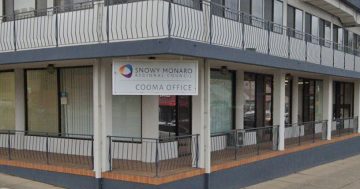
Mayor of Snowy Monaro Regional Council, Chris Hanna, said council had been advised that Snowy Monaro could see a $5.1 million reduction in the FA grant delivered to the shire.
“If this methodology is put in place, council will have to raise more money locally or reduce the levels of services currently provided to the community. This is a significant impact. A reduction in Commonwealth funding of that magnitude cannot simply be absorbed,” Cr Hanna said.


At Queanbeyan-Palerang Regional Council, Mayor Kenrick Winchester says the proposed funding cut is $1.9 million.
“While council is in support of a fair funding model for councils and it is good to review the methodology, the proposed new methodology has led to some perverse outcomes. No council should be worse off. The real concern is that the overall funding pool for councils is just not enough,” Cr Winchester said.
Shoalhaven City Council vowed to provide detailed written feedback to the LGCC after being told its FA grant allocation would be reduced from $16.2 million to $14 million.
“Shoalhaven has been united with councils across Australia in advocating for an increase in federal financial support to address growing infrastructure backlogs, rising service demands and the ongoing impact of cost shifting from state to local government,” acting Mayor Peter Wilkins said.
“This proposed change to the funding allocation is a slap in the face to the Shoalhaven community. At a time when we’re already under significant financial pressure and working hard to make every dollar count, taking millions of dollars away from our region is the exact opposite of what’s needed.”
The Lord Mayor of Wollongong City Council, Tania Brown, has personally raised concerns regarding the proposed changes with NSW Premier Chris Minns.
Wollongong received $23.8 million in funding for the 2025-26 financial year through the FA grant program, but under the proposed modelling, this allocation would drop to about $7.7 million from July 2027, a cut of more than 67 per cent.
Wollongong Council has made a submission to the LGGC that the modelling lacks adequate data or supporting information, as well as transparency, and provides no transition period, despite proposing significant funding cuts within a single budget cycle.
“Council has worked diligently over many years to be in a sound financial position, and you really do need to question any methodology that suggests a $16 million cut within a single budget cycle is warranted or manageable,” Cr Brown said.
The Canberra Region Joint Organisation (CRJO) represents 11 councils surrounding Canberra.
Of the 11 councils, four will receive increases under the proposed methodology – Eurobodalla, Yass Valley, Wagga Wagga (an associate member) and Goulburn Mulwaree – but seven will be worse off, including Wingecarribee by $2.7 million and Upper Lachlan Shire Council by $3.2 million.
CRJO as a group will be down by more than $15 million because of reduced FA grants.
The Country Mayors Association is also concerned about what it says is a lack of nuance in the new methodology.
“Given the diversity that is represented by the NSW Local Government sector, which encompasses the largest city in Australia to some of the smallest villages that stretches across beaches, deserts, snowfields and forests, using just two key drivers fails to account for that diversity,” chair of the CMA Rick Firman said in his letter.
The CMA is also concerned that receiving other tied grants for council work will affect the annual FA grant amount, making budgeting highly volatile. Along with individual councils, the CMA has raised the number of “unknowns” in the calculations underpinning the new methodology, adding that it cannot support its adoption.
“Our stance at this point is that the existing methodology should remain in place and that further work be undertaken on the new methodology to address the concerns of the sector. Strong feedback from our members is that the new methodology should not leave any council worse off than the application of the existing distribution methodology,” Mr Firman said.
Feedback to the LGGC closed on 9 October and will be considered in the coming weeks.
The new FA grant system is expected to commence on 1 July 2027, but given the strong feelings among so many councils, considerable lobbying is likely in the interim.