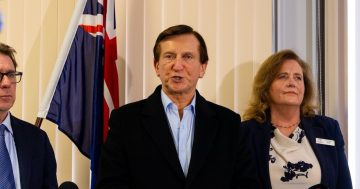
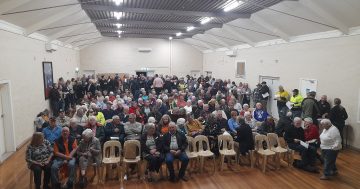
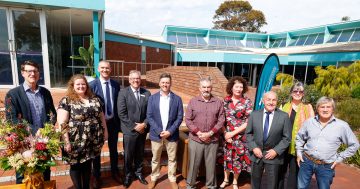
The banning of pre-meeting briefings has shaken up how things are handled at Eurobodalla Shire Council. Photo: Karyn Starmer.
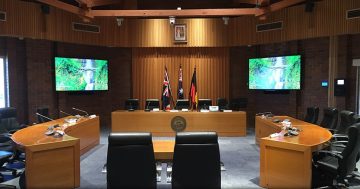
Eurobodalla Shire Council’s recent meeting raised questions about the effectiveness of council meetings for facilitating robust debate and well-informed, considered decision-making, particularly given recent reforms that ban private briefings for councillors.
A contributing factor was the meeting’s 142-page agenda, with attachments totalling 1403 pages.
Additionally, three agenda items were of high public interest including the potential sale and closure of Coopers Island Road. Earlier that day community members lodged a 153-page petition with council with 1500 signatures in support of keeping the road open. Since notifying its proposal to close and sell the road late last year council has received 39 submissions from members of the public, including 37 objections.
Another item was a planning proposal to subdivide land in Mossy Point zoned C4 Environmental Living and C2 Environmental Conservation to make it available for residential development. Council received 59 submissions, including 55 objections, and three residents spoke against the proposal during the public forum. Councillor Amber Schutz moved to defer voting on the matter to get more information on the lot averaging clause that enabled the developer to propose 11 lots that did not meet the minimum lot size.
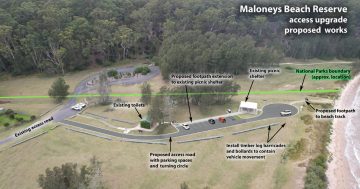
The contentious issue of reinstating vehicular and pedestrian access at Maloneys Beach was also on the agenda. The review of environmental factors that was exhibited over summer received 127 submissions.
The second agenda item for discussion was a question on notice from councillor Anthony Mayne about the role of community submissions in the decision-making process.
He said councillors lived in a new world order where private pre-meeting briefings by council staff had been banned.

Before the council meeting on 28 April, supporters of keeping Coopers Island Road open met to present a petition. Photo: Supplied.
“We are coming into this meeting on significant and complex matters without briefings, asking questions on the fly and then having to debate,” Cr Mayne said. “We have listened to incredible presentations from the community today and we have to incorporate that into the information we have been given. We need those submissions. Your voice is vital.”
That prompted Cr Sharon Winslade to say – that since they no longer received briefings – “I feel like I’m not part of this anymore”.
“I put a question in writing and get an answer back in writing the following day. We have to be briefed deeply.”
Mayor Mat Hatcher said the changes to the NSW Local Government Code of Meeting Practice that came into effect this year “aren’t ideal”.
“Previously we would have weeks of briefings. It gives you very little time to seek advice,” Mayor Hatcher said. “If you don’t feel you have enough information that is what deferrals are for.”
Councillor Mick Johnson had similar thoughts. “The people who come to us for our judgment aren’t getting value because we are up late at night trying to understand and still receiving information an hour before the meeting.”
The crammed agenda saw five items deferred until next month’s meeting, including Maloney’s Beach access.

Terry Hill and Max Castle lodging a 1500-signature petition with council regarding Coopers Island Road. Photo: Supplied.
It also led to many people registering to speak in the public forum. Instead of the usual seven minutes to address councillors, they were only given four minutes. The final speakers were then told they had two minutes.
That prompted an outburst from one speaker, Max Castle. “The system can’t continue to work like this. This will be the biggest media story to come out of the South Coast this year,” he said. “I will be making a submission to council, and I expect it to be in the minutes. Our First Nations people haven’t been consulted and they were very upset.”
Another speaker wrote to council to lodge a formal complaint about the way the public forum was conducted. “It represents a clear failure of procedural fairness, transparency, and the principal of natural justice that underpins meaningful community participation.”
Jim Bright, whose career was in the federal public service giving advice on integrity and governance, said the ban on pre-meeting briefings must change.
He said there was almost always not enough time, especially for the public, to go through the meeting’s papers between Wednesday afternoon when they were published on council’s website and Tuesday’s council meeting. That, combined with the lack of pre-meeting briefings, meant councillors did not have time to think things through and seek clarification.
Bernie O’Neil, co-convenor of A Better Eurobodalla, said it was unworkable for councillors and the public to get across the “punishingly large” agenda in so few days. “It would be helpful if pre-meeting briefings were held and made public and if the agenda came out a week earlier.”