About 900 new native plants are growing along the Murrumbidgee River to tackle an invasive species. Photo: Southern ACT Catchment Group.
A multi-year campaign is underway to purge wild blackberry from the ACT’s southern waterways, where the fast-spreading weed is suffocating local bushland.
With government funding, the Southern ACT Catchment Group is tackling dense infestations that wipe out biodiversity along riverbanks.
“You might naturally have 20 different small shrubs in an area, but you’re only going to have one when blackberry dominates,” executive officer Martine Franco said.
“It spreads through the river, and it’s very dominating, very prickly, and difficult to remove.”
Funding is coming through the Urban Rivers and Catchment Project, with the group partnering with Ginninderra Catchment Group and Molonglo Conservation Group as delivery agents.
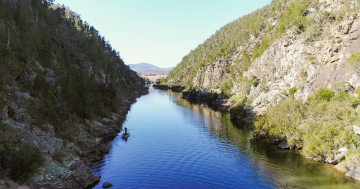
In their branch of the program, Southern ACT Catchment Group focused on the Murrumbidgee River corridor and some nearby tributaries.
They’re working to replace blackberries with native raspberries and other native plants to limit erosion and diversify wildlife habitat.
“Blackberry can dominate … That means that a lot of species can’t move through it.
“You lose biodiversity, in the number of different species that live in any certain area.”
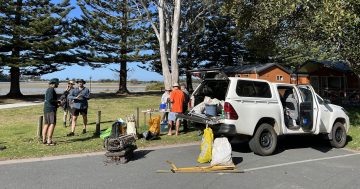
Since their project began, volunteers have planted about 900 native plants along the river to re-create more suitable habitats.
Ms Franco said the replacement plants were chosen because they create similar cover to the blackberry but don’t have the harmful impacts.
“Small birds really like the shrubs, and while blackberry can be a bit of a harbour for small birds, it’s also a harbour for rabbits and other pests,” Ms Franco said.
“Replacing it with a native shrub layer is good for lots of different biodiversity [goals], while also providing some habitat for the small birds.”
She said that once the blackberry is cleared, volunteers can step in and begin planting, an essential step to prevent erosion.
“You might have to treat it three times, but once you get rid of those [blackberry] canes, you’re then left with open ground.
“Open ground is a place where erosion can occur … Replacing it with a similar species that’s more native and not so dominating, like raspberry, means that you’re returning a native species to the landscape.”
Throughout the program, the volunteers have also used coir logs and strategic planting to stabilise the riverbank.
Teams have mapped weeds and flora across the area.
“That gives us a better idea of where we need to target our work,” she said.
“We’ve removed a lot of debris as well – 95 kilos’ worth … which is actually a hell of a lot of debris from the waterways.”
Ms Franco described the project as a chance for Canberrans to put “their energy and interest” towards protecting the “mighty Murrumbidgee”.
She also said their efforts, and similar projects, were key in helping the natural environment endure.
“I think the thing to understand about Australian vegetation is it is diverse, and it is messy. The messier and more diverse it is, the better habitat it is for native animals.
“There are all these things that a biodiverse environment can provide that blackberry alone won’t.”
The project is ongoing and is set to finish in mid-2027.
You can get involved by visiting the Southern ACT Catchment Group or Facebook.
Original Article published by Claire Sams on Region Canberra.