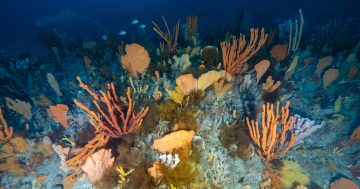
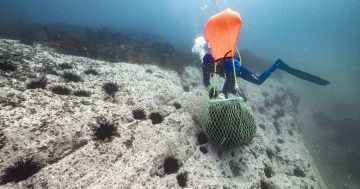
Long-spined sea urchins are a valuable seafood product and an environmental problem. Photos: Supplied.
Joonga Land and Water Aboriginal Corporation has secured a $1.48 million grant from the NSW Government to develop sustainable sea urchin fisheries along the South Coast.
The grant will not only help produce a valuable seafood product, but also address an environmental disaster, create jobs and economic opportunities for First Nations people and give them the lead in restoring Sea Country.
The grant was one of four announced by NSW Minister for Agriculture Tara Moriarty on 30 April.
For years, traditional owner Wally Stewart has watched the destruction of the Great Southern Reef and its kelp forests that are critical to healthy and biodiverse ecosystems. Climate change-induced warmer waters have seen long-spined sea urchins move south. They are voracious feeders and prolific breeders. Their exploding numbers have devoured the kelp forests, leaving behind urchin barrens.
“For nearly four years, we have been working on a fishing industry plan, which is a business and restoration plan for sea urchins, because we know we are never going to run out of sea urchins,” the co-founder and director of Joonga said. “Then this aquaculture grant came up and we saw it fits with the business plan and kicks off what we have been talking about for years.”
Over that time Mr Stewart has been working with University of Wollongong Associate Professor Tillmann Boehme who led the successful grant application. Jamie Newman of Sydney Urchins, based on the South Coast, joined the project a year ago.
“The sea urchins are destroying our reefs but they are also one of the world’s most valuable seafood products so we can remove the problem and sell it,” Mr Stewart said. “Every kilogram removed contributes to the reef’s recovery.”

John Carriage Junior and Denzel Carriage.
He said that economically, Australia’s small, labour-intensive sea urchin industry was uncompetitive. Processing them, namely cracking open the urchins to extract the valuable roe, treating them and packing according to their grade, was the biggest barrier.
“We will be investing the money into process automation and new product development with longer shelf-life, with skilled labour and training pathways,” Mr Stewart said.
Sydney Urchins has been working with leading experts from Chile to design a processing machine that will remove some early high labour costs.
They will sell the sea urchin products to domestic and export markets, while the waste from urchin processing will be pelletised into soil enhancers. That creates a circular economy angle because nothing is wasted. Joonga is working with a vineyard.
Initially the project will create four jobs, but over time it could create 20 to 30. Mr Newman said there would be jobs in diving, plus in the factory, management and logistics.
There is still much work to be done including bringing in universities and engineers to design the processing machine, and research on the barrens and fattening up undernourished urchins.
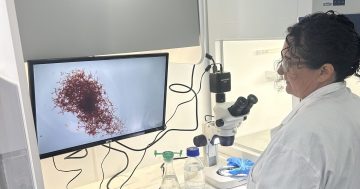
If the kelp forests do not recover naturally, Joonga will enlist marine conservationist Jo Lane of Sea Health Products. She has established a kelp seed bank at her laboratory in Tilba.

Denzel Carriage, Jamie Newman of Sydney Urchins and John Carriage Junior.
The facility will be based near Huskisson’s industrial area and process urchins harvested from Wollongong to Eden.
“It is an industry that improves the quality of the ocean, and we hope it brings the seaweed back to the barrens,” Mr Newman said. “No-one will make millions, but we will employ people and look after the environment.”
Mr Stewart said there was a lot of support to do something about the sea urchin problem and restore the reefs.
“People want us to build a sustainable industry for our people and teach them to look after Sea Country again,” he said. “It ticks all the boxes. The government recognises this and supports it, and we have all this expertise coming together.”
Part of their marketing campaign will be educating people about the problem.
“It is under the water so people can’t see it,” Mr Stewart said. “A hectare of kelp forest is better than 10 hectares of rainforest for sequestering carbon.
“We’re bringing together cultural knowledge, modern industry and environmental stewardship, while also creating long-term economic benefits for our community,” he said.
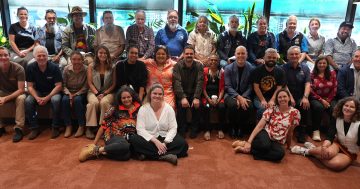
Associate Professor Boehme said the project reflected years of collaboration, hard work, persistence and shared vision between Joonga, Sydney Urchins and the Blue Futures Team at University of Wollongong.
“We find the only people passionate about this is the Indigenous people which is why we are working with them,” Mr Newman said. “They have the same passion we do.”