


Gundagai’s Niagara Cafe in 1939 before a fire threatened its future. Photo: J. Castrisson.
From 80-year-old Greek eateries that have endured the test of the ages to cafes retrofitted into some of our most historic buildings, giving them a purpose to live into the future, our region is brimming with nostalgic destinations. Here’s where you should head this winter for a journey back to another time.

The Paragon Cafe’s neon sign. Photo: Neil Penning.
Paragon Cafe, Goulburn
Since James Sophios first opened the doors in 1940, the Paragon Cafe in Goulburn has set the standard when it comes to sheer volume of food on one plate. Think ribs, steak, garlic prawns and veal scallopini, the kind of spread that will have you heading for a lie-down afterwards.
In the past 80 years, the Paragon has moved once, in 1987, and changed hands through a range of entrepreneurial Greek families a number of times. But what hasn’t changed goes to the heart of Australian Greek diner history: generous meals, generous service and a place that feels deeply embedded in the vibrant migrant culture that built our nation.

An extensive rebuild in 2021 restored the art deco Niagara Cafe. Photo: Niagara Cafe Facebook.
Niagara Cafe, Gundagai
Operating in various forms since 1902, Gundagai’s Niagara Cafe is an art deco masterpiece that has been lovingly restored by the current owners after a 1975 fire threatened to destroy this important part of the town’s history.
This revived Greek dining experience is slipping away across the country, and the extensive restoration seen here is often referred to as the finest specimen of its kind, taking diners back to an era when Greek cafes were the norm across the nation.
While you won’t find the steak and eggs that Prime Minister John Curtin dined on with his war cabinet in 1942, the menu now strikes a perfect balance of big brekkies, burgers and scrambled eggs, alongside modern dishes such as karaage don and bao buns.

The 19th-century Mill House Cafe is now a popular spot for woodfired pizzas. Photo: Tenele Conway.
The Mill House Cafe, Queanbeyan
Tucked beside the region’s last surviving 19th-century mill complex, the Mill House Cafe offers something increasingly rare: a dining experience that hasn’t been stripped back to open-plan minimalism.
Built in 1883, the former residence retains its original layout, meaning you’ll move through a series of rooms rather than one big echoing space. It feels more like you’ve been invited into someone’s home than a commercial venue.
Added to the State Heritage Register in 1999, the venue now slings delicious woodfired pizzas alongside an extensive breakfast and lunch menu that can be enjoyed in one of the many indoor dining rooms or in the shady courtyard garden. And don’t miss the desserts and pastries, as they’re all handmade by the cafe owner.

The historic Tathra Wharf now lives on as a cafe. Photo: Tathra Museum.
The Wharf Local, Tathra
You’d be hard-pressed to find another cafe that boasts views like this, or a historic structure to match.
Perched on the heritage-listed Tathra Wharf, which was built in 1862, The Wharf Local sits within the only surviving 19th-century coastal steamship wharf in Australia.
From a working export wharf bustling with Australia’s early settlers to a place to sip coffee and watch the recreational fishers at work, this rustic, timber-clad building has come a long way in 166 years.
Inside, the cafe leans into its industrial bones. Exposed timber beams, heritage sash windows and a slightly weathered feel all add to the atmosphere. Outside, the views do all the talking.
The menu is packed with treats that the 19th-century dockworkers could only have dreamed of. Artisan sourdough is topped with fresh local ingredients, and the Friday vibes drinks-and-eats session makes the most of a long afternoon by the sea.
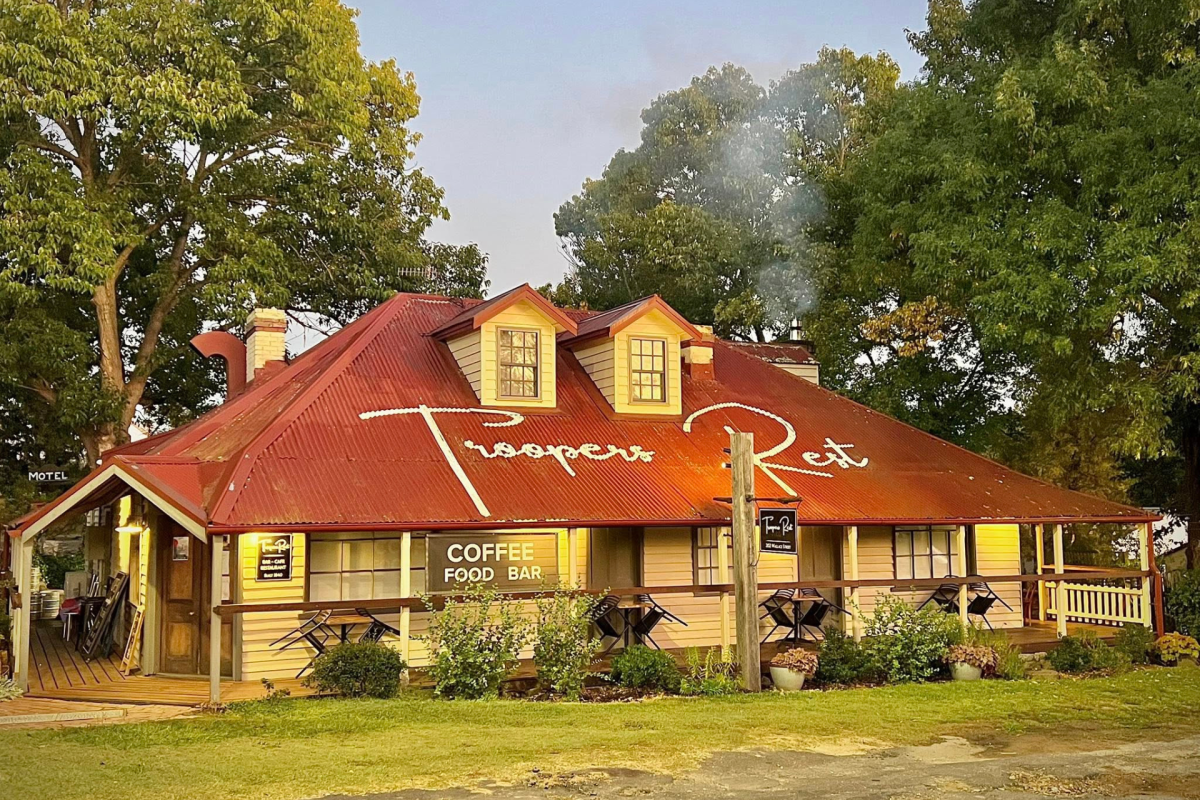
Braidwood’s historic Trooper’s Rest dates back to 1845. Photo: Trooper’s Rest.
Trooper’s Rest, Braidwood
Trooper’s Rest, in New South Wales’s only heritage-listed main street, began life in the early 1840s as the Dog and Style, a stopping point for travellers heading towards the Araluen goldfields. Its original licence, dating back to 1845, was only uncovered relatively recently when the new owners went digging into the past.
The venue’s current name reflects its deep ties to the region’s bushranger era. It sits next to the old police station, where armed troopers gathered to guard the Golden Times Coach, which carried gold through territory watched closely by bushrangers such as the Clarke brothers.
These days, the only thing you’ll need to guard is your spot at the table, with this lively and historic venue being open for three meals a day, seven days a week.

The Old Canberra Inn. Photo: Michelle Kroll.
The Old Canberra Inn, Lyneham
In the ‘’young’’ city of Canberra, a venue as old as The Old Canberra Inn is an anomaly.
Built in 1857, long before Canberra was even a concept, the original slab-and-pole hut began life as a settler’s home, later becoming a coach stop between Yass and Queanbeyan and eventually evolving into a licensed premises in the 1970s.
Now, the ales flow, with 10 craft beers on tap, and live music is a weekly occurrence. It all takes place within the timber walls that predate the city itself.

The White Rose Cafe in Temora is like a mid-century time capsule. Photo: White Rose Cafe Facebook.
White Rose Cafe, Temora
If you’re chasing that unmistakable mid-century Greek cafe feel, Temora’s White Rose delivers in spades.
Originally built in 1909 by Peter Caligeros, the cafe was gutted by fire in 1950 before reopening in 1951, and it’s that post-war rebuild that defines its character today.
The laminex tabletops, the layout, the overall aesthetic: it’s all a snapshot of a particular moment in time, preserved by the choices made by generations of owners who have kept the soul of the space intact.
And while the surroundings lean retro, the menu is exactly what you’d hope for in a country cafe: sausages and mash, steak sandwiches, lamb burgers, toasties and all-day breakfasts.
It’s open seven days a week, and its very existence is proof that sometimes, the best thing you can do is keep doing what works.








