Labor politician Al Grassby (right) was once popular in Griffith. Photo: Griffith City Library archives.
Imagine a Labor politician being cheered by thousands of Griffith residents inside a packed Yoogali Club just days before recording a thumping election victory to retain his role as our federal MP.
Today, it’s almost impossible to picture.
Yet Labor’s Al Grassby held the seat of Riverina in the early 1970s, while at state level Lin Gordon represented Griffith well into the 1980s.
Fast forward to today and Labor has been reduced to a fringe player. At the 2025 federal election the party secured just 18 per cent of the primary vote in Riverina. In neighbouring Farrer – which now includes Griffith – Labor didn’t even nominate a candidate at this year’s by-election, which was won comfortably by One Nation.
So what happened? How did Labor go from winning Riverina elections to barely contesting them within the space of a few decades?
Political experts point to several overlapping trends: demographic change, the decline of union membership, Labor’s evolution into a more metropolitan-focused party, the Coalition’s long-standing strategy of avoiding three-cornered contests in rural seats and, more recently, the rise of One Nation.
“The Labor Party has shifted in its membership in recent years; it’s now very much an urban liberal party with few exceptions,” Charles Sturt University political scientist Dominic O’Sullivan said.
“It doesn’t have as broad a social base as it once did before it split and the Democratic Labor Party was created.”
Professor O’Sullivan said regional Australia retained a strong sense of local identity that the Nationals had successfully tapped into.
“There’s also a deep social conservatism that the National Party understand that perhaps the Labor Party doesn’t,” he said.
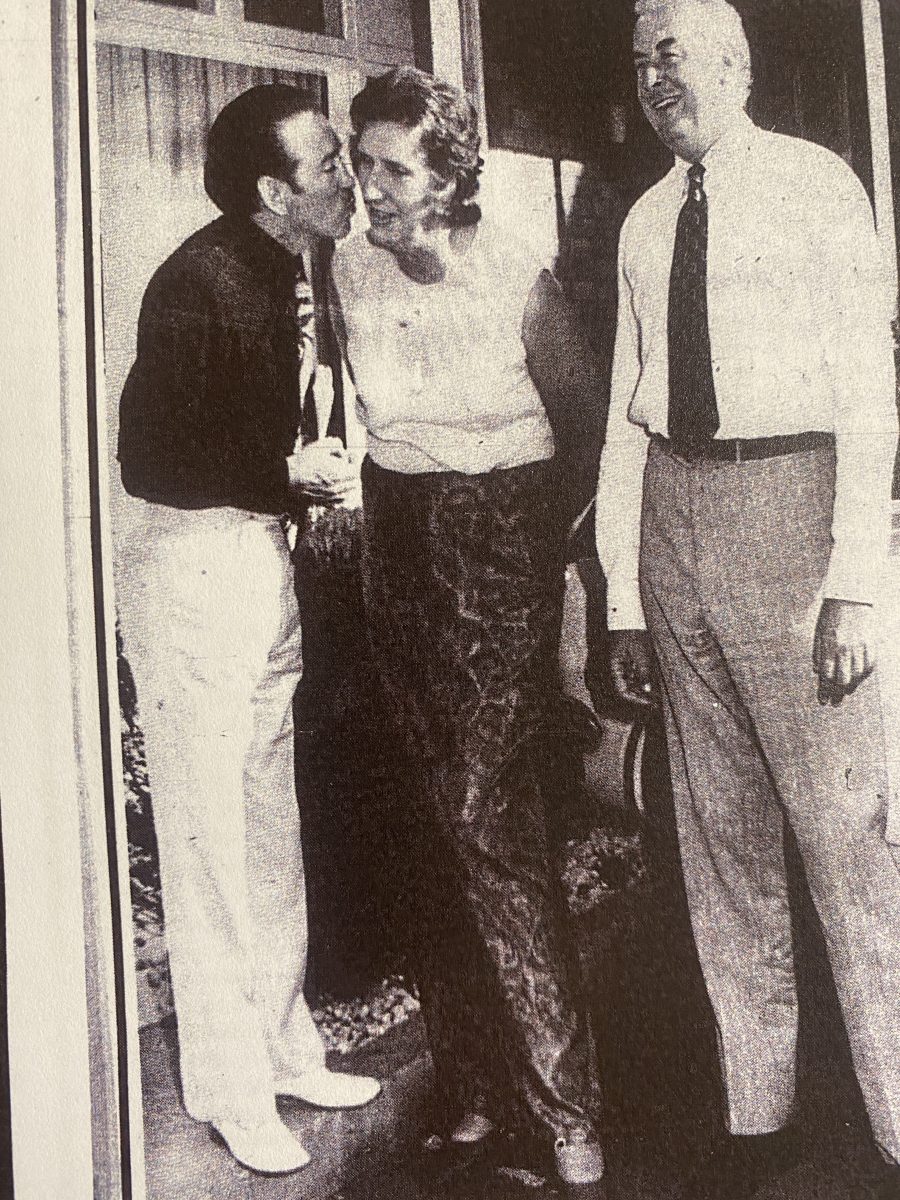
Al Grassby, Margaret Whitlam and Gough Whitlam outside the Yoogali Club in 1972. Photo: Griffith City Library archives.
That advantage has been reinforced by electoral strategy. Since the Coalition parties agreed not to contest the same lower house rural seats, conservative voters have largely united behind a single candidate rather than splitting their vote.
Charles Sturt University researcher Liam Lander, who wrote a paper on the history of the Country Labor Party, argues that change has been crucial.
“The consolidation of right-wing unity amongst voters in the Riverina, by placing only one Coalition party on the local ballot, and the recent influx of micro-parties which has significantly eroded the Country Labor vote,” he wrote.
“Whether through fracturing the loyalty of Country Labor’s core voters, disillusionment, voter confusion or political disengagement, the dramatic increase of micro-parties has coincided with higher rates of informal voting in this electorate. This has undisputedly impacted negatively upon the percentage of the local vote claimed by Country Labor in recent elections.”

A 1974 Coalition election ad criticising Al Grassby over the end of the White Australia Policy. Photo: Liam Lander.
The collapse of union membership has also weakened Labor’s traditional support base. Around half Australian employees belonged to a union in the early 1970s. Today, that figure has fallen to about 13 per cent.
“Union membership kept a stronger connection between working people and Labor. These days, union staff tend to be those who have influence in the Labor Party, rather than union members,” Professor O’Sullivan said.
“If you look at the demographics of Labor Party membership, it’s very different now from Grassby’s time. It’s now distant from working class conservatism, which is a group that One Nation is doing very well with these days. Labor has to a degree lost touch with that audience as it’s adopted what some might describe as identity politics, which is more important to those in the city than the country.”
The irony for Labor is that while it has spoken repeatedly about reconnecting with regional Australia, the electoral maths gives it little incentive to focus on places like the Riverina. With 94 seats in the House of Representatives, it easily won government without needing to shift votes here.
Instead, the political contest has shifted. It’s One Nation – not Labor – that has emerged as the main challenger to the Coalition, capturing many of the blue-collar and socially conservative voters who once formed the backbone of Labor’s support.
For now at least, Al Grassby’s Riverina feels further away than ever.
Original Article published by Oliver Jacques on Region Riverina.