


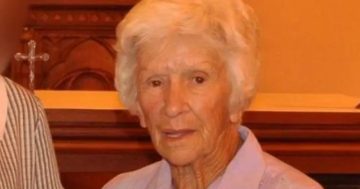
Amber Haigh before she went missing in June 2002. She was 19 and the mother of a five-month-old baby. Photo: File.
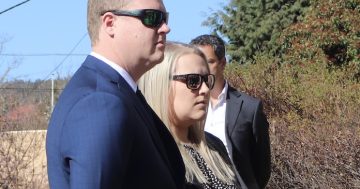
More than 20 years after Young mother Amber Haigh disappeared, a NSW Supreme Court judge has found the case against the couple accused of murdering her was “foredoomed to fail” – a ruling that opens the door for Anne and Robert Geeves to be reimbursed some of their legal costs by the state.
The Geeves lived at Kingsvale, south of Young, when 19-year-old Ms Haigh went missing in June 2002.
They were arrested and charged with her murder in 2022 and acquitted after a judge-alone trial two years later.
In a judgment delivered last week, Justice Julia Lonergan found it had been unreasonable to prosecute them and granted certificates under the Costs in Criminal Cases Act, allowing them to seek back some of what they spent defending themselves.
Ms Haigh had a five-month-old baby fathered by Robert Geeves and divided her time between a flat in Young and the couple’s Kingsvale property.
The Geeves said they last saw her on 5 June 2002, when they drove her to Campbelltown railway station so she could visit her dying father in a Sydney hospital.
They reported her missing at Young Police Station on 19 June.
No one has seen or heard from Ms Haigh since, and her body has never been found.
Justice Lonergan’s finding centred on two parts of the prosecution case that, she found, should never have carried the weight they were given – an account from a man who came forward in 2021, and recordings police claimed contained the couple’s admissions.
Boorowa man, James Arber, told police he saw Ms Haigh with the Geeves, then saw the couple without her at a Boorowa petrol station a short time later.
Had that timing lined up with 5 June 2002, it would have directly challenged the Geeves’ account of driving Ms Haigh to Campbelltown that day.
But Justice Lonergan found Arber had never actually named that date himself – and that police had known his account didn’t hold up well before the trial even started.
His father, Peter Arber, gave police a different version: the petrol station sighting was a separate occasion, days or weeks later, and the baby he saw with Ms Haigh looked newborn – pointing to a date months earlier than June.
In a note written on 3 November 2022, Detective Senior Constable Amanda Cary, who led the Unsolved Homicide Squad’s reinvestigation, herself concluded the encounter likely happened around February, not June.
Police also treated Arber’s recollection of striped bags in the Geeves’ car as significant, on the basis it wasn’t public knowledge – but the judgment found police had mentioned the bags in media releases years earlier.
Despite all this, the prosecutor called Arber at trial anyway, in what Justice Lonergan called, “a desperate attempt, and it failed”.
The second issue was audio from listening devices installed in the Geeves’ home and vehicle in 2002.
Earlier transcripts recorded no admissions in several passages, but DSC Cary later prepared new transcripts attributing incriminating remarks to the couple, which the prosecution then relied on.
Prosecutors also referred to “enhanced” recordings they claimed revealed admissions – recordings that never materialised.
When the original audio was played at trial, the disputed passages were left blank for the judge to assess herself.
“I could hear no such words,” Justice Lonergan wrote, noting no other officer who’d listened to the tapes had given evidence of hearing them either.
She said it was inexplicable that words one detective alone thought she could hear were put forward as evidence for a murder charge, adding: “There is an obligation on a prosecutor to cast a cold eye on the evidence.”
Justice Lonergan also raised concerns about the Crown’s closing address.
Robert Geeves’ barrister had identified 44 separate statements the prosecutor made that didn’t match the evidence, and asked him to withdraw them.
Some were withdrawn; others weren’t, and the judge had to rule on them herself.
She said this pointed to a gap between the case prosecutors believed they had and the much thinner one the evidence actually supported.
Taken together, she found, the prosecutor had access to evidence undermining the case well before trial – certainly by November 2022, when the murder charge was formally certified to proceed – but pressed ahead regardless.
The Geeves raised the costs question within two days of their acquittal; the DPP didn’t oppose the applications, though it declined to consent without a hearing.
Anne Geeves’ solicitor submitted a $40,000 invoice for work done before her Legal Aid cover was backdated, though the judge noted it wasn’t itemised.
How much of the couple’s costs will actually be paid out is now a separate matter for assessment.











"It’ll be a couple of years before we get going." Good. That means it should be covered by the… View