Beef farmer Jenny Wells is concerned about the proximity of adjacent homes to the Bega Saleyards, under the terms of a rezoning proposal. Photo: Denise Dion.
Farmers across the region are worried that rezoning proposals from Bega Valley Shire Council (BVSC), which have received gateway approval but are not yet finalised, could impact the long-term survival of the Bega Saleyards at the very time when they are flourishing and need further investment.
The Bega Saleyards are 50 years old, but despite their age, they are handling increasing numbers of cattle from the Victorian border to Moss Vale in the north.
Bega Beef farmer and stud owner Jenny Wells said there were biosecurity issues and the need for a suitable buffer zone around saleyards if housing was to be considered in adjacent vacant land.
“It’s a potential flash point and concerns the local farming community. This can be a very noisy and odorous environment and we need to plan for suitable buffer zones for a commercial saleyard, to be in place,” Ms Wells said.
Apart from buffer zones, Ms Wells said the saleyards were in need of significant upgrade. They are processing 2000 head of cattle in the monthly store sale and another 700 in the Tuesday market. An increase in numbers at the monthly store sale was one of a number of factors contributing to Bega becoming a regional selling exchange.
“There’s an ongoing shift to beef from dairy. The price of milk has played a part but also it’s a 24/7 job milking cows and the biggest issue is a shortage of skilled staff. Even the larger dairies are looking for staff on a regular basis,” Ms Wells said.

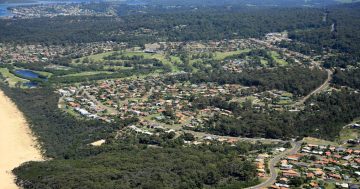
Bega Saleyards and surrounding land which has been the subject of BVSC rezoning proposals. Photo: BVSC.
“Last year Nowra and Camden saleyards closed and the next nearest are Moss Vale and Bairnsdale. These are big distances and people need to be able to sell cattle locally. It helps them meet new animal welfare standards.”
The Bega Beef Coop, of which Ms Wells is a member, said the Bega Saleyards generated more than $25m a year in livestock sales, and had a significant impact on the local economy. But due to the 50-year-old infrastructure the monthly store sale is proving to be a logistical and operational challenge, Ms Wells said.
“The monthly store sale has 20 saleyard staff in addition to livestock transport staff, commission buyers and vendors. There can be 15 trucks coming into the saleyards with cattle but some of those do multiple runs,” Ms Wells said.
Processing the cattle, particularly in winter, means working in the dark.
“We can be receiving cattle up to 9 pm and handling them in the dark has its challenges. They can be spooked. You always get some that are touchy and you’re trying to see a black cow in the dark as she decides to make a break,” Ms Wells said.
Bega Valley Shire Council CEO Anthony McMahon said council would look at interim solutions.

BVSC plans showing the proposed rezoning areas in south Bega. The areas closest to the saleyards would be R2 low density residential. Image: BVSC.
“We need to look at the safety risks,” Mr McMahon told councillors at the recent council meeting in which the Bega Saleyards were discussed. BVSC has allocated $50,000 in its 2026/27 budget to fund an infrastructure needs analysis and site-specific asset management plan which will be carried out by consultants in the 2027 financial year.
BVSC said the plans would support future funding opportunities and help ensure the saleyards continued to meet modern standards while serving the local livestock industry for years to come. Council plans to engage directly with saleyard users, livestock producers, stock and station agents, industry representatives and other stakeholders during the development of the plans.
Ms Wells said the farming community appreciated BVSC’s support and proactive approach to the long-term viability of the saleyards.
“The saleyards need a significant upgrade. As well as the increase in numbers, cattle have increased in quality, weight and size compared to 50 years ago,” Ms Wells said.
But the saleyards aren’t just a place for selling and buying cattle. It’s a community which likes to look after its own. The monthly store sale is an opportunity for farmers to touch base and check in with mates.
“Farmers have to deal with droughts, fires, finances and mental health is a priority for the farming sector. I always ask if they’re buying or selling and some will say they’re just here for the chat. There’s nothing like a farmer to understand another farmer,” Ms Wells said.