Fifty-six-day-old baby kelp growing on test lines in Twofold Bay, in southern NSW. Photo: Auskelp.
The NSW Government will soon probe plans for a South Coast-based project that’s been labelled as Australia’s first commercial offshore kelp farm.
According to documents lodged with the government, Australian-owned Auskelp Pty Ltd is behind the project.
The company previously ran test lines in Twofold Bay, ahead of its push for a farm at Disaster Bay in the Bega Valley.
The project would be called Eden-1 and span a 200-hectare area, of which longline infrastructure would fill only up to 100 hectares.
“The farm will cultivate native kelp species Ecklonia radiata using longline infrastructure designed for high-energy open ocean environments,” the documents state.
“The project’s goal is to successfully pioneer and develop kelp farming as a sustainable form of ocean farming in Australian waters.”
If given the green light, it is hoped it could grow 1500 tonnes of wet seaweed a year and create 30 full-time jobs.
It would start with an initial area of about 25 hectares before the project is expanded in subsequent stages.
An environmental management plan states the proposed kelp farm would be operational between March and November.
It would be located about 1.1 kilometres offshore.
Staff would head offshore to inspect the farm once a week (weather permitting) and log the results.
Any major issues would be reported to management and, if needed, to Fisheries NSW, the plan states.
If they couldn’t access the farm by boat, Greenglades Beach has been identified as a spot where they could carry out visual inspections – using binoculars, drones or other technology.
The management plan also states that after a significant storm, an inspection must be carried out within 48 hours.

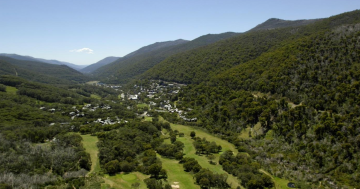
According to the development documents, Auskelp plans to use kelp seedstock gathered from a 10 kilometre radius of Disaster Bay. Image: Supplied.
The chosen site is about 25 kilometres south of Eden.
“Based on current designs, kelp longline infrastructure will cover up to 100 ha of the above 200 ha allocation to allow for vessel movements and hydrodynamic openings towards Greenglades Beach,” the documents state of the farm’s proposed layout.
While Disaster Bay adjoins terrestrial conservation areas, the farm site doesn’t overlap with marine protected areas or statutory exclusion zones.
Five other South Coast sites were considered to house Eden-1, but these were rejected because of concerns that included agricultural runoff, excess nutrient loading, salinity and the presence of existing underwater reef systems.
The documents note that while other NSW sites could host the proposed Eden-1 farm, there were also problems.
“These locations could theoretically support kelp farming under specific seasonal conditions, however they were not formally explored due to the overriding benefits of the chosen project site and the logistical, environmental, and operational efficiencies offered by the selected site.”
The application documents state that, depending on approvals, commercial operations are expected to start in 2027.
“Located in offshore waters with strong currents, low marine traffic, and minimal conflicting uses, the project is ideally situated for the cultivation of Ecklonia radiata (Golden Kelp), a native brown seaweed with significant commercial and environmental value,” an environmental statement states of the project’s rationale.
“By harnessing the clean, nutrient-rich waters in Disaster Bay, the farm aims to supply kelp biomass for food, agricultural feed, fertiliser, and bioproduct markets, while also supporting Australia’s emerging blue economy strategy.”
A decommissioning plan lodged as part of the proposal states that the chosen infrastructure would provide minimal damage or disturbance to the seabed.
“The use of removable screw anchors, tensioned rope systems, and a no-chain rig design ensures infrastructure can be retrieved without seabed dragging, excavation, or sediment disruption,” it states.
“Installation torque records and as-built GPS coordinates for anchors, longlines and boundary markers will be maintained to facilitate accurate retrieval and verification of complete removal.”
The project has been designed as a state significant development.
Submissions will close on Friday (8 April), and can be made through the NSW Planning Portal.