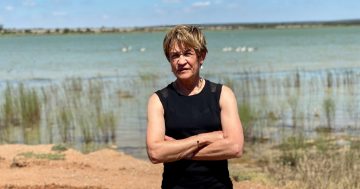
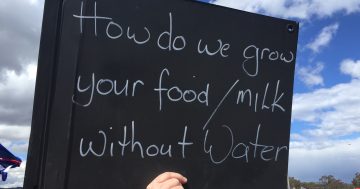
The Leeton SunRice mill will see a downscale in production. Photo: Leeton Living.
Riverina food giant SunRice is expected to shed several jobs after announcing a major scale-back of production at its Leeton and Deniliquin mills.
The company has blamed the decision on government water policy settings and ongoing dry conditions, which have led to a decline in rice supply.
The Leeton mill will reduce production from 24 hours a day, seven days a week, to 16 hours a day, five days a week.
The Deniliquin mill will be cut back to a single eight-hour shift, five days a week.
“SunRice Group has announced changes to its current Riverina milling operations in response to a sustained reduction in rice supply, driven by ongoing dry conditions and current water policy settings,” SunRice CEO Paul Serra said.
“As a result of these changes, we have commenced consultation with employees on the proposed workforce impacts across Deniliquin, Leeton and AGS operations.”
A company spokesperson said no decisions had been made on workforce reductions, but industry sources said job losses were considered inevitable.
“Our focus is on retaining as many employees as possible, including exploring redeployment opportunities where feasible. As always, we are committed to engaging openly, constructively and transparently with our people throughout the consultation process,” Mr Serra said.
“We continue to advocate to government on the adverse impacts of water policy settings on the Riverina rice industry, while closely monitoring seasonal conditions and crop outlook.”
Under a long-standing arrangement known as vesting, SunRice historically held the exclusive right to export rice grown in NSW. This meant growers exported their rice through the Riverina-based company, which milled, marketed and sold it to overseas customers. The NSW Government abolished the system in July 2025, but SunRice remains the dominant buyer and exporter of Riverina rice.
This year’s rice harvest has been well below average, largely because low water allocations and high irrigation water prices meant many growers planted less rice or switched to other crops. The smaller harvest has reduced the amount of rice available for processing at SunRice’s Riverina mills.
SunRice has also pointed to government water policy as a contributing factor. The company and many irrigators argue the ramping up of federal government buy backs of irrigation water under the Murray-Darling Basin Plan has reduced water available for agriculture, making it harder to grow rice.
The Federal Government says the water recovery is necessary to improve the health of rivers and wetlands, but critics argue it comes at the expense of food production and jobs in irrigation communities.
Riverina MPs were quick to condemn the Federal and NSW governments following SunRice’s announcement.
“This is a stark reminder that water policy decisions do not stop at the farm gate,” Cootamundra MP Steph Cooke said.
“They flow through our mills, processors, main streets, schools, sporting clubs and regional economies.
“The NSW and Federal governments … must urgently step up with practical support for affected workers, genuine investment in regional industry and a clear plan to protect food and fibre production in the southern Basin.”

Cootamundra MP Steph Cooke wants government to support SunRice workers. Photo: Steph Cooke.
Federal Riverina MP Michael McCormack said: “Bad water decision-making by Labor – buybacks – hollows out irrigation communities and that’s what is happening. The small business sector suffers, schools lose students and towns wither. It is madness based on poor policy and lazy politics.”
Murray MP Helen Dalton said SunRice couldn’t be blamed for what it was being forced to do and reiterated her call for a royal commission into water.
“We can no longer allow governments to destroy our rivers and the rural communities that rely on them,” Ms Dalton said.
The latest cuts continue a long-term trend for SunRice, which has gradually reduced production and its workforce in the Riverina over the past decade as rice plantings have fallen.
In 2018-2019, the company shed more than 200 jobs at mills during a prolonged drought. At the time, SunRice also reduced milling operations at Leeton and Deniliquin, saying there was not enough rice to keep its facilities operating at normal capacity.
SunRice is one of the Riverina’s biggest food manufacturers and Australia’s largest rice processor and exporter, sourcing rice from growers across southern NSW and supplying products to more than 50 countries. It employers just under 2000 workers.
Original Article published by Oliver Jacques on Region Riverina.