The ”living shoreline” project aims to increase biodiversity at Narooma’s Wagonga Inlet. Photo S Chalker.
For the first time, Eurobodalla Shire Council has a biodiversity strategy. It contains 55 proposed actions to be taken over 10 years.
The council’s natural resource and sustainability coordinator Heidi Thompson provided an overview of the draft strategy to councillors in a workshop open to the public on 9 June. Councillors are expected to endorse it for public exhibition for six weeks.
More than 200 species of plants and animals and ecological communities are listed as threatened in the shire. About 88 per cent of the shire retains woody vegetation that supports a wide array of flora and fauna.
“We don’t have a strategic direction for biodiversity, yet we know Eurobodalla residents and visitors value nature and it is important to oyster farmers, tourism and farmers,” Ms Thompson told councillors.
More than 45 per cent of the shire is classified as national parks and another 33 per cent is designated as state forest. Some 18 per cent is private land, while 2 per cent is Crown land. The council owns just 0.6 per cent.
Key threats to the shire’s biodiversity are the clearing of native vegetation, habitat fragmentation, the loss of important habitat features such as trees with hollows and hollow logs, climate change, invasive species including weeds, feral animals and sea urchins, inappropriate fire regimes and the loss of Indigenous knowledge sharing.
Ms Thompson said the strategy started with background research in 2021/22, followed by engagement with the community and other stakeholders from 2022 to 2025. There was internal engagement with the council’s Aboriginal Advisory Committee and its Climate Change and Environment Advisory Committee. The plan was presented to the Heritage Advisory Committee.
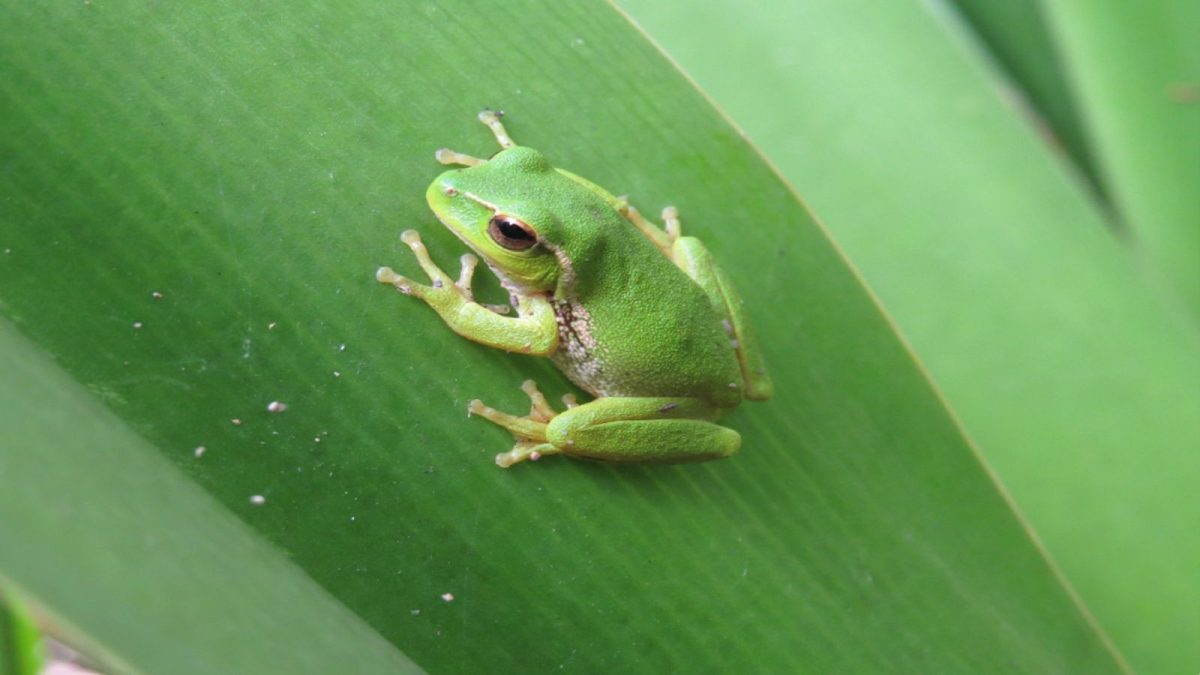
Eurobodalla Shire Council’s first-ever biodiversity strategy aims to protect the area’s wide array of flora and fauna. Photo: Eurobodalla Regional Botanic Gardens.
Ms Thompson outlined several key actions. These included mapping, validating and protecting biodiversity corridors, and the development of an urban greening plan with canopy targets. Another is to work with property owners to ensure there is no net loss of trees, and expand the Botanic Gardens’ nursery for local plant production.
Some related to working more closely with Aboriginal people, including engaging Indigenous ranger groups to restore fire regimes.
Educating the community about responsible pet ownership is another key action, with the focus on cats. Feral and pet cats kill around 2 to 3 billion animals a year in Australia, the majority of which are native species. There is strong community support for measures such as desexing domestic cats, a cat bib program, trapping feral cats and containing domestic cats on their owners’ properties.
Councillor Amber Schutz said more street trees should be fast-tracked. Ms Thompson said it was a high-priority action.
“We need a street tree policy for new development and a more complex policy for getting street trees into areas where there are a lot more constraints.”
Another key action is expanding volunteer networks.
Councillors asked about virtual fencing. Council staff said data from WIRES and the places where the group was called to pick up dead animals informed where the fences were. On a section of road at Long Beach, five animals a week were hit. Since virtual fencing was installed eight months ago, only five animals have been hit. The technology only works for macropods and with speed limits of 80 kilometres per hour or less.
Planning and environment director Gary Bruce said much of the strategy was being implemented in the council’s day-to-day operations in the context of other policies and documents.
“If council adopts this strategy, theoretically there will be 550 people doing something towards this vision,” Mr Bruce said.

A new landfill cell at the Brou waste facility. Photo: Eurobodalla Shire Council.
The following week, Ms Thompson outlined the council’s emissions reduction plan. Under its climate action plan, it wants the council’s operations to source 100 per cent renewable electricity by 2030, reduce emissions by 80 per cent by 2030 and achieve net-zero emissions by 2040 from its 2024/25 validated baseline of the equivalent of 42,274 tonnes.
It has already avoided annual emissions by about 30 per cent through initiatives such as gas flaring at landfill sites, solar across council facilities, and LED streetlights.
The council engaged a consultant to check its current targets and approach, and develop a tool to determine the impact of any development or project.
Key emission sources are landfill gas emissions, which are around 28,700 tonnes, electricity consumption (7200 tonnes) and fuel use (982 tonnes).
Ms Thompson said food waste accounted for 65 per cent of landfill gas emissions and that FOGO — Food Organics and Garden Organics — was the biggest opportunity to reduce those emissions.
With electricity output, the priority is to reduce grid consumption, then seek certified renewable energy. The Bay Pavilions and the council’s administration building will be the first to have solar.
The council is transitioning its fleet to electric vehicles, but utes and other heavy vehicles are more challenging.