20 August 2026

Environment Minister corrects aerial cull evidence as brumby welfare questioned

| By Edwina Mason
Join the conversation
12
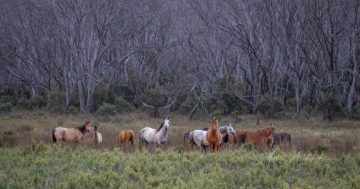
horses grazing in the bush

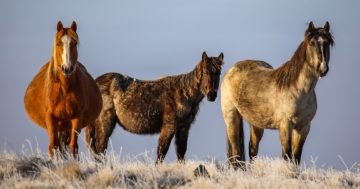
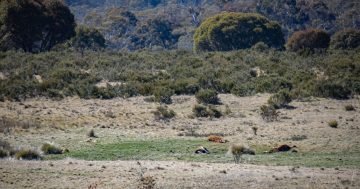
Wild horses in Kosciuszko National Park, where aerial culling and population estimates remain under intense scrutiny. Photo: NSW Environment & Heritage.

NSW Environment Minister Penny Sharpe has told a Budget Estimates hearing that wild horses shot from helicopters in Kosciuszko National Park (KNP) lose consciousness within five to eight seconds – less than half an hour after initially telling the same hearing the figure was 30 seconds.

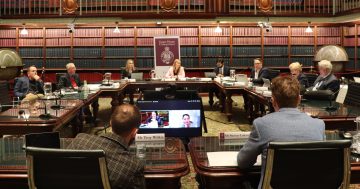
The correction came during a fiery hearing on Tuesday (18 August) that put the welfare of the aerial culling program under sustained scrutiny, as Upper House MPs questioned the minister and senior National Parks and Wildlife Service (NPWS) officials over the number of shots fired at horses, where those shots were placed and the reliability of population estimates being used to guide the cull.

Independent MLC Mark Latham told the committee he had “never seen such grief expressed by a vast number of horse lovers in NSW” and asked Ms Sharpe to end aerial shooting altogether.

Ms Sharpe rejected the call and defended the program as necessary to protect Kosciuszko’s alpine grasslands and waterways from damage caused by horses.

She said more than 7000 horses had been removed from the park in recent years, including about 1000 during the recent winter aerial operation in June and July, with the majority of removals carried out through aerial shooting.

Another 50 horses, she said, had been rehomed in the past month.

READ ALSO NSW Land and Environment Court refuses urgent bid to halt Kosciuszko brumby cull

Questioned about the welfare of horses shot from helicopters, Ms Sharpe initially told the committee they, “become insentient and mostly dead within 30 seconds”.

She also defended the use of multiple rounds on individual animals, saying there was a misconception that aerial shooters were trying to kill each horse with a single shot.

“They use very high-grade weapons that often use multiple shots – seven, sometimes up to 15 – which guarantees that the horses die very quickly,” she said.

“It’s not one shot and then they’re harmed and wandering around and the helicopter has to come down and deal with it.”

Mr Latham questioned how the government could be certain of the timeframe when shots were being fired from a moving helicopter and raised concerns about the number of shots being fired.

Before the committee broke for its mid-morning adjournment, Ms Sharpe returned to her earlier evidence.

“I said that in relation to horses it was 30 seconds to insensibility,” she said. “It’s actually five to eight.”

The welfare debate resurfaced later in the hearing when Liberal MLC Rachel Merton questioned NPWS deputy secretary Alex Graham about the procedures governing aerial shooting.

Ms Merton told the committee that expert advice previously provided to the government had identified an accurate shot to the cranium, causing immediate unconsciousness and death, as the humane benchmark.

She contrasted that with what she said were the shot-placement directions contained in the NPWS H009 aerial shooting standard operating procedure (SOP), including shots to other parts of the body, and referred to trial data showing an average of 7.5 shots fired per horse.

Ms Graham did not dispute the figure and said the procedures had been developed, “under guidance and with the endorsement of veterinarians and the RSPCA”.

She said firing multiple rounds could represent the best welfare outcome because operators were required to continue shooting to ensure an animal died as quickly as possible.

Asked whether the SOP was publicly available as operational guidance, Ms Graham said it was not.

However, the H009 procedure is already on the public record. A copy was tabled during the NSW parliamentary inquiry into proposed aerial shooting of brumbies in December 2023 and remains publicly available among the inquiry documents.

Questions then turned to the deeply contested issue of how many wild horses remain in the park.

NPWS survey estimates put the population at between 2131 and 5639 in 2024, before rising to between 6476 and 16,411 in 2025, with a central estimate of about 10,000.

Asked whether NPWS remained confident in the data being used to guide aerial culling decisions, Ms Graham said she was.

“I am confident in the estimation of the population of wild horses in Kosciuszko National Park, as it is determined by the best survey method available internationally,” she said.

Ms Graham acknowledged there was, “a big difference” between the two surveys, saying the higher 2025 result was likely due to a combination of lower horse detectability during the 2024 survey and some population increase over the following year.

When Ms Merton said veterinarians and experts considered growth of that scale, “biologically impossible”, Ms Graham stressed NPWS was not attributing the entire increase to population growth.

“It’s also about the detectability of the horses in the 24 survey, which is why we believe that survey result was lower,” she said.

The disputed figures were also at the centre of questioning from Wagga Wagga-based Nationals MLC Wes Fang, who asked Ms Sharpe to suspend further aerial shooting until another count established whether horse numbers remained above the government’s target.

“I am aware that the method and the count is contested,” Ms Sharpe said.

Asked whether she would agree not to undertake further aerial culling until that had been established, she replied: “No, I won’t.”

Ms Sharpe said another horse count would be conducted later this year and indicated the methodology would remain broadly consistent so successive surveys could be compared, “apples with apples”.

The hearing also exposed a gap in public reporting on the park’s Wild Horse Community Advisory Panel, which brings together brumby advocates, conservation groups and NPWS staff.

READ ALSO Government response to aerial brumby culling sparks outrage, and a warning

Liberal MLC Jacqui Munro told the committee the panel’s minutes had not been published since December and asked Ms Graham whether it had met since.

“Yes, the panel has met since then,” Ms Graham said, but she was unable to say how many times or explain why the minutes had stopped appearing publicly, telling the committee she would come back with an answer.

She returned with a response in the hearing’s closing minutes, nearly five hours later, telling the committee the panel had met twice since December – once in March and once in June – with minutes from both meetings still awaiting publication.

“We are a bit delayed in publishing both those minutes,” Ms Graham said, “but we will make that a priority this month.”

Mr Fang also asked how much the government had spent on aerial brumby control since Labor came to office.

Ms Sharpe did not have the figure available and took the question on notice.

The government is working towards a legally required target of 3000 wild horses in designated retention areas by 30 June 2027.

NPWS has also flagged aerial feral animal control operations in selected parts of KNP throughout November, with closures scheduled from 2 to 27 November.

The public notice does not specify that horses will be the sole target.

Free, trusted local news delivered direct to your inbox.

Keep up-to-date with what's happening around the Capital region by signing up for our free daily newsletter.
Loading
By submitting your email address you are agreeing to Region Group's terms and conditions and privacy policy.

Join the conversation

12
All Comments
  • All Comments
  • Website Comments
LatestOldest
Philip Creagh5:35 pm 21 Aug 26

Ms Sharpe has been ill advised by her minders. Shooting horses (450kg) from a helicopter with a 308calibre automatic will NOT induce insensibility in 5 to 8 seconds. The wound are is the chest, from above, if lucky, will avoid the spinal cord (will stop the bullet and cause instant hind limb paralysis) and hit the lungs, and maybe the heart. In my experience large animals (large deer, camels and probably horses) shot in the heart will take at least 30 seconds to get to insensibility with a .308. Hit in the lungs with multiple shots will take many minutes. Part of the issue relates to the calibre. In my opinion to shoot a horse with any degree of certainty needs a .338, which is the largest calibre available in a semi automatic. So Ms. Sharpe has her ‘facts’ wrong.

I have mentioned before that the KNP was only declared a ‘national park’ in 1967, becoming more formalised in 1970 with no more summer grazing of cattle allowed. Cattle and horses had a presence in what is now the park from the 1840’s through to 1970. The horses did multiply after that as the cattle were gone. However in my opinion the carrying capacity of the northern block did not allow the huge increases that are claimed in the last 10 years or so– it is just impossible.

I have fished and bushwalked the northern block of KNP pretty extensively since 1966. I did enjoy seeing the horses and, as a Veterinarian, observed where they went and how the numbers rose and fell depending on the season. I also observed the rabbits, and pigs were becoming more noticeable as well.

It should be remembered that in all the ‘studies’ on the damage caused by horses there have been absolutely no BACI experiments done. So we are expected to take as a given the anecdotal reports of people who, in many cases, have never been to KNP and believe ‘native good, feral; bad’. If you want to see real damage then have a look at the Thredbo river between Ngarigo and Thredbo Diggings.and see what wombats can do.

You say there are “absolutely no BACI experiments done”. Do the ones where they fenced off areas from horses and watched what happened on both sides of the fence not count?

Philip Creagh10:24 am 31 Aug 26

Joe Blow – It appears you don’t understand the principle of a BACI experiment.

A BACI experiment in this case involves FIRSTLY identifying what you are trying to evaluate – Say for Prof Lintermann, it would be the effects of horses on stocky galaxia. This would be done by finding out the stocking rate of these fish in a length of river, preferably one that’s unaffected by horse (or pig) damage, as well as one that IS affected by damage. (The ‘B’ part)

Then by fencing off a length of river that is both unaffected and affected and THEN returning at set intervals and determining the stocking density. (The ‘C” part)

The evaluation is the ‘I’ part

Of course this would apply to any animal that is believed affected by damage by horses or pigs. In my opinion the damage by horses is mostly cosmetic, not very functional. So, if it is then the large sums of taxpayer funds spent on the cull may be wasted. Not the first instance of extreme green conservation ‘shouting’ to achieve wastage. An example I was involved with 20 years ago is the Grey Nurse shark ‘count’

Further, excluding horses with that effective fence also excludes many other animals as well. The fence appears to be good enough to exclude even Kangaroos. I have a fence around half an acre on our small farm in Narooma. It has been there for a year and the grass has grown well inside. The only animals that we have on our property is Kangaroos and wallabies. No pigs, deer or horses.

Sad to see the usual cruel know it alls cheering on this mindless and incompetent slaughter. I do hope karma is real for these zealots.

jonathan gaul8:20 am 21 Aug 26

The concerns and emotional reactions of high country people and horse lovers generally are
understandable and should be addressed respectfully and factually. Nonetheless, the first priority must remain the protection of the Kosciusko National Park (KNP) and its globally unique wildlife, insects, fish, plants and endangered wetlands. The next priority must remain the protection of the sources of three of our great rivers: the Murray; the Murrumbidgee; and the Snowy. The alpine sphagnum bogs where these rivers rise are endangered peat-forming wetlands which are vital natural water filters and reservoirs, damaged by pugging and erosion from feral horse activity. The recently completed 4.6kms electric fencing at Wild Horse Plain north of Kiandra is a good start on restoration, but much more needs to be done to protect the sphagnum bogs in areas like Happy Jacks, Boggy Plain and Port Phillip.
Jon Gaul

Margaret Wood7:46 pm 20 Aug 26

Why isn’t there transparency if the aerial culling of horses in KNP is so clean and efficient !
Prove it minister Sharpe !
Cameras on choopers, let us see !

Michael Garvan3:51 pm 20 Aug 26

I’m totally appalled by the callous disregard for the cruelty inflicted through aerial culling. I’m not disputing the need to cull but the method is just WRONG. Today I saw a woman weeping whilst she watched the video of Minister Sharpe give her evidence. “Why are you crying?” Answer- “She just doesn’t care. And does she know that she is providing lots of feed to the pigs and wild dogs? She just doesn’t care.” I agree that Sharpe just doesn’t care.

Or the other view of the situation is that they die a quick death so there is nothing to be upset about. NPWS killed 2000 deer in June – I didn’t see anyone crying over bambi. Why not – same technique was used on a smaller animal which would be harder to hit.

NPWS is also targetting feral pigs and wild dogs.

A cruel and mindless slaughter driven by greenie zealots. Sadly the wounding of these poor creatures is something no one cares about. The horses and their foals bodies are strewn over wide areas and are a national disgrace. Bleeding hearts? Or caring compassionate people? Shame on this slaughter and shame on the killers behind it.

patricia gardiner9:47 am 21 Aug 26

And shame on the feral horse advocates whose continuous delaying tactics allowed horse numbers to increase to such an extent that aerial culling was the only option to reduce numbers quickly.
High praise to Penny Sharpe for her persistence in the face vile criticism by feral horse lovers.

The wild horses are classed as feral animals and serve no purpose. They only destroy parts of our environment. They are not necessary farm animals, racehorses nor do they reside in stud farms. They are not wounded but killed outright by professional shooters.

I am definitely not a greenie but live in the real world where some actions are necessary to preserve our environment from any type of destruction.

I can only assume you are not financially or otherwise affected by these horses in your daily life.

Congratulations to the NSW Environment Minister, Penny Sharpe, on standing her ground re the culling of wild horses.

Whilst no decent person wishes to see harm come to any animal, these are feral animals and do so much damage to the environment. We cannot let the “bleeding hearts” interrupt the culling process. They usually live well away from the affected areas and do not see or experience the damage so their opinion should not be taken seriously.

They are so blinkered just to focus on the horses. What about the native animals whose habitats are destroyed? Their indiscrimate grazing affects the vegetation required for cattle, sheep and goats who supply our food production. They break through boundary fences causing repair costs to the owner and allowing managed livestock to escape. But of course, the objectors do not have to cope with these problems.

I am quite sure those who shoot these horses are compassionate people and have good markmanship skills so there would be a quick death to the animals.

Daily Digest

Do you like to know what’s happening around your region? Every day the About Regional team packages up our most popular stories and sends them straight to your inbox for free. Sign-up now for trusted local news that will never be behind a paywall.

By submitting your email address you are agreeing to Region Group's terms and conditions and privacy policy.