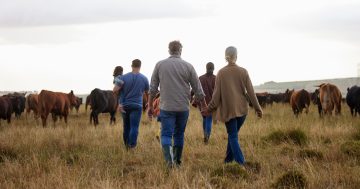
Securing your farm’s future requires a proactive approach to succession that far too many families put off. Photo: Yuri Acurs People Images.
Farms aren’t just businesses. Hailed as the lifeblood of Australia, they’re often a home, a livelihood and a lifelong identity for those behind the wheel – along with their kids and grandkids.
There may never be a comfortable or convenient time to talk about what will happen to farming assets when you’re gone, but without a detailed succession plan in place, the risk of costly legal proceedings, relationship breakdowns and the farm being split rises.
How heartbreaking would it be if generations of hard work ended up down the drain, simply because there was no way for the farm to endure after your death?
“Farm estate planning is one of the most complex and emotional areas of estate law. This is one of the reasons why so many farming families leave it too late,” Connie Park from BDN Lawyers says.
“You might feel like you don’t need to engage a lawyer yet because you’re fit and healthy, but you never know what tomorrow will bring.”
One of the biggest challenges with farm estate planning is that every enterprise is different.
The goal is often to preserve the farm as is. This process can be fairly straightforward for single-child families, but as Connie explains, challenges can arise when multiple kids are involved.
Consider a family where one child stays on the property and works the land into adulthood, while the other leaves home to pursue a career elsewhere. A simple 50/50 split wouldn’t fairly reflect their contributions or their needs.
“In these cases, the farming child would typically take on the land and business, while the other is compensated through other means,” Connie says.
“That could look like life insurance, superannuation, or a structured cash settlement, depending on the circumstances. The goal is to keep the farming land intact and the business viable while looking after everyone fairly.”

Connie has more than a decade of experience in farm estate planning. She was made a partner at BDN Lawyers in 2025. Photo: BDN Lawyers.
If a family member feels they were not adequately provided for, they can apply to the court for a share of the estate, even after a will has been finalised.
It’s one of the most common ways a farming succession plan can unravel after death and one more reason to settle expectations while everyone is still around to discuss them.
There are several options farming families can explore, depending on their circumstances.
Binding family agreements set out who receives what and on what terms, well before death. Overseen by a lawyer and signed by all parties, they are one of the most effective ways to prevent disputes before they start.
Intergenerational transfers allow assets to be passed on during your lifetime – though they generally don’t apply unless the recipient will continue the farming enterprise.
Testamentary trusts offer an extra layer of protection. Leaving the farm directly in a family member’s personal name could expose it during a divorce, business dispute, or insolvency. Assets owned by a trust are still managed by the beneficiary, but are generally harder for outside parties to reach.
The worst-case scenario for most families would be to lose their loved one and their home in one fell swoop.
This is a very real possibility for primary producers, because dividing a farm isn’t like other properties. If it’s split, the business is unlikely to stay viable and your legacy could be permanently lost.
“It’s better to have a basic will in place than nothing at all, as without a will, your estate will be subject to the laws of intestacy,” Connie says.
“But when you’re dealing with a farm estate, it’s really worth going to a local specialist. It’s also worth noting that different rules will apply depending on the jurisdiction.
“Many disputes that end up in court could have been avoided with proper planning.”
Securing the future of your farm won’t happen in a single conversation. But the sooner you start, the greater the chance that the land your family has worked so hard will continue to thrive long after you’re gone.
For more information, visit BDN Lawyers.
Original Article published by Morgan Kenyon on Region Canberra.
Region Media Partner Content