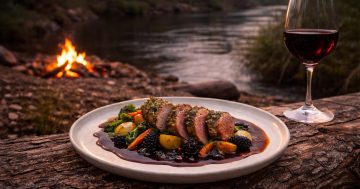
Adam Digby says demand for Snowy Mountains wild venison is growing faster than his business can source supply, prompting a call for more licensed harvesters. Photo: Adam Digby
A growing appetite for wild venison has prompted Kosciuszko Wild Venison to search for more licensed harvesters, with owner Adam Digby saying skilled operators could earn more than $100,000 a year as the business expands into new markets.
The Jindabyne business is seeking NSW Food Authority licensed harvesters to supply field-dressed venison as demand grows from restaurants and consumers in Canberra, Sydney, Melbourne and Brisbane.
Mr Digby said the business currently worked with just three regular harvesters and needed more operators capable of meeting the strict food safety standards required for the human food market.
For those prepared to invest in the necessary licences, equipment and training, Mr Digby believes the industry offers a genuine career opportunity.
“For a good operator it’s generally a second job,” he said.
“If somebody wanted to dedicate themselves to it as a full-time job, they could easily be making over $100,000 a year.”
The call for harvesters comes as more Australians embrace venison as a lean, high-protein alternative to traditional red meat while recognising its role in helping manage Australia’s growing wild deer population.
“Now that it’s migrated into a pest species in the environment, it has this wonderful ethical story about putting a problem into a resource with terrific health and economic benefits,” Mr Digby said.
Kosciuszko Wild Venison now supplies 13 restaurants across the Snowy Mountains, along with venues in Merimbula, Berrima and Canberra – including the exclusive Commonwealth Club – and is working to establish stronger markets in Sydney, Melbourne and Brisbane.
Mr Digby admitted he had initially underestimated the restaurant trade.
“I was wrong. They’re looking for something unique to put on the menu.”
Mr Digby said more direct consumers were also discovering venison and the next stage of the business would be expanding sales through butchers and wholesalers.
“There were initially wholesalers who wanted to take specific cuts,” he said.
“I’m working towards a whole-of-animal sale where butchers can do more of their own breaking down and encouraging consumers to go to the butcher and ask for it.”
Despite receiving offers to source venison elsewhere, Mr Digby said he was committed to building the business around the Snowy Mountains.
“I’ve had offers from all sorts of places to come and harvest in their district, but my provenance is here in the Snowy Mountains,” he said.
The business’s growth depends on increasing the supply of venison that meets the strict hygiene standards required for the human food market.
Unlike the pet food industry, the human food market requires strict hygiene standards from the paddock through to the processing plant.
Mr Digby said more licensed harvesters were needed with the skills to meet those requirements.
“I think we need to see a better standard at the harvesting level in the industry,” he said.
He said successful harvesters also needed to build strong relationships with landholders by communicating where they were operating and following agreed protocols.
“It’s about maintaining relationships with landholders and getting the due diligence and reporting right,” he said. “I can’t just turn up and start shooting.”
Looking ahead, Mr Digby believes commercial harvesting has the potential to become an important part of long-term wild deer management while creating jobs and strengthening the regional economy.
“We’re never going to get rid of them,” he said.
“If we turn them into a valuable resource, the constant pressure will help maintain the wild herd.”
He said a stronger local venison industry could create jobs not only for harvesters, but also in transport, meat processing and value-added food production, keeping more of the economic benefits in the Snowy Mountains.
“We can do better than what we’re doing right now,” he said.
“We can create jobs in the local area and build a reputation for a high-quality protein that will be synonymous with this town and this region.”
NSW Food Authority licensed harvesters interested in supplying field-dressed venison for the human food market should contact Adam through his website.