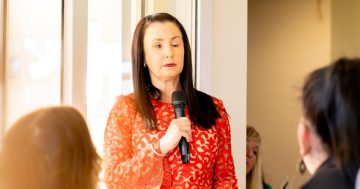
Illawarra Women’s Trauma Recovery Centre CEO Elise Phillips says the domestic violence death data should force Australia to face the evidence and act decisively. Photo: Supplied.
CONTENT WARNING: This article contains references to family violence
Australia’s first publicly accessible domestic violence death data website makes for uncomfortable but critical reading, according to advocates.
The Illawarra Women’s Trauma Recovery Centre has welcomed the launch of the website, which provides detailed and regularly updated insights into domestic violence-related homicides across the state to inform prevention, policy and public understanding.
CEO Elise Phillips said Australia could not effectively address domestic, family and sexual violence without being honest about its scale, patterns and impact.
“We have a major domestic, family and sexual violence problem in Australia and far too many lives are being destroyed,” she said.
“If we are serious about ending this violence, we must be prepared to confront the evidence – even when the truth is deeply uncomfortable.
“While anyone can be a victim of abuse, the data shows that women and children are disproportionately being killed, hospitalised and left with lifelong trauma.
“Recognising domestic and family violence as a gendered issue does not diminish the experiences of other victim-survivors.
“It ensures our prevention strategies, policies and services respond honestly and effectively to the patterns of violence revealed by the evidence.”
Ms Phillips said the data exposed the scale and deadly patterns of domestic violence and provided critical evidence to support earlier intervention, stronger accountability and more effective specialist responses.
The dashboard shows domestic violence was identified as a significant contributing factor in 32 per cent of NSW homicides reviewed since July 2000.
Four in five people killed by a current or former intimate partner in NSW were women. Of the 293 women killed by an intimate partner since July 2000, 99 per cent had been the victim of domestic violence within that relationship.
Since July 2000, 134 children and young people have also been killed in domestic violence homicides.
The dashboard also shows that domestic violence homicides extend beyond intimate partner relationships. Almost half involve children, adult relatives, bystanders and other people affected by a broader pattern of domestic and family violence.

The domestic violence homicide dashboard. Image: NSW Coroners Court.
The latest data records 36 domestic violence homicides in NSW during 2024-25, with two-thirds occurring outside an intimate partner relationship.
Ms Phillips said the findings highlighted critical opportunities to identify warning signs and intervene before violence escalated.
“Domestic violence homicides rarely occur in isolation. In many cases, there is an established pattern of violence, coercive control or escalating risk before a life is lost,” she said.
“This dashboard gives governments, agencies and specialist services a stronger evidence base to recognise those patterns, improve risk assessment and act earlier.
“The data must translate into coordinated action, including better information sharing, stronger accountability for people using violence and accessible specialist support for victim-survivors at every stage, from crisis intervention through to long-term recovery.”
One of the key findings from the dashboard was that regional NSW experiences higher rates of domestic violence homicide than metropolitan areas.
Ms Phillips said those findings reinforced the need for equitable access to specialist services, regardless of where victim-survivors lived.
“People in regional communities can face additional barriers, including fewer specialist services, transport and housing challenges and concerns about privacy in smaller communities,” she said.
“Where a person lives must not determine whether they can access safety, specialist care and the long-term support needed to rebuild their life.”
The dashboard draws on detailed case reviews examining the patterns of abuse, relationship dynamics and broader circumstances preceding each death. This includes homicide-suicides and incidents involving self-defence where criminal charges may not have been laid.
“Every number represents a life lost, a family devastated and a community affected,” Ms Phillips said.
“We owe it to those who have been killed, and to every person currently living with violence, to face the evidence, learn from it and act decisively.
“Preventing further deaths must remain the priority, but survival is not the end of the experience. Victim-survivors also need specialist, trauma-informed support to recover their health, safety, independence and future.”
The figures cited on the dashboard are from the NSW Communities and Justice Department, published on 9 June. It will be updated quarterly and expanded as further findings from the Domestic Violence Death Review Team’s case reviews become available.
The Domestic Violence Death Review Team Dashboard is available through the NSW Coroner’s Court website.
If this story has raised any concerns for you, 1800RESPECT, the national 24-hour sexual assault, family and domestic violence counselling line, can be contacted on 1800 737 732. If you or someone you know is impacted by family and domestic violence, support is available: Lifeline 13 11 14; Men’s Referral Service 1300 776 491; Kids Helpline 1800 551 800; beyondblue 1300 224 636.
Original Article published by Jen White on Region Illawarra.