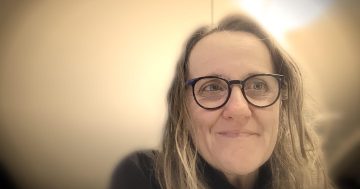
Rebecca Lyons is an end-of-life doula and funeral director. Photos: Supplied.
A quiet revolution is underway, turning the clock back to when dying was a social and community affair, and before it became medicalised, industrialised and sanitised.
Among Australia’s ageing population is a growing interest in, and demand for, end-of-life doulas. It is potentially a new area of employment for older women.
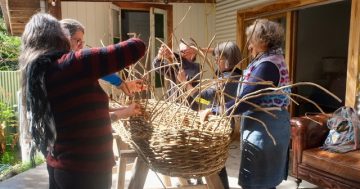
Fiona McCuaig, founder of Bodalla’s Walawaani Way, is seeing strong interest in all its workshops on death literacy, home funerals and conducting meaningful ceremonies that greatly help bereavement. The workshops quickly sell out and attract people from across Australia, as well as locals.
End-of-life doula Rebecca Lyons well understands the interest. She said Australia’s palliative care system was underfunded, disparate and struggling to cope with existing demand, let alone the huge forecast growth in the number of deaths annually over the next 30 years.
She wears many hats. Ms Lyons is an independent funeral director in Tasmania and president of the National Death Advocacy Network (NDAN) and the Australian Home Funeral Alliance (AHFA).
She entered the funeral industry in 2011. As a mainstream funeral director, she saw many families struggle to obtain the support they and their dying loved ones needed.
“Often when someone gets a terminal or life-limiting diagnosis, the only continuity is their primary carer,” Ms Lyons said.
The dying can be shifted from one medical practitioner to another, and in and out of hospitals and nursing homes, before being discharged by a specialist into palliative care at a hospice.
“There is a lot of disconnect and not a lot of continuity. Often their family does not understand what is going on. It is a crash course for them,” Ms Lyons said.

A workshop at Walawaani Way by Australia’s leading death practitioner, Zenith Virago, quickly sold out.
That led her to train as a doula in 2018 to help make people’s grief easier.
She was awarded a Churchill Fellowship and travelled to several countries looking at how others managed death.
“I decided we need a holistic approach, so being a funeral director and a doula, I could be with them throughout,” Ms Lyons said.
Doulas do not necessarily know all the medical detail, but they are good at navigating what can be a bewildering system.
They offer social support by coordinating and communicating across the possibly many family members and other stakeholders who deal with daily responsibilities while caring for the person dying. Doulas provide spiritual and emotional help, and services such as Reiki and sound therapy.
“I exist as a non-medical support to people dying and their families and community around them,” Ms Lyons said.
Australia’s palliative system is already overstretched.
“There are not enough hospices for the growing number of people dying, so one answer is to move people back into their homes,” Ms Lyons said.
“While 70 per cent of people want to die at home, only around 14 per cent achieve that. More effort and money must go into community care.”

By being an end-of-life doula and funeral director, Rebecca Lyons can provide support to the dying and their family and friends throughout their journey.
She quoted Dr Allan Kellehear, who said death was a social event with a medical component, not the other way around.
Ms Lyons said sometimes doulas could be funded as social support in NDIS and aged-care packages. NDAN and AHFA want to see doulas funded by nursing homes and hospitals. Otherwise, doulas are a “fee for service”, meaning only wealthier people benefit from that extra level of support.
“They don’t have the volunteers and community hospice companions, and there is not enough time,” she said.
Having a nurse for just an hour a day means carer burnout is inevitable. That is where doulas come in.
One of the problems is that aged care is managed at the federal level, while healthcare is managed at the state level.
Ms Lyons said there were 169,301 deaths in 2019.
“There will be 430,000 by 2056, so a huge increase that our institutions cannot cope with. If that means going back to home, doulas are part of that, but it won’t happen unless the money flows into it.”
The NDAN and AHFA websites have links to doula training groups offering online courses through to Certificate IV.
Ms Lyons said it suited people with some lived experience who could sit with “uncomfortable” and leave their “baggage” at the door.
“It is only the last 200 years that dying has been taken out of human care, so it is time to reclaim that space,” she said. “None of this is new. We have just forgotten it.”